What To Expect On A Visit To The Alexandria Black History Museum In Alexandria

The Alexandria Black History Museum located at 902 Wythe St Alexandria was originally the segregated library for Alexandria's African American residents. The Museum operates the Alexandria African American Heritage Park where the site of a 19th century African American cemetery is preserved. The museum currently houses two (2) exhibition galleries on the first floor with artifact storage and offices below. Continue reading

Collingwood Library and Museum

The Collingwood Foundation's main building and grounds, which were once part of George Washington's River Farm, are south of Alexandria on the banks of the Potomac River, surrounded by woods and gardens. The mission of the foundation is to foster an appreciation of our American Heritage by sharing these facilities with all. There are three components to achieving this mission. Firstly, the Collingwood Library on Americanism boasts a library of more than five thousand volumes on American heritage. Secondly, the Collingwood Museum is home to an eclectic collection of Americana. Lastly, the foundation opens the grounds to serve as a venue for weddings, corporate gatherings and other private events. are available for weddings, receptions and other private functions. Collingwood, as the whole is generally referred to, is primarily dependent upon contributions from the public and income from third party events. Collingwood is comprised of a historic mansion between the Potomac and the George Washington Memorial Parkway. Today the property is approximately 8.7 acres but the property was once a part of George Washington's estate of his River Farm at Mount Vernon. Collingwood was purchased by George Washington in 1760. River Farm was the largest of the five working farms all of which were a part of his Mount Vernon estate. Collingwood's namesake was a member of the British forces at the Battle of Bunker Hill and in 1805 an Admiral commanding a portion of the British fleet in the Battle of Trafalgar. The original house constructed in 1792 was a modest one, but in time there were at least three major additions to the house. From a small two-room house to its current condition as a colonial mansion the property has had many occupants and usages over time. Over the course of the last two and half centuries, Collingwood has been home to farmers, a ferry operator, airline crew members, and Intelligence School students. For a part of the 20th Century, Collingwood served up meals as an area restaurant. But time took a toll on Colingwood and by 1977 it was no more than overgrown, neglected land and a much vandalized building that only hinted at the history found here. At that time a group of dedicated National Sojourners obtained the property. took possession of the property. Presently, the Foundation for Collingwood Library and Museum on Americanism, with offices for Headquarters National Sojourners, maintains and occupies the property. Collingwood Library and Museum consists of a historic mansion that houses thousands of books and artifacts relating to the history of America. As part of George Washington's River Farm, our rich history had many of our founding fathers walking this land in our nation's infancy. Nestled on approximately 8.7 acres on the Potomac River off the George Washington Memorial Parkway in Alexandria, VA, Collingwood is available for conferences, retreats, business meetings and weddings.  

Area Museums and Historical Sites

Mount Vernon Estate & Gardens is the oldest national historic preservation organization in the country, and it has always been in the forefront of the restoration field. Mount Vernon is the most popular historic estate in America and is open 365 days a year. Mount Vernon was the home of our first President George Washington. The grounds are well-preserved as is the home itself. Alexandria Lyceum is a grand hall built in the late 1800's to provide a place for lectures, scientific experiments and quiet reading. Since that time, it has been a Civil War hospital, a private home, an office building and the nation's first Bicentennial Center. In 1985, The Lyceum became Alexandria's History Museum, providing exhibitions, school programs, lectures and concerts, volunteer opportunities and space for rental functions for the community. The Lyceum Museum Shop carries a wide variety of maps, books, note cards and special items related to Alexandria's history. The present-day Lyceum Company serves the museum as a membership and fund-raising organization. Walk to Old Towne! Old Towne is filled with historic landmarks, carriage rides and walking history tours. Just a few miles down George Washington Parkway is the nationally renown collection of museums called the Smithsonian Institution. The Smithsonian National Zoological Park is a wonderful zoo. Civil War enthusiasts might want to inspect Fort Willard just as President Lincoln did. Fort Willard has long since abandoned its military use and is now a quiet park like Fort Hunt. If you are interested in architecture and local history visit Frank Lloyd Wright's Pope-Leighey House or the Woodlawn Plantation. The Collingwood Library and musuem is dedicated to providing information about our national heritage to the American Public. Collingwood is available to anyone who cares to learn of the heroic efforts made by American Patriots, particularly members of the Masonic Fraternity, in founding and developing this, the greatest nation on earth.
Collingwood is a resource as a local library but also interesting place to visit in it's own right. For more information or to set up an appointment call Stuart at (703)765-0300.

Live near the Lyceum in Old Town Alexandria VA

Historical and Patriotic
The Lyceum is located at the heart of Old Town Alexandria, Virginia. Built in 1839 and managed by gentlemen who formed with the Alexandria Library Company, The Lyceum remains to be historical and patriotic in its structure, with Greek style architecture on the exterior. The outside of the building is in the Greek style form of architecture which gives The Lyceum a distinct look. For tourists who plan to visit The Lyceum there are many historical memorabilia items which include the Civil War, documents, antique silver, photographs, furniture, and 19th century stoneware. The Lyceum was intended to be the cultural center of Alexandria and now it has returned to its former prominence. The Lyceum has served many purposes for its country over the years. It was a cultural center in Alexandria before the Civil War broke out. It was then used as a hospital by the Union Army during the Civil War. It was even used as an office building, a private home and the first Bicentennial Center in the nation. It was in 1985 when The Lyceum was made as Alexandria’s Historical Museum. The Lyceum can be rented by the community and by private parties for concerts, lectures, school programs, volunteer functions and weddings. Tourists can also enjoy viewing historical memorabilia from the Civil War, documents, antique silver, photographs, furniture and 19th century stoneware.

Homes for Sale in Old Town Alexandria


Live near the The Torpedo Factory Art Center in Alexandria

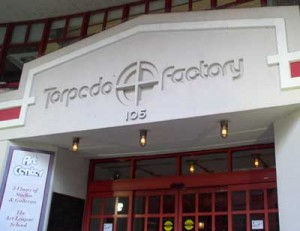
The Torpedo Factory is one of the largest Art Centers in The United States
The Torpedo Factory Art Center in Old Town Alexandria
Featuring 6 grand galleries, more than 80 studios, 2 workshops and the Alexandria Archeology Museum, The Torpedo Factory Art Center can be found in Old Town Alexandria, near Union and kings Street and the Potomac River.
Over 160 artists produce and showcase their original work in the Art Canter. One can also shop excellent quality and unique artworks, such as Paintings, Print Making, Jewelry, Ceramics, Stained Glass, Sculpture and Photography. The Art League School teaches children ages 5 years and above, as well as those at least 18 years of age for adult classes.
6 Grand Galleries of the The Torpedo Factory Art Center are are made up of :
  1. The Art League Gallery
  2. The Target Gallery
  3. Enamelists Gallery
  4. Potomac Craftsmen Fiber Gallery
  5. Multiple Exposures Gallery for photographs
  6. Scope Gallery for ceramics
Residents of Old Town Alexandria in North Virginia (which is the most sought after real estate) have access to The Torpedo Factory Art Center, The Lyceum and other shops and restaurants, all connected by King St. Trolley to the Washington Metro. Luxury condos surrounded by a central courtyard can be found at the Torpedo Factory Condominium Complex just right across the The Torpedo Factory Art Center.

History of Franconia VA

Franconia Road, once the means by which Virginia tobacco entered the port city of Alexandria, is now a bustling city road catering to millions of pedestrians on a regular basis. Franconia, throughout history, witnessed events such as Mosby raids, the birth of the first Virginia governor coming from the northern part of the state, and even became the home of Carrolltown, a flourishing community of African-Americans.
Franconia Museum interior
The Franconia Museum is located in Fairfax County VA.
Franconia Museum is at 6121 Franconia Road, Alexandria, VA 22310. Franconia Museum is a great place to learn more about the history of Franconia. With a band of volunteers fueling its operations and the regular exhibits sponsored by the museum in local hotspots, the Franconia Museum is one of the uniting factors of its surrounding community, serving to educate its citizens and enrich their cultural and historical knowledge. To learn more about the Museum, you can join their many events, including regular gatherings where guests are encouraged to tell their stories and learn of the stories of others, and of course, their celebration of Franconia History Day during the fall. For more information on Franconia Museum and their hosted events, you can contact the following phone number: (703) 971-7943.
22310 real estate agents
Nesbitt Realty can help you buy and sell real estate in 22310

Alexandria’s African American Heritage Museum

African Americans have been an important part of the Alexandria's history and vibrant community back to the city's founding in 1749. Both as enslaved people and as free men and women, African-Americans have contributed to the city's tapestry of life benefiting the community of Alexandria with rich economic and cultural contributions. Alexandria was a key city during the US Civil War and though Robert E. Lee is one of the city's sons, the city was quickly occupied by the Union and remained in Federal hands through-out the war. After the war the city was segregated but a defining moment in the history of segregation in Alexandria occurred in 1939 when five young African-American men staged a "sit-in" at the city's segregated Queen Street Library. The young men brought focus to the issue of the inequality of educational opportunities and as a result Alexandria built the Robert Robinson Library in 1940. This library was used by African-Americans until desegregation in the early 1960's. Today, that structure is a foundational element of the Alexandria Black History Museum.

Alexandria Black History Museum 902 Wythe Street Alexandria, VA 22314 Phone: (703) 838-4356 Fax: (703) 706-3999

In time, additional sites were added to the museum. At the eastern bound of the Carlyle District one will find the Alexandria African American Heritage Park. Next door to the Museum, the Watson Reading Room houses a non-circulating collection of books, videos, documents, and periodicals on African-American life and culture. The African American Museum is a source of pride for all Alexandrians. The museum has a calendar of events and rotating exhibits, so check back even if you have already been to the museum. From Benjamin Banneker in Alexandria's earliest days, to Dr. Albert Johnson to Samuel Wilbert Tucker during the Civil Rights Movement, Alexandria is a focal point in that courageous and audacious journey that led to the diverse, vibrant and prosperous Alexandria of today.

Alexandria’s George Washington Masonic Memorial

Masonic Temple
Masonic Temple
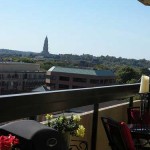
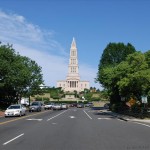
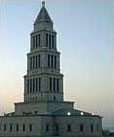
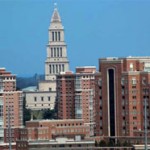
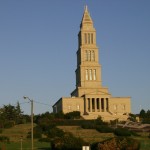
As a tribute to our first president, George Washington, the Masonic Memorial was created.  The memorial looks like the ancient Lighthouse of Alexandria. With 9 floors in the edifice, it has something for everyone. The first floor is dedicated to the Shriner's, with the George Washington Memorial Theater joining along side. The second floor features the Alexandria-Washington Lodge No. 22. On the third floor is the Grotto Exhibit, an organization featuring the Master Masons. The fourth and fifth floors are covered with paintings, and historical documents. The sixth contains the Memorial Library. Once on the seventh floor you will experience murals of Masonic lessons. On the eighth floor is The Knights Templar Chapel. Finally, as  you make your way to the ninth floor you will see a replica of King Solomon's throne. This historical site is a must see. It contains many reflections of one of our founding fathers and a glimpse inside the mysterious. The Masonic Memorial is easily accessible near the King Street Metro. The Masonic Memorial has a spectacular view of King St and is right in front of the Alexandria Amtrak station. For more information please contact: George Washington Masonic Memorial 101 Callahan Drive Alexandria, VA. 22301 703-683-2007

Northern Virginia Fine Arts Association — Old Town’s Atheanaeum

Located in the heart of Old Town Alexandria, The Athenaeum is home to the Northern Virginia Fine Arts Association (NVFAA). Constructed between 1851-52, the Athenaeum is a Greek revival building with a rich history. The building is named after the Greek Goddess of wisdom, Athena. Over the years The Athenaeum has taken many names and was used for many functions. Together with the Lyceum, the Athenaeum is a foundation of Alexandria's Greek neo-classic buildings. The building has a long history of use in Alexandria. Before the Civil War, Robert E. Lee banked here, when the building was known as the Bank of the Old Dominion. During the Civil War it was occupied by Federals and home to the Union Army Commissary Headquarters. In 1905, the bank was converted from commercial to industrial purposes. The building was used by the Stabler-Leadbeater Apothecary Shop as a place to grind talcum into powder. In 1925, the talcum factory became the Free Methodist Church. NVFAA purchased the Athenaeum in 1964. Since then, restorations have taken place using the funds from the members of the NVFAA and the National Park Service Save America's Treasure Grant. Recent art exhibits include Song For Europe by Mark Cameron Boyd is participatory installation using his signature "text bisection" process on a series of chalkboards to address four different languages from European origin such as Greek, Latin, French, and English. This exhibit is on display from August 16th - September 21st. Music is another art form featured at The Athenaeum. Yoga classes are available at The Athenaeum. Instructor Betsy Huffman welcomes drop-ins. Class fees are only $18 per class. Classes are Mondays 11:30am The Athenaeum is available for rentals for weddings, receptions, parties, business meetings and seminars.

Gallery Hours: Thursday, Friday, & Sunday: Noon-4pm Saturday 1pm-4pm

The Athenaeum 201 Prince St. Alexandria, VA 22314 (703) 548-0035

For more information or to set up an appointment call Julie at (703)765-0300.

Apothecary Museum is a Trip Back in Time at Old Town Alexandria VA

Stabler Leadbeater Apothecary Museum
The Stabler-Leadbeater Apothecary Museum was opened by a Quaker pharmacist Edward Stabler in 1792 and is one of the oldest pharmacies in the country. Located on 105-107 South Fairfax Street Alexandria, Virginia in the heart of Old Town Alexandria. In addition to being a pharmacist, Stabler was dedicated to the abolition of slavery and the expansion of educational opportunities. Among other accomplishments, Stabler purchased many slaves for the express purpose of granting their freedom. Edward Stabler died in 1831, but his son continued to run the business for many years after. This particular building served and survived through many important events in United States history such as the War of 1812. The pharmacy was of great importance during the Yellow Fever Epidemic of 1821. During the Civil War the apothecary furnished medicines for the Union. The pharmacy also served during the Spanish-American War of 1898, and World War I. Finally, in 1933 the shop closed due to the Great Depression. At that time the contents of the shop were sold, and the money that was raised was used to preserve the property as a museum. In 1939 the shop re-opened as a museum and 43 years later Stabler Leadbeater Apothecary Museum was placed on the National Register of Historic Places. With over 8,000 objects-- gold-leaf labels, hand-blown medicine bottles, pill rollers, show-globes, mortars & pestles-- the museum provides visitors with a wide, fantastic collection. The first floor is in the Gothic Revival style from 1835. On the second floor names of herbs and medicine are in their original hand writing placed on the walls and shelving of the interior. The Apothecary is home to many important artifacts, journals, receipts, ledgers, and invoices, and also include many historical figures names in documents, Martha Washington, James Monroe, and Robert E. Lee.The purpose of the Stabler-Leadbeater Apothecary Museum is to promote the history and educate people about the values of Edward Stabler. More importantly, the museum promotes a better knowledge of historic public health issues of the past. It was a center of daily life in Old Town Alexandria, and as a museum the apothecary is still having an positive impact today. This museum is just one of the many features that make Old Town an attractive destination for tourists and a highly prized location for residents. Parking can be a hassle in Old Town, but the problem can be avoided by taking the Metro and the King St. Free Trolley, which stops near the museum.