Foreclosure filings continue their downward spiral, dropping to the lowest level in January since April 2007, according to RealtyTrac's latest report.
Filings — which include notices of default, scheduled auctions, and bank repossessions — dropped 28 percent in January year-over-year.
"We're now well past the peak of the foreclosure crisis," says Daren Blomquist, spokesman for RealtyTrac.
Still, the foreclosure problem has a ways to go: Filings remain at double the pace of 2005, and foreclosure auctions are on the rise in 26 states.
"It's likely that by this time next year, we'll start to see 2005-type, pre-crisis numbers again," Blomquist says.
The decrease in foreclosure starts in January was largely attributed to California, which saw a significant drop last month. Due to a new law in California that offers borrowers in default more protection, the state saw foreclosure filings fall 62 percent in January. The big drop made it the first month since January 2007 that California was not the leader in the nation in foreclosure filings — that state has been replaced by Florida.
Meanwhile, RealtyTrac also reported that bank repossessions were down 24 percent in January from year-ago levels, reaching their lowest ebb since February 2008 and putting it below half of the record amount set in September 2010.
Source: RealtyTrac and “Foreclosure Filings Fall to Lowest Level Since 2007,” CNNMoney (Feb. 14, 2013)
The housing market recovery continues to grow stronger, but the economy remains “fragile,” according to the Obama administration’s latest Housing Scorecard for January. The Obama Administration’s Housing Scorecard is released monthly, providing a snapshot of the nation’s housing market.
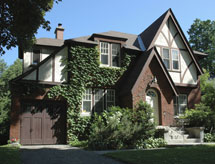
typical Tudor home
"The housing market has clearly bottomed out nationally and is turning a corner with new home construction increasing to a level not seen since June 2008 and home prices showing strong annual gains,” says Kurt Usowski, deputy assistant secretary for economic affairs with the U.S. Department of Housing and Urban Development. “But with so many households still struggling, we have important work ahead.”
Government efforts to help struggling home owners avoid foreclosure are improving. Nearly 1.5 million homeowner assistance actions have taken place through the Making Home Affordable Program, and the Federal Housing Administration has offered more than 1.5 million loss mitigation and early delinquency interventions.
"Every foreclosure avoided has positive impacts for families, communities, and our economy,” says Tim Massad, Treasury assistant secretary for financial stability.
Also, the number of underwater borrowers continues to fall while home prices improve. Home owners who owe more on their mortgage than their home is currently worth account for 10.67 million borrowers, which is down from 10.78 million in the previous quarter, according to CoreLogic.
The inventory of existing homes for sale continues to drop, reaching a 4.4 months’ supply, according to National Association of REALTORS®’ data. In November, the supply of housing averaged 5.3 months.
Fewer homes are being sold due to limited inventories. Existing home sales fell to 411.7 million in January from 415.8 million in December.
Source: U.S. Department of the Treasury and “Obama Scorecard Warns Economy Remains Fragile,” HousingWire (Feb. 8, 2013)
Julie Nesbitt
Julie Nesbitt knows the back trails and by-ways of Northern Virginia real estate.
Established in 1974 with a mission to reduce homelessness, increase community support and promote self sufficiency, the Good Shepherd Housing and Family Services is operated by a multi-denominational board of directors and staff managing over 70 housing units. Good Shepherd Housing and Family Services is located in the Mount Zephyr Business Center at 8305 Richmond…
The Washington, D.C. area has emerged from the recent recession with Northern Virginia leading the way, a George Mason University economist recently told local Realtors.
George Mason University economist Stephen Fuller said the economic recovery has been underway for about 17 months and is stronger than analysts expected.
He pointed to bright spots for the No. Virginia economy:
1) Employment: Fuller said the manufacturing segment has led the economy out of the downturn with increased hiring for 17 months in a row. Gross domestic product is higher now than when the recession started in November 2007.
2) Housing Shortage: He also predicted a future housing shortage for the region.
According to Fuller, the area likely will absorb about 700,000 more people in coming decades and needs to build about 35,000 housing units per year to keep up with demand.
While some apartment developers may err on the side of overbuilding, Fuller said more condominiums and smaller townhouses and single-family house are being built. The number of larger single-family developments is declining
But don’t uncork the champagne just yet. He also said consumer confidence remains low, despite the good economic news.
The uptrend in existing-home sales continues, with January sales rising for the third consecutive month with a pace that is now above levels a year ago, according to the NATIONAL ASSOCIATION OF REALTORS®.
Existing-home sales, which are completed transactions that include single-family, townhomes, condominiums and co-ops, increased 2.7 percent to a seasonally adjusted annual rate of 5.36 million in January from a downwardly revised 5.22 million in December, and are 5.3 percent above the 5.09 million level in January 2010. This is the first time in seven months that sales activity was higher than a year earlier.
Lawrence Yun, NAR chief economist, said the improvement is good but could be better. “The uptrend in home sales is consistent with improvements in the economy and jobs, which are helping boost consumer confidence,” Yun said. “The extremely favorable housing affordability conditions are a big factor, but buyers have been constrained by unnecessarily tight credit. As a result, there are abnormally high levels of all-cash purchases, along with rising investor activity.”
A parallel NAR practitioner survey shows first-time buyers purchased 29 percent of homes in January, down from 33 percent in December and 40 percent in January 2010 when an extended tax credit was in place.
Investors accounted for 23 percent of purchases in January, up from 20 percent in December and 17 percent in January 2010; the balance of sales were to repeat buyers. All-cash sales rose to 32 percent in January from 29 percent in December and 26 percent in January 2010.
“Increases in all-cash transactions, the investor market share and distressed home sales all go hand-in-hand. With tight credit standards, it’s not surprising to see so much activity where cash is king and investors are taking advantage of conditions to purchase undervalued homes,” Yun said.
All-cash purchases are at the highest level since NAR started measuring these purchases monthly in October 2008, when they accounted for 15 percent of the market. The average of all-cash deals was 20 percent in 2009, rising to 28 percent last year.
The national median existing-home price for all housing types was $158,800 in January, down 3.7 percent from January 2010. Distressed homes edged up to a 37 percent market share in January from 36 percent in December; it was 38 percent in January 2010.
NAR President Ron Phipps, broker-president of Phipps Realty in Warwick, R.I., said the median price is being dampened by unusual market factors. “Unprecedented levels of all-cash purchases, primarily of distressed homes sold at deep discounts, undoubtedly pulls the median price downward,” Phipps said. “Given the levels of inventory we see today, we believe that traditional homes in good condition have held their value.”
Total housing inventory at the end of January fell 5.1 percent to 3.38 million existing homes available for sale, which represents a 7.6-month supply at the current sales pace, down from an 8.2-month supply in December. The inventory supply is at the lowest level since December 2009 when there was a 7.3-month supply.
According to Freddie Mac, the national average commitment rate for a 30-year, conventional, fixed-rate mortgage rose to 4.76 percent in January from 4.71 percent in December; the rate was 5.03 percent in January 2010.
Single-family home sales rose 2.4 percent to a seasonally adjusted annual rate of 4.69 million in January from 4.58 million in December, and are 4.9 percent higher than the 4.47 million level in January 2010. The median existing single-family home price was $159,400 in January, down 2.7 percent from a year ago.
Existing condominium and co-op sales increased 4.7 percent to a seasonally adjusted annual rate of 670,000 in January from 640,000 in December, and are 7.9 percent above the 621,000-unit pace one year ago. The median existing condo price was $154,900 in January, which is 10.2 percent below January 2010.
Regional Sales
Northeast: Regionally, existing-home sales in the Northeast fell 4.6 percent to an annual pace of 830,000 in January from a spike in December and are 1.2 percent below January 2010. The median price in the Northeast was $236,500, which is 4.0 percent below a year ago.
Midwest :"Existing-home sales in the Midwest rose 1.8 percent in January to a level of 1.14 million and are 3.6 percent above a year ago. The median price in the Midwest was $126,300, which is 3.2 percent below January 2010.
South: In the South, existing-home sales increased 3.6 percent to an annual pace of 2.02 million in January and are 8.0 percent higher than January 2010. The median price in the South was $136,600, down 2.1 percent from a year ago.
West: Existing-home sales in the West rose 7.9 percent to an annual level of 1.37 million in January and are 7.0 percent above January 2010. The median price in the West was $193,200, down 5.7 percent from a year ago.
— NAR
Home Prices In Arlington Continue To Hike
The housing market in Arlington County is getting more and more expensive as potential buyers continue to have fewer homes and condos to choose from.
Inlet Cove is alongside Route 1 This neighborhood of townhouses is near grocers and eateries Inlet Cove is close to Fort Belvoir, Alexandria, and Potomac Mills shops, in the city of Woodbridge Interior to these properties are multilevel Inlet Cove is serene
Pending home sales increased again in March, affirming that a surge of home sales is unfolding for the spring home buying season, according to the National Association of REALTORS®. The Pending Home Sales Index, a forward-looking indicator based on contracts signed in March, rose 5.3 percent to 102.9 from 97.7 in February, and is 21.1…
Some of the best housing deals are on high-end homes, many over $1 million. Some of them need TLC or they aren’t in the most-coveted locations. But there are plenty of desirable properties and lots of sellers who are getting impatient. Buyers with cash have the best opportunities. Buyers who need a mortgage should move…
The National Association of Realtors recently did a study about the characteristics of home buyers. Some of the findings might surprise you. Thirteen percent of buyers purchased a home with one or more parents and grandparents together with adult children. There were several reasons given for purchasing a multi-generational home. Cost savings; Children over the…
Carlye Towers looking toward Masonic Memorial in Alexandria VA
Home prices are expected to rise in 40 percent of major metropolitan areas, according to Veros Real Estate Solutions, a research firm that provides information to the mortgage industry.
The markets Veros expects to be strongest are:
1. San Diego/Carlsbad/San Marcos, Calif.
2. Kennewick/Richland/Pasco, Wash.
3. Pittsburgh
4. Fargo, N.D.
5. Washington, D.C. metro area
The five markets Veros expects to be weakest are:
1. Reno/Sparks, Nev.
2. Orlando/Kissimmee, Fla.
3. Boise City/Nampa, Idaho
4. Deltona/Daytona Beach/Ormond Beach, Fla.
5. Port St. Lucie/Fort Pierce, Fla.
Source: HousingWire.com, Kerry Curry (12/22/2010)
Home Prices In Arlington Continue To Hike
The housing market in Arlington County is getting more and more expensive as potential buyers continue to have fewer homes and condos to choose from.
Inlet Cove is alongside Route 1 This neighborhood of townhouses is near grocers and eateries Inlet Cove is close to Fort Belvoir, Alexandria, and Potomac Mills shops, in the city of Woodbridge Interior to these properties are multilevel Inlet Cove is serene
Pending home sales increased again in March, affirming that a surge of home sales is unfolding for the spring home buying season, according to the National Association of REALTORS®. The Pending Home Sales Index, a forward-looking indicator based on contracts signed in March, rose 5.3 percent to 102.9 from 97.7 in February, and is 21.1…
Some of the best housing deals are on high-end homes, many over $1 million. Some of them need TLC or they aren’t in the most-coveted locations. But there are plenty of desirable properties and lots of sellers who are getting impatient. Buyers with cash have the best opportunities. Buyers who need a mortgage should move…
The National Association of Realtors recently did a study about the characteristics of home buyers. Some of the findings might surprise you. Thirteen percent of buyers purchased a home with one or more parents and grandparents together with adult children. There were several reasons given for purchasing a multi-generational home. Cost savings; Children over the…
Consider this piece of information if you're about to buy a home:
According to the Zillow Home Value Index (HVI), we have just completed our 17th consecutive quarter in declining home prices as values declined 1.2% from the previous quarter and 4.3% since Q3 2009. Although not a steep decline, it is consistent with other economic indicators pointing to a continued gradual decline as 77% of markets covered by Zillow experienced value dips.
According to Zillow, “with home values 25% below their June 2006 peak, the current housing downturn is approaching Great Depression-era declines, when home values fell 25.9% in five years.”
“While not unexpected, the unceasing declines in home values signal that we’re in for a long, bleak winter of continued troubles for the housing market,” said Zillow Chief Economist Dr. Stan Humphries. “The length and depth of the current housing recession is rivaling the Great Depression’s real estate downturn, and, with encouraging signs fading, will easily eclipse it in the coming months.
Additionally, Zillow began taking a closer look at other indicators last year, thus began tracking negative equity. Since they began tracking, the percentage of homeowners underwater has crept up to where it sits now at 23.2% of all single family loan holders.
The percentage of U.S. households that owned their homes remained at 66.9 percent in the third quarter, unchanged from the second quarter, the Census Bureau said Tuesday.
The homeownership rate held steady for decades at 64 percent, but climbed to 69 percent in 2004. Since the housing bubble burst in 2006, it has declined steadily.
Because of rising foreclosures and tightening lending standards, homeownership is likely to decline to 66.7 percent, the rate in 1999, predicted IHS Global Insight economist Patrick Newport.
Source: The Associated Press, Alan Zibel (11/02/2010)
Home Prices In Arlington Continue To Hike
The housing market in Arlington County is getting more and more expensive as potential buyers continue to have fewer homes and condos to choose from.
Inlet Cove is alongside Route 1 This neighborhood of townhouses is near grocers and eateries Inlet Cove is close to Fort Belvoir, Alexandria, and Potomac Mills shops, in the city of Woodbridge Interior to these properties are multilevel Inlet Cove is serene
Pending home sales increased again in March, affirming that a surge of home sales is unfolding for the spring home buying season, according to the National Association of REALTORS®. The Pending Home Sales Index, a forward-looking indicator based on contracts signed in March, rose 5.3 percent to 102.9 from 97.7 in February, and is 21.1…
Some of the best housing deals are on high-end homes, many over $1 million. Some of them need TLC or they aren’t in the most-coveted locations. But there are plenty of desirable properties and lots of sellers who are getting impatient. Buyers with cash have the best opportunities. Buyers who need a mortgage should move…
The National Association of Realtors recently did a study about the characteristics of home buyers. Some of the findings might surprise you. Thirteen percent of buyers purchased a home with one or more parents and grandparents together with adult children. There were several reasons given for purchasing a multi-generational home. Cost savings; Children over the…
Two housing experts called for public policies that emphasize urban living at the expense of suburban and exurban housing in an extensive proposal in the current issue of Washington Monthly.
Patrick C. Doherty, director of the Smart Strategy Initiative at the New America Foundation, and Christopher B. Leinberger, a professor at the University of Michigan, argued that neither Baby Boomers nor their children — together comprising half the population — want to live in suburbia.
“Demand for standard-issue suburban housing is going down, not up, a trend that was apparent even before the crash. In 2006, Arthur C. Nelson, now at the University of Utah, estimated in the Journal of the American Planning Association that there would be 22 million unwanted large-lot suburban homes by 2025,” the authors wrote.
Instead, the authors urge federal support for development of urban, walkable, and transit-friendly neighborhoods. “All this rebuilding could spur millions of new construction jobs,” they write.
Source: Washington Monthly, Patrick C. Doherty and Christopher B. Leinberger (11/01/2010)Nesbitt Realty serves the real estate needs of Northern VA
Average sale prices for homes in foreclosure and those owned by banks rose 1.6 percent in the second quarter compared to the first quarter and 6.1 percent year over year, according to RealtyTrac, a foreclosure marketing service.
The average price of these homes in the second quarter was $174,198 nationwide, but was significantly higher in California where the average price, according to RealtyTrac, was $256,833. These prices reflected homes sold by lenders or by homeowners who had received at least one notice of default.
About 24 percent of all properties sold in the second quarter were REOs and foreclosures. Their prices were on average 26 percent lower than those of homes not in foreclosure, RealtyTrac reported.
RealtyTrac Senior Vice President Rick Sharga projected that it would be the end of 2013 before the housing marked works its way through the foreclosure inventory.
Source: Los Angeles Times, Alejandro Lazo and Daily Finance, Hugh Collins (09/30/2010)
Julie Nesbitt
Julie Nesbitt knows the back trails and by-ways of Northern Virginia real estate.
Established in 1974 with a mission to reduce homelessness, increase community support and promote self sufficiency, the Good Shepherd Housing and Family Services is operated by a multi-denominational board of directors and staff managing over 70 housing units. Good Shepherd Housing and Family Services is located in the Mount Zephyr Business Center at 8305 Richmond…
Four-leaf clover
Amid all the media reports on how housing is still “in the tank,” one piece of news seemed to have escaped many of the pundits. Housing affordability could possibly reach an all-time high of near 200 in the second half of this year. That is, a household making the median income would have twice the income necessary to buy a median-priced home in America. To date, NAR’s housing affordability index reached an all-time high of 184 back in early 2009. It was only slightly above 100 during the housing bubble years, meaning that qualifying income barely met the requirements to buy a home even with a 20 percent down payment (if not using teaser-rate, funny/toxic mortgages). Historically over the past 40 years, the average affordability index was 118.
The principal reason for the expected record high housing affordability index reading is the rock bottom mortgage rates of 4.4 percent on a 30-year fixed rate. Add to that modest gains in the average wage rate, which rose 3 percent in 2009 and is up 1.2 percent this year-to-date in spite of the high unemployment rate. Consider now versus then when home prices were at their “bubble” peak in 2006.
shiny penny
Of course, like all things “real estate,” affordability is local as well. There will be considerable local market variations in affordability conditions. Remember that one of the main components of NAR’s affordability index is home prices. Some markets encountered only minimal price declines while others
such as Las Vegas experienced a 60 percent nose dive. Still, on a nationwide basis, the affordability conditions have risen to compelling levels.
However, if a sizable number of people view – rightly or wrongly – that home prices will fall further and raise the affordability levels to even higher levels, then homebuying will continue to remain soft. That will lead to a further build up of inventory and thus hold back a true price recovery. The price decline potential was evident in July’s housing data. Existing-home sales plunged 27 percent to 3.83 million seasonally adjusted annualized units – their lowest level since 1995. Even though there was little change in inventory (with 4 million homes available for sale), the actual months’ supply of inventory rose sharply to 12.5. The sales decline reflected the aftermath of taking the stimulus medicine away. For nearly all of June, homebuyers knew they had to close the deal by the end of June to qualify for the tax credit. Therefore – and naturally – people rushed in to close in June and not wait till July. Qualitative REALTOR® member survey data about recent homebuyers suggest that investors, all-cash buyers, and buyers of expensive homes stayed in the market in July, but first-time buyers did not.
rainbow
Going forward, home prices may fall, although I doubt in any meaningful way. Even if they do decline, there is no guarantee that affordability conditions will improve. Again, the principal reason for our current exceptionally high affordability conditions is lower mortgage rates. If prices were to fall 10 percent but mortgage rates creep up to 5.4 percent, then the affordability conditions could actually worsen.
As for home sales, there are far fewer people in the pipeline to buy a home in the immediate months after the tax credit expiration.
Consequently, expect continuing low sales at least through autumn. But sales should slowly come back because of the high expected affordability conditions. Winter months are generally slow ones for home sales. If sales this coming winter matches up with past “normal” winters, then it would be a good sign that the housing market is getting back on track to normal sales levels. If sales this winter remain 20 to 30 percent lower than normal, then we are looking at trouble with high inventory stuck at a double-digit months’ supply. Remember that the months-supply figure is also impacted by the raw count of homes listed for sale. Since inventory generally declines from summer to winter, the months’ supply will steadily fall, hopefully to 8 or 9 months, and close to the level consistent with continuing price stabilization. For example, inventory fell by 600,000 to 800,000 from July to December in each of the past 3 years. If a similar decline occurs this year and home sales slowly bounce back to 4.5 million (annualized sales) then we can have continuing price stabilization.
A compelling argument can be made about the best affordability conditions, but it will be for naught if consumers lack confidence. Confidence in turn will be directly impacted by the general direction of the economy. Unfortunately, the economic recovery is coming to a virtual halt. GDP growth rates in the past three successive quarters were: 5.0%, 3.7%, and 1.6%. The upcoming GDP growth rates could be even lower figures. (If it turns negative for two straight quarters, then another fresh recession is at hand). At such tepid growth rate the unemployment rate could well reach 10 percent. GDP growth in a post-recessionary environment should be 5 percent or better, not only to start growing but to compensate for the recessionary downfall.
Entrance to the Jamieson Condominium
The weak economic expansion means that the job market will continue to look bleak and the unemployment rate could top 10 percent. This does not mean the country is necessary losing jobs on net right now. There have in fact been 763,000 private sector job creations from the beginning of the year to August. The soft economic expansion just means that the job creation pace is too slow to accommodate the rise in the labor force, particularly the recent high school and college graduates looking for work, aside from the need to fully re-hire the near 8 million job losses that occurred in the 2008 and 2009 recession. In a normal good year, there would be 2.5 to 3 million annual private sector job gains.
The homebuyer tax credit appears to have done its job in preventing home price over-correction. NAR prices show stabilizing pattern for the past 12 months while Case-Shiller price data show stabilizing patter for the past 18 months. We’ll still need to wait several more months to get a definitive gauge on price stabilization. At this point, we’ll see how the housing market behaves in the absence of the stimulus medicine. As with any sectors in the economy, it is very unhealthy to be dependent on government help for a long period. Compelling affordability conditions and some job creations are a move in the right direction and we have to just allow some time for these factors to work their way into the system. But an important question that will linger is of when consumer confidence will genuinely return to close on the deal.
by Lawrence Yun, NAR Chief Economist

 Source: RealtyTrac and “Foreclosure Filings Fall to Lowest Level Since 2007,” CNNMoney (Feb. 14, 2013)