The Potomac River separates Virginia from Maryland and DC and as it makes it way south from Great Falls to the Chesapeake Bay it passes Old Town Alexandria. In days past, Alexandria was a working port filled with transport ships of sail and steam. Today, only rarely to working ships make their way to or even past Alexandria. Today the docks are filled with pleasure craft and the docks are filled with tourists instead of workers.
Alexandria Waterfront
Waterfront
Potomac River as seen from Ford’s Landing Park
Alexandria Waterfront
The Potomac River separates the Commonwealth of Virginia from the State of Maryland and the District of Columbia.
Fisherman enjoy the amenities on the water while a boater passes
About the Author --- Aubrey Nesbitt is a native of Northern Virginia who attended Virginia Commonwealth University. He is a veteran of the US Army and helps his family business by providing informational articles like this one. In addition to photography and blogging, Aubrey provides administrative support for the office.
Add a fence for privacy and distinction
Owning a home is an expensive proposition. There’s maintenance, landscaping, utilities, renovations, and, of course, taxes. It’s your civic duty to pay the latter, but it’s also your right not to yield a penny more than your fair share.
It’s possible to trim your property tax bill by appealing the assessed value of your home. But making a case against your real estate assessment, the basis for your property tax bill, requires doing a bit of homework. Initial research can be done online or by phone over two or three days, but the process can stretch out for months if you’re forced to file a formal appeal.
There are a few things to keep in mind as you weigh an appeal. The board can only lower your real estate assessment, not the rate at which you’re taxed. There’s also a chance, albeit slight, that your assessment could be raised, thus increasing your property taxes. A reduction in your assessment right before you put your house on the market could hurt the sale price. An easier route to savings might lie in determining if you qualify for property tax exemptions based on age, disability, military service, or other factors.
Read your assessment letter
A real estate assessment is conducted periodically by the local government to assign a value to your home for taxation purposes. An assessment isn’t the same as a private appraisal, and the assessed value of your home isn’t necessarily how much you could sell it for today. Real estate assessment letters are mailed to homeowners annually, or perhaps every two to three years, depending where you live.
The letter will include some information about your property, such as lot size or a legal description, as well as the assessed value of your house and land. Additional details—number of bedrooms, for example, or date of construction—can often be found in the property listing on your local government’s website. Your property tax bill will usually be calculated by multiplying your home’s assessed value by the local tax rate, which can vary from town to town.
If you think your home’s assessment is higher than it should be, challenge it immediately. The clock starts ticking as soon as the letter goes out. You generally have less than 30 days to respond, though the time frame varies not just between states, but within each state. Procedures are often outlined on the back of the letter.
Gather evidence
Start by making sure the assessment letter doesn’t contain any mistakes. Is the number of bathrooms accurate? Number of fireplaces? How about the size of the lot? There’s a big difference between “0.3 acres” and “3.0 acres.” If any facts are wrong, then you may have a quick and easy challenge on your hands.
Next, research your home’s value. Ask a real estate agent to find three to five comparable properties—“comps” in real estate jargon—that have sold recently. Alternatively, check a website like Smarthomeprice.com to find approximate values of comparable properties. The key is identifying properties that are very similar to your own in terms of size, style, condition, and location. If you’re willing to shell out between $350 and $600, you can hire a private appraiser to do the heavy lifting.
Once you identify comps, check the assessments on those properties. Most local governments maintain public databases. If yours doesn’t, seek help from an agent or ask neighbors to share tax information. If the assessments on your comps are lower, you can argue yours is too high. Even if the assessments are similar, if you can show that the “comparable” properties aren’t truly comparable, you may have a case for relief based on equity. Maybe your neighbor added an addition while you were still struggling to clean up storm damage. In that case, the properties are no longer equitable.
Present your case
Once you’re armed with your research, call your local assessor’s office. Most assessors are willing to discuss your assessment informally by phone. If not, or if you aren’t satisfied with the explanation, request a formal review. Pay attention to deadlines and procedures. There’s probably a form to fill out and specific instructions for supporting evidence. A typical review, which usually doesn’t require you to appear in person, can take anywhere from one to three months. Expect to receive a decision in writing.
If the review is unsuccessful, you can usually appeal the decision to an independent board, with or without the help of a lawyer. You may have to pay a modest filing fee, perhaps $10 to $25. If you end up before an appeals board, your challenge could stretch as long as a year, especially in large jurisdictions that have a high number of appeals. But homeowners do triumph. According to Guy Griscom, Assistant Chief Appraiser of the Harris County (Texas) Central Appraisal District, of the 288,800 protests filed in his Houston-area district in 2008, about 58% received reduced assessments.
How much effort you decide to put into a challenge depends on the stakes. The annual U.S. median property tax paid in 2008 was $1,897, or 0.96% of the median home value of $197,600. Lowering that assessed value by 15% would net savings of about $285.
This article provides general information about tax laws and consequences, but is not intended to be relied upon by readers as tax or legal advice applicable to particular transactions or circumstances. Readers should consult a tax professional for such advice, and are reminded that tax laws may vary by jurisdiction.
Green Spring Farm is located at 4601 Green Spring Road in Annandale VA. Back in 1940 this structure was dilapidated and ready to crumble but today the site has been fully restored.
Green Spring Farm in 2013Green Spring Farm in Annandale in 1940
The zipcode of 22310 is in Fairfax County VA but is an Alexandria address. The area is called Franconia or Rose Hill. The Greendale Golf Course is in this area as is Lee District Park and Franconia Park and Loftridge Park.
The argument for staging a house to get it ready for sale is largely based on what are perceived as the shortcomings of vacant, or unstaged, properties. For one, advocates of the staging process say a vacant home distracts would-be buyers from focusing on the actual real estate.
River Towers Living Room
Instead, they allow themselves to speculate on the possible reasons the house is on the market — divorce, financial straits, and other scenarios — as well as on any defects the property may have. Small flaws, like nail holes and worn carpeting, are much more noticeable when the rest of the space is empty. Additionally, a vacant home allows dust to settle and stale odors to linger and spread, cutting short showing times and generating fewer sale chances.
All of these factors lead prospective buyers to submit low-ball bids on vacant homes. Other times, they will not even make a bid at all because empty dwellings simply do not allow them to make an emotional connection to the property. They may not even be able to visualize how their own furnishings may fit in a room, causing them to lose interest, say staging professionals.
Which rooms do you find more appealing?
living room at the Jamieson
An empty dining area
The carpet has some staining. I would recommend changing the floor on this level to a laminate or vinyl.
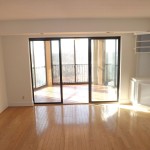
Hardwood floors in a vacant unit don’t translate well in pictures and don’t make much of an impression in real life.
Sunroom in a vacant unit
Montebello’s Living Spaces
Carpet in a vacant bedroom doesn’t call to a buyer.
Living area with a contemporary feel at River Towers
Nesbitt Realty can help you buy and sell real estate in 22033.
Fair Oaks Mall is located near the intersection of Rt. 50 and Interstate 66 not far from the City of Fairfax in Fairfax County VA.
11750 Fair Oaks Mall
Fairfax, VA 22033
(703) 279-2659
Fair Oaks Mall is conveniently located near I-66 and Rt. 50 in Fairfax County.
Fair Oaks Mall
Fair Oaks Mall
Fair Oaks Mall
Fair Oaks Mall
Fair Oaks Mall is conveniently located near I-66 and Rt. 50 in Fairfax County.
Tours at the Cherry Hill Farmhouse are given so you can marvel at this beautiful 18th-19th century home. It was built in 1845 and was a 73 acre farm. After surviving the Civil War this historic home was bought by the City of Falls Church.
For more information on tour times please contact:
Cherry Hill Farmhouse
312 Park Ave.
Falls Church, VA. 22046
703-248-5071
About the Author --- Aubrey Nesbitt is a native of Northern Virginia who attended Virginia Commonwealth University. He is a veteran of the US Army and helps his family business by providing informational articles like this one. In addition to photography and blogging, Aubrey provides administrative support for the office.
Ron Ginyard has the experience you need to successfully realize your real estate goals.
Short sales abound, but many real estate sales associates do not possess the time, training, or temperament to process this type of transaction. In particular, many sales associates would rather use the time that would be lost processing paperwork to instead pursue marketing, lead generation, and other more productive activities.
Rather than distract themselves from their core tasks, sales associates handling a short-sale listing can benefit from the involvement of a short-sale negotiator, but they must be careful to adhere to rules on agency relationships, insurance, and compensation.
Home owners may choose their own negotiator, although they often do not have the expertise to select the best professional; selling sales associates may retain a negotiator as part of their team, or this individual may be an independent contractor that they hire; or the buyer's sales associate may bring in the negotiator, although this may lead to agency issues since the buyer's sales associate then begins to represent the seller.
In any case, it is critical for listing and selling sales associates to be certain of their Errors & Omissions policies, which may or may not cover these activities. They also must take care to address how the negotiator will be paid — out of commissions that have been earned or as a separate or negotiated fee.
Second Liens Roadblock for Short Sales
Second mortgages have become one of the biggest roadblocks to closing short sales. There are about 450,000 properties in some stage of the foreclosure process with at least one junior lien, according to real estate research firm CoreLogic. These second liens are a primary challenge for Freddie Mac, said Mark Johnson, who oversees short sales…
The foreclosure mess is making it harder for banks to sell properties. ForeclosureRadar, which tracks foreclosures in five Western states, says the number of properties coming to auction in Arizona, California, and Nevada has declined by more than 30 percent. Investors are backing away from sales because they fear that the properties they buy will…
This real estate scheme usually happens when the borrower owes more on the property than the current value. The borrower then pretends they have a financial hardship and can not make any more payments. Someone, an accomplice, who is working with the borrower submits a low offer to buy the property. The lender agrees with the…
Nesbitt Realty can help you buy and sell real estate in 22207
The Langston-Brown Community Center is a great place to plan an activity. The center has a multi-purpose senior center, art room, gameroom, fitness room, teen lounge and much more.
Langston-Brown Community Center hours are:
Sunday - Closed
Monday-Thursday - 9:00a.m.-10:00p.m.
Friday - 8:00a.m.-9:00p.m.
Saturday-9:00a.m.-4:001p.m.
For more information please contact:
Langston-Brown Community Center
2121 Culpepper Street
Arlington, VA. 22207
703-228-5210
Transit-Metrobus 3ABE and 23AC
About the Author --- Aubrey Nesbitt is a native of Northern Virginia who attended Virginia Commonwealth University. He is a veteran of the US Army and helps his family business by providing informational articles like this one. In addition to photography and blogging, Aubrey provides administrative support for the office.
Before there was Beacon Hill Shopping Center, the Beacon Mall was in the exact same location. When you look at the picture below, some landmarks and shapes are very recognizable.
For example the water tower and the profile of buildings remains much as it was. Today the "big boxes" of Lowe's and Marshalls are in the same place. Famous Dave's is nowhere to be seen. It's also interesting to notice the cars that are in the lot.
Beacon Mall in the 1970's












 About the Author --- Aubrey Nesbitt is a native of Northern Virginia who attended Virginia Commonwealth University. He is a veteran of the US Army and helps his family business by providing informational articles like this one. In addition to photography and blogging, Aubrey provides administrative support for the office.






















.jpg)
.jpg)

.jpg)

.jpg)