Why you’ll love Idylwood Knoll

Idylwood Knoll in Falls Church VA is very conveniently located between two metro stations. Charming on the outside, elegant design on the inside, it's worth a visit. Detached properties in Idylwood Knoll were built in 1940 and they cost around $670,000. Schools that serve the neighborhood are: Shrevewood Elementary School, Kilmer Middle School and Marshall High School. Compare to: idylwood knoll

Why go for Cherry Hill Townhouses

Cherry Hill Townhouses in Falls Church VA are beautiful and elegantly designed inside, plus they offer community pool. They are on great location too: only a short walk to downtown FCC. Cherry Hill Townhouses were built around 1977 and they cost approximately $570,000. Neighborhood is served by Thomas Jefferson Elementary School, Mary Ellen Henderson Middle School and George Mason Hih School. Compare to: cherry hill townhouses2

12 Ways a Realtor from Condo Alexandria Can Help You

Will Nesbitt
Will Nesbitt at Watergate at Landmark
1. Your Nesbitt Realty Realtor® can help you determine your buying power -- that is, your financial reserves plus your borrowing capacity. If you give a Nesbitt Realty Realtor® some basic information about your available savings, income and current debt, he or she can refer you to lenders best qualified to help you. Most lenders -- banks and mortgage companies -- offer limited choices. 2. Your Nesbitt Realty Realtor® has many resources to assist you in your home search. Sometimes the property you are seeking is available but not actively advertised in the market, and it will take some investigation by your agent to find all available properties. 3. Your Nesbitt Realty Realtor® can assist you in the selection process by providing objective information about each property. Agents who are Nesbitt Realty Realtors® have access to a variety of informational resources. Nesbitt Realty Realtor® can provide local community information on utilities,
Julie Nesbitt
your Realtor Julie Nesbitt
zoning. schools, etc. There are two things you'll want to know. First, will the property provide the environment I want for a home or investment? Second, will the property have resale value when I am ready to sell? 4. Your Nesbitt Realty Realtor® can help you negotiate. There are myriad negotiating factors, including but not limited to price, financing, terms, date of possession and often the inclusion or exclusion of repairs and furnishings or equipment. The purchase agreement should provide a period of time for you to complete appropriate inspections and investigations of the property before you are bound to complete the purchase. Your agent can advise you as to which investigations and inspections are recommended or required. 5. Your Nesbitt Realty Realtor® provides due diligence during the evaluation of the property. Depending on the area and property, this could include inspections for termites, dry rot, asbestos, faulty structure, roof condition, septic tank and well tests, just to name a few. Your Nesbitt Realty Realtor® can assist you in finding qualified responsible professionals to do most of these investigations and provide you with written reports. You will also want to see a preliminary report on the title of the property. Title indicates ownership of property and can be mired in confusing status of past owners or rights of access. The title to most properties will have some limitations; for example, easements
Stuart Nesbitt
Stuart Nesbitt
(access rights) for utilities. Your Nesbitt Realty Realtor®, title company or attorney can help you resolve issues that might cause problems at a later date. 6. Your Nesbitt Realty Realtor® can help you in understanding different financing options and in identifying qualified lenders. 7. Your Nesbitt Realty Realtor® can guide you through the closing process and make sure everything flows together smoothly. 8. When selling your home, your Nesbitt Realty Realtor® can give you up-to-date information on what is happening in the marketplace and the price, financing, terms and condition of competing properties. These are key factors in getting your property sold at the best price, quickly and with minimum hassle.
Realtor Ron Ginyard
Ron Ginyard has the experience you need to successfully realize your real estate goals.
9. Your Nesbitt Realty Realtor® markets your property to other real estate agents and the public. Often, your Nesbitt Realty Realtor® can recommend repairs or cosmetic work that will significantly enhance the salability of your property. Your Nesbitt Realty Realtor® markets your property to other real estate agents and the public. In many markets across the country, over 50% of real estate sales are cooperative sales; that is, a real estate agent other than yours brings in the buyer. Your Nesbitt Realty Realtor® acts as the marketing coordinator, disbursing information about your property to other real estate agents through a Multiple Listing Service or other cooperative marketing networks, open houses for agents, etc. The Realtor® Code of Ethics requires Nesbitt Realty Realtor® to utilize these cooperative relationships when they benefit their clients. 10. Your Nesbitt Realty Realtor® will know when, where and how to advertise your property. There is a misconception that advertising sells real estate. The NATIONAL ASSOCIATION OF REALTORS® studies show that 82% of real estate sales are the result of agent contacts through previous clients, referrals, friends, family and personal contacts. When a property is marketed with the help of your Nesbitt Realty Realtor®, you do not have to allow strangers into your home. Your Nesbitt Realty Realtor® will generally prescreen and accompany qualified prospects through your property. 11. Your Nesbitt Realty Realtor® can help you objectively evaluate every buyer's proposal without compromising your marketing position.
Dillon Lee
Dillon Lee
This initial agreement is only the beginning of a process of appraisals, inspections and financing -- a lot of possible pitfalls. Your Nesbitt Realty Realtor® can help you write a legally binding, win-win agreement that will be more likely to make it through the process. 12. Your Nesbitt Realty Realtor® can help close the sale of your home. Between the initial sales agreement and closing (or settlement), questions may arise. For example, unexpected repairs are required to obtain financing or a cloud in the title is discovered. The required paperwork alone is overwhelming for most sellers. Your Nesbitt Realty Realtor® is the best person to objectively help you resolve these issues and move the transaction to closing (or settlement). For more information or to set up an appointment call Nesbitt Realty at (703)765-0300.

Tips for Basement Floors or concrete floors

Although moisture problems can be a concern for basement finishes, there are many types of flooring that are ideal for basement applications. The key to successful basement flooring installations is to ensure that the basement is dry and that there is a smooth, flat surface for the new finish material.

Moisture and humidity

Because the floor of your basement is below grade and the lowest surface within your house, it requires special considerations before flooring can be installed. If your basement has ever been susceptible to water infiltration and flooding, those problems must be remedied before flooring is installed. Sealing your basement from water and moisture infiltration can cost from several hundred dollars to a few thousand dollars or more. Humidity and condensation are other concerns. Because moist, humid air is heavy, it tends to sink to the lowest part of your house---your basement. There, warm, humid air can come in contact with relatively cool surfaces, such as a concrete slab floor, and condense. Keeping condensation in check during warm, humid months helps ensure that flooring remains stable and free from mold and mildew growth. Most likely, your existing heating and cooling system is equipped with a dehumidifier that maintains relative humidity (RH) levels between 30% and 60%, which the Environmental Protection Agency (EPA) and building codes recommend for a healthy indoor environment. A portable, plug-in unit for single-room use costs about $200 and includes a monitor to regulate the RH level.

Level floor surfaces

It's also critical to inspect your existing concrete basement floor and make adjustments for any noticeable slopes or flaws that might damage the new floor finish or affect its aesthetic appeal. Patch or fill minor cracks and flaws with an elastomeric sealant made especially for concrete. A 10-ounce tube runs from about $4 to $10 at home improvement centers. Use a 3-foot or longer bubble level to see if any sections of the floor slope more than a half-inch in 8 feet. Fill in low spots with a self-leveling compound, available at home improvement centers for about $30 for a 50-pound bag. For about $60 to $80 per day, rent a concrete sander to reduce high spots. Tile backerboard, made from cement or fiber-reinforced gypsum, can be used as a subfloor over your basement slab to create a smooth, level surface. Backerboard can be glued down or held in place with concrete nails. Backerboard costs about $11 for a 4x5-foot sheet. Allowing for waste, expect to pay about $500 for enough backerboard to cover the floor of a 600 sq. ft. basement. Once you have satisfied all potential moisture-related issues and created a smooth, level surface, you'll have many flooring choices for your basement retreat.

Carpeting

According to the NAHB Research Center's annual survey of builder practices, more than 28% of basement floors in newly built homes are finished with carpeting. "Most of our clients want carpet in the basement," says Sherrille Sabo, operations manager for COS Construction in Edwardsville, Ohio, a construction company that remodels about a half-dozen basements per year into finished living spaces. "It's warmer and adds a level of soundproofing." Low-pile carpets such as Berber or other looped varieties show less wear than cut-looped or shag-like carpeting and are less expensive; all or partial nylon blends also are more durable and less costly than all-natural options. Wall-to-wall carpeting is among the least expensive and easiest to install options for basement flooring. A mid-range nylon Berber carpet costs about $1 to $3 per sq. ft. With glued-down perimeter tack strips and a standard pad, plus professional labor, the cost to buy and install a new carpet is about $1,200 to $2,400 for a 600 sq. ft. basement. If you've addressed any moisture issues in the basement but are still concerned about dampness or the chances that liquid spills or pet accidents may occur, consider a pad that is made to block moisture from either seeping up into the carpet or seeping down through the pad to the concrete floor. Moisture-resistant pads are about 70% more expensive than standard pads. They may reduce cleanup chores, but they will not solve chronic moisture problems. Also, consider carpet tiles. Nylon pile 20-inch squares come in a variety of colors and styles and cost $2 to $4 per sq. ft. Most are made with integral pads and self-adhesive backings for easy, do-it-yourself installation.

Vinyl

Resilient vinyl flooring is durable, moisture-proof, and maintenance-free. Sheet vinyl comes in 12-foot-wide rolls that virtually eliminate seams. Self-sticking vinyl tiles are ideal for do-it-yourself installations. There are an enormous variety of colors and styles from which to choose. In general, thicker vinyl translates to higher quality and cost. Thicker vinyl can feature a textured surface, and some types have the appearance of real stone and wood. Vinyl installs easily over a concrete slab, but it's critical to make sure the surface is smooth, as imperfections are sure to show through and possibly damage the flooring. A thicker (and more expensive) grade of vinyl flooring may help hide slight bumps in the concrete. Sheet vinyl and vinyl tile can cost $1 to $5 per sq. ft. Figure another $1 to $2 per sq. ft. for professional installation, depending on the complexity of the basement configuration.

Ceramic tile

Ceramic tile installs readily over a concrete slab and the many styles and colors available make it a good designer's choice. Properly installed and maintained ceramic tiles should last as long as your house. In some below-grade applications, condensation may occur on the surface of ceramic tiles, making them slippery. If ceramic tile is your primary choice for your basement but condensation is a concern, consider glazed ceramic floor tiles with an anti-slip finish. Look for tiles that meet slip-resistance standards specified by the Americans with Disabilities Act. Costs for ceramic tile varies widely, depending on size, shape, and pattern. A standard domestic 12x12-inch ceramic tile might cost 80 cents per tile at home improvement center, while a highly decorative tile from Mexico or a porcelain stone tile from Italy can cost $10 per tile or far more. Professional installation adds $5 to $10 per sq. ft.

Engineered wood

Until the advent of engineered hardwood flooring, few builders or remodelers would recommend or risk installing a hardwood floor over a below-grade concrete surface. Because solid wood changes dimensions with fluctuations in temperature and humidity, the chances of warping and cracking were too great. In addition, there were few reliable options for installing wood flooring without traditional nails or screws. Engineered wood floors, however, provide a more stable substrate for the planks while delivering the look and feel of a solid wood floor. They feature a thin veneer layer of solid wood that is laminated to plywood backing. Plywood is more dimensionally stable than solid wood, allowing the planks to withstand temperature and moisture fluctuations without warping. Engineered hardwood planks are installed one of two ways. Some varieties are designed to be glued to the basement floor using an industrial adhesive. Others are "floated" over a layer of thin foam sheeting; the planks are held in place by a system of interlocking ends and edges. Engineered wood planks are priced from $2 to $20 per sq. ft. Their factory-finished veneer is virtually maintenance-free. Installation is about $4 to $5 per sq. ft., regardless of whether the planks are glued down or floated.

Laminate flooring

Laminate flooring has similar construction to engineered wood flooring, but the top veneer is a layer of tough film covered with plastic resins. Laminate flooring mimics the look of wood, stone, and ceramic tile. The core layers of laminate flooring are dimensionally stable; some varieties are treated to resist moisture and make good choices for basement applications. Laminate flooring planks and tiles "snap" together and float over the concrete floor on a foam pad. The flooring sells for $3 to $5 per sq. ft. at home improvement centers; installation adds $4 to $5 per sq. ft.

Concrete

One of the simplest and least expensive options for finishing a basement concrete slab is to paint or stain the slab. A one-gallon can of either coating option is about $30 and covers about 80-100 sq. ft. If you elect to use paint, consider an acrylic formula with slip-resistant surface finish. Assuming the basement concrete slab is unsealed and still porous, a colored stain will likely penetrate fairly well and hold its color for several years before reapplication. A concrete paint probably will show wear in a high-traffic areas, and will require a reapplication every 3-5 years. An epoxy coating system, which combines a solvent-based adhesive coating with decorative (and slip-resistant) color chips, is far tougher than a concrete paint or stain. It costs about 3 times as much as a gallon of paint or stain but covers four times the area and leaves a tough, industrial-looking finish. Another option is to cover the concrete slab with an additional, thin layer of concrete that has been pigmented with color. A thin-coat can also be stamped with a pattern to resemble brick, flagstone, and even wood planks. Because the color is throughout the coating, it will never wear away. Expect to pay $2 to $3 per sq. ft. for a thin-coat installation. Rich Binsacca has been writing about housing and home improvement since 1987. He is the author of 12 books on various home-related topics, is currently a contributing editor for Builder and EcoHome magazines, and has written articles for such magazines as Remodeling, Home, and Architectural Record, among several others. His first house in Boise featured a finished basement with two bedrooms, a laundry area, and the mechanical room; he had to dismantle a Queen-sized box spring to get it down the stairs.

7 Smart Strategies for a Kitchen Remodel

If you're contemplating a kitchen remodel, you're also weighing a considerable investment. But a significant portion of the upfront costs may be recovered by the value the project brings to your home. Kitchen remodels in the $50,000 range recouped 76% of the initial project cost at the home's resale, according to recent data from Remodeling Magazine's Cost vs. Value Report. To make sure you maximize your return, consider these seven smart kitchen remodeling strategies.

1. Establish your priorities

Van Dorn Village
Van Dorn Village is located in Franconia VA
Simple enough? Not so fast. The National Kitchen and Bath Association (NKBA) recommends spending at least six months planning before beginning the work. That way, you can thoroughly evaluate your priorities and won't be tempted to change your mind during construction. Contractors often have clauses in their contracts that specify additional costs for amendments to original plans. Planning points to consider include:
  • Avoid traffic jams. A walkway through the kitchen should be at least 36 inches wide, according to the NKBA. Work aisles for one cook should be a minimum of 42 inches wide and at least 48 inches wide for households with multiple cooks.
  • Consider children. Avoid sharp, square corners on countertops, and make sure microwave ovens are installed at the heights recommended by the NKBA---3 inches below the shoulder of the principle user but not more than 54 inches from the floor.
  • Access to the outside. If you want to easily reach entertaining areas, such as a deck or a patio, factor a new exterior door into your plans.
Because planning a kitchen is complex, consider hiring a professional designer. A pro can help make style decisions and foresee potential problems, so you can avoid costly mistakes. In addition, a pro makes sure contractors and installers are sequenced properly so that workflow is cost-effective. Expect fees around $50 to $150 per hour, or 5% to 15% of the total cost of the project.

2. Keep the same footprint

No matter the size and scope of your planned kitchen, you can save major expense by not rearranging walls and by locating any new plumbing fixtures near existing plumbing pipes. Not only will you save on demolition and reconstruction, you'll greatly reduce the amount of dust and debris your project generates.

3. Match appliances to your skill level

Falls Church realtors
Byron condominium is located in Falls Church VA
A six-burner commercial-grade range and luxury-brand refrigerator might make eye-catching centerpieces, but be sure they fit your lifestyle, says Molly Erin McCabe, owner of A Kitchen That Works design firm in Bainbridge Island, Wash. "It's probably the part of a kitchen project where people tend to overspend the most." The high price is only worth the investment if you're an exceptional cook. Otherwise, save thousands with trusted brands that receive high marks at consumer review websites, like www.ePinions.com and www.amazon.com, and resources such as Consumer Reports.

4. Create a well-designed lighting scheme

Some guidelines:
  • Install task lighting, such as recessed or track lights, over sinks and food prep areas; assign at least two fixtures per task to eliminate shadows. Under-cabinet lights illuminate clean-up and are great for reading cookbooks. Pendant lights over counters bring the light source close to work surfaces.
  • Ambient lighting includes flush-mounted ceiling fixtures, wall sconces, and track lights. Consider dimmer switches with ambient lighting to control intensity and mood.

5. Focus on durability

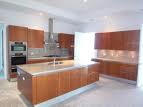
kitchen at Turnberry Tower
Quality designs for each unit
"People are putting more emphasis on functionality and durability in the kitchen," says McCabe. That may mean resisting bargain prices and focusing on products that combine low-maintenance with long warranty periods. "Solid-surface countertops [Corian, Silestone] are a perfect example," adds McCabe. "They may cost a little more, but they're going to look as good in 10 years as they did the day they were installed." If you're not planning to stay in your house that long, products with substantial warranties can become a selling point. "Individual upgrades don't necessarily give you a 100% return," says Frank Gregoire, a real estate appraiser in St. Petersburg, Fla. "But they can give you an edge when it comes time to market your home for sale" if other for-sale homes have similar features.

6. Add storage, not space

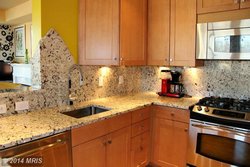
kitchen
Kitchen
To add storage without bumping out walls:
  • Specify upper cabinets that reach the ceiling. They may cost a bit more, but you'll gain valuable storage space. In addition, you won't have to worry about dusting the tops.
  • Hang it up. Install small shelving units on unused wall areas, and add narrow spice racks and shelves on the insides of cabinet doors. Use a ceiling-mounted pot rack to keep bulkier pots and pans from cluttering cabinets. Add hooks to the backs of closet doors for aprons, brooms, and mops.

7. Communicate effectively---and often

Having a good rapport with your project manager or construction team is essential for staying on budget. "Poor communication is a leading cause of kitchen projects going sour," says McCabe. To keep the sweetness in your project:
  • Drop by the project during work hours as often as possible. Your presence assures subcontractors and other workers of your commitment to getting good results.
  • Establish a communication routine. Hang a message board on-site where you and the project manager can leave each other daily communiques. Give your email address and cell phone number to subs and team leaders.
  • Set house rules. Be clear about smoking, boom box noise levels, which bathroom is available, and where workers should park their vehicles.
Consumers spend more money on kitchen remodeling than any other home improvement project, according to the Home Improvement Research Institute, and with good reason. They're the hub of home life, and a source of pride. With a little strategizing, you can ensure your new kitchen gives you years of satisfaction. John Riha has written six books on home improvement and hundreds of articles on home-related topics. He's been a residential builder, the editorial director of the Black & Decker Home Improvement Library, and the executive editor of Better Homes and Gardens magazine. His standard 1968 suburban house has been an ongoing source of maintenance experience.

The advantages of buying at One Park Crest

One Park Crest in Mclean offer amazing amenities, some of which are 24h concierge, library, gym, guest suites, gardens, pool and much more. Key location next to Harris Teeter and close to New Metro too. Condos at One Park Crest were built in 2008 and they cost between $600,000 and $780,000. The neighborhood is served by Spring Hill Elementary School, Longfellow Middle School and Mclean High School. Compare to: one park crest2

In search of property near Virginia Hospital center?

Detached properties at Highview Park are close to Virginia Hospital Center, as well as major highwaysshopping and schools. Highview Park detached houses in Arlington VA were built between 1904 and 1996 and their prices vary from $480,000 to $540,000. Nearby schools are: Arlington Traditional, Glebe Elementary School and Langston High School Continuation Program. Compare to: highview park2

Want an affordable condo on commuter friendly location?

Condos at The Chatham in Arlington VA are affordable (around $220,000) and located close to Rt 50 and less than a mile to Ballston Metro. Condos at The Chatham were built in 1965. Schools near the community are: Barrett Elementary School, Jefferson Middle School and Arlington Mill High School Compare To the chatham

The Lofts condo association

22304 real estate agents
Nesbitt Realty can help you buy and sell real estate in 22304
If you would like to ask about condo documents, insurance or maintenance, please contact the office below:

The Lofts Condominiums

301 S. Reynolds St. Alexandria, Va, 22304 We do not manage this association, but if you would like to buy a condo or if you need help with rental property management, call Nesbitt Realty.
Alexandria real estate agents
Nesbitt Realty can help you buy and sell real estate in Alexandria.

The importance of marketing …

Marketing is how you communicate to customers and potential customers what you're all about. How important is marketing? Terminator If you've seen the Terminator then it should be apparent just how important marketing is. A good marketer never lies. A marketer selects the facts that are relevant and uses them to put his product in the best light. https://www.youtube.com/watch?v=Gf7h6o3I8yw shining One of the reasons a good realtor is an important asset when you're seeking a new home is because a knowledgeable realtor might have an understanding or information that might not be readily apparent to you. As in the Mary Poppins example, home buyers sometimes don't have a full picture of an area or a neighborhood and they are scared by aspects of a neighborhood that they should embrace rather than fear. The truth is a skilled marketer can arrange facts to give a powerful impression that isn't really reflective of reality. But a good marketer only uses his powers for good and not for evil. Mary Poppins That is to say that a marketer should always consider the public's best interests when marketing a property. The trouble is not all marketers are good and many marketers are unskilled. That's why a realtor is so important when you're searching for a new home. As a trusted expert, the realtor knows where reality lies and can help you sort out marketing enticements from marketing facts. To market your home, condo or property in or near Alexandria VA , please contact me, Will Nesbitt . If you're buying a home, you need an expert who can show you what Northern Virginia is all about and who knows the neighborhoods of Northern Virginia . For more information or to set up an appointment call Nesbitt Realty at (703)765-0300.