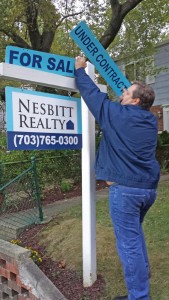
Port Potomac is a great neighborhood with easy access to Quantico, Rt. 1 and the Mark Train
Renters of single-family homes are twenty-five percent more likely than apartment tenants to stay in their current homes fives years or longer, according to a new survey by Opinion Research Corporation. The finding suggests that “demand for single-family homes, the fastest growing rental category, will be more stable than multi-family demand,” according to the survey findings.
Renters also say they plan to become home owners one day, particularly among single-family tenants. Sixty percent of single-family renters and 44 percent of apartment renters say they plan to become home owners within the next five years.
“The near term interest in becoming home owners among single-family tenants reflects the new roles single-family rentals are fulfilling as a stepping stone to home ownership for first-time buyers and as a sanctuary for large numbers of families displaced by foreclosures but who plan to buy again when they can afford to do so,” according to the survey results.
The survey also found that single-family renters make more money and are twice as likely to have children as apartment renters, according to the survey. The survey found that the median income of a single-family renter is $75,000 to $100,000 compared to $50,000-$75,000 for apartment dwellers. Single-family renters also tend to be older, with the majority aged 35 to 44, compared to 14 to 34 among apartment dwellers.
Source: Opinion Research Corporation
If you're thinking of buying a new construction, you probably already know that every new development will have its own sales staff. These people are often friendly, helpful and very knowledgeable about the new condominium or new house. However, the on-site sales people work to sell this property only. That means that the on-site staff of a new condominium knows the property as-well-as or better than anyone around and they are there to assist you. But that also means that the on-site sales staff works for the builder.
When in the market for a new condo or a new home, it's a good idea to employ a buyer's agent such to protect your interests. A condominium agent knows the entire area, not just one property. A buyer's agent knows the pitfalls and benefits of buying new, and best of all it won't cost you one dime more than if you use the onsite staff. You have a right to representation: exercise that right today!
[read more about Buyer's Representation]
[new homes for sale]
Define your needs. Write down all the reasons for selling your home. Ask yourself, "Why do I want to sell and what do I expect to accomplish with the sale?" For example, a job opportunity in another city may necessitate a move or a growing family may prompt your need for a larger home. For your goals, write down if you'd like to sell your house within a certain time frame or make a particular profit margin. Work with your Nesbitt Realty real estate agent to map out the best path to achieve your objectives and set a realistic time frame for the sale. Continue reading
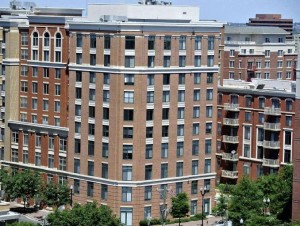
On the roof at Waterview in Arlington VA
Fairly recently the Commonwealth of Virginia implemented new laws requiring an agency relationship prior to showing homes. (Effective July 1st, 2012, the Commonwealth of Virginia required an agency agreement prior to showing homes to clients.) This can be frustrating to some folks who "just want to see houses". Once you've signed an agency agreement we can run out to look at houses, but we've found this to be generally ineffective.
Instead, we prefer to take a little time to answer your questions, give you a copy of all the documents you’ll be seeing, and put you in a position to make better decisions. The choice is yours, and I think you will find the second way extremely valuable.
Established in 1974 with a mission to reduce homelessness, increase community support and promote self sufficiency, the Good Shepherd Housing and Family Services is operated by a multi-denominational board of directors and staff managing over 70 housing units. Good Shepherd Housing and Family Services is located in the Mount Zephyr Business Center at 8305 Richmond…
Low interest rates helped keep housing affordability high in the final quarter of 2012, according to the National Association of Home Builders/Wells Fargo Housing Opportunity Index released on Thursday.
Nearly 75 percent of homes sold between October and the end of December were affordable to families earning the median income of $65,000.
"The most recent housing affordability data should be encouraging to many prospective home buyers, because it shows that home ownership remains within reach of median-income consumers even as most local markets appear to be on a recovery path," says NAHB Chairman Rick Judson.
The median price of all new and existing homes sold in the fourth quarter of 2012 was $188,000.
"It is noteworthy that affordability remains historically high thanks to favorable mortgage rates even as national home price indexes show some rise in values," says NAHB Chief Economist David Crowe.
The nation’s most affordable major housing market? For the second-consecutive quarter, it's Ogden-Clearfield, Utah, according to the index. Nearly 94 percent of all home sales there were affordable to families earning the median household income of $71,500. Other affordable major housing markets were Dayton, Ohio; Indianapolis-Carmel, Ind.; Lakeland-Winter Haven, Fla.; and Syracuse, N.Y.
Meanwhile, the most expensive major housing market remains San Francisco-San Mateo-Redwood City, Calif. Twenty-eight percent of homes sold in San Francisco during the fourth quarter were affordable to families earning the area’s median income of $103,000, according to the index.
Source: National Association of Home Builders
[affordability]
Julie sold another!
Existing-home sales edged up in January, while a seller’s market is developing and home prices continue to rise steadily above year-ago levels, according to the National Association of REALTORS®. Sales rose in every region but the West, which is the region most constrained by limited inventory.
Total existing-home sales, which are completed transactions that include single-family homes, townhomes, condominiums and co-ops, increased 0.4 percent to a seasonally adjusted annual rate of 4.92 million in January from a downwardly revised 4.90 million in December, and are 9.1 percent above the 4.51 million-unit pace in January 2012.
Lawrence Yun, NAR chief economist, said tight inventory is a major factor in the market. “Buyer traffic is continuing to pick up, while seller traffic is holding steady,” he said. “In fact, buyer traffic is 40 percent above a year ago, so there is plenty of demand but insufficient inventory to improve sales more strongly. We’ve transitioned into a seller’s market in much of the country.”
Total housing inventory at the end of January fell 4.9 percent to 1.74 million existing homes available for sale, which represents a 4.2-month supply at the current sales pace, down from 4.5 months in December, and is the lowest housing supply since April 2005 when it was also 4.2 months.
Listed inventory is 25.3 percent below a year ago when there was a 6.2-month supply. Raw unsold inventory is at the lowest level since December 1999 when there were 1.71 million homes on the market.
“We expect a seasonal rise of inventory this spring, but it may be insufficient to avoid more frequent incidences of multiple bidding and faster-than-normal price growth,” Yun explained.
The national median existing-home price for all housing types was $173,600 in January, up 12.3 percent from January 2012, which is the 11thconsecutive month of year-over-year price increases; that last occurred from July 2005 to May 2006. The January gain is the strongest since November 2005 when it was 12.9 percent above a year earlier.
Distressed homes — foreclosures and short sales — accounted for 23 percent of January sales, down from 24 percent in December and 35 percent in January 2012. Fourteen percent of January sales were foreclosures and 9 percent were short sales. Foreclosures sold for an average discount of 20 percent below market value in January, while short sales were discounted 12 percent.
According to Freddie Mac, the national average commitment rate for a 30-year, conventional, fixed-rate mortgage rose to 3.41 percent in January from a record low 3.35 percent in December; it was 3.92 percent in January 2012.
Sales Trends
NAR President Gary Thomas said homes are selling faster. “The typical home is selling nearly four weeks faster than it did a year ago,” he said. “In this environment, REALTORS® can help buyers strike a balance between moving quickly and protecting their interests, such as making offers contingent upon a satisfactory home inspection and obtaining a loan; of course, a loan pre-qualification may help too.”
The median time on market for all homes was 71 days in January, down from 73 days in December and is 28.3 percent below 99 days in January 2012. Short sales were on the market for a median of 94 days, while foreclosures typically sold in 47 days and non-distressed homes took 75 days; 31 percent of all homes sold in January were on the market for less than a month.
First-time buyers accounted for 30 percent of purchases in January, unchanged from December; they were 33 percent in January 2012.
All-cash sales were at 28 percent of transactions in January, down from 29 percent in December and 31 percent in January 2012. Investors, who account for most cash sales, purchased 19 percent of homes in January, down from 21 percent in December and 23 percent in January 2012.
Single-family home sales increased 0.2 percent to a seasonally adjusted annual rate of 4.34 million in January from 4.33 million in December, and are 8.5 percent above the 4.00 million-unit level in January 2012. The median existing single-family home price was $174,100 in January, up 12.6 percent from a year ago.
Existing condominium and co-op sales rose 1.8 percent to an annualized pace of 580,000 in January from 570,000 in December, and are 13.7 percent higher than the 510,000-unit level a year ago. The median existing condo price was $169,600 inJanuary, up 9.4 percent from January 2012.
Performance by Region
Regionally, existing-home sales in the Northeast increased 4.8 percent to an annual rate of 650,000 in January and are 12.1 percent above January 2012. The median price in the Northeast was $230,500, up 2.4 percent from a year ago.
Existing-home sales in the Midwest rose 3.6 percent in January to a pace of 1.16 million and are 17.2 percent higher than a year ago. The median price in the Midwest was $131,800, which is 8.6 percent above January 2012.
In the South, existing-home sales increased 1.0 percent to an annual level of 1.96 million in January and are 14.0 percent above January 2012. The median price in the South was $152,100, up 13.4 percent from a year ago.
Existing-home sales in the West fell 5.7 percent to a pace of 1.15 million in January and are 5.7 percent below a year ago. The median price in the West was $239,800, which is 26.6 percent above January 2012.
Source: NAR
Established in 1974 with a mission to reduce homelessness, increase community support and promote self sufficiency, the Good Shepherd Housing and Family Services is operated by a multi-denominational board of directors and staff managing over 70 housing units. Good Shepherd Housing and Family Services is located in the Mount Zephyr Business Center at 8305 Richmond…
Ron Ginyard has the experience you need to successfully realize your real estate goals.
Short sales are increasing this year, and these transactions can take up to three times longer than a traditional transaction. A lot can go wrong in that timeframe. These are the most common delays, according to a recent article by George “Gee” Dunsten, a real estate broker and president of Gee Dunsten Seminars, at RISMedia.
Title issues: Be sure to do a title exam at the beginning in order to identify all individuals on the deed and mortgages, and determine all lien holders.
Lack of communication with the lender: Lost documents and misunderstandings commonly cause delays. Make it a habit to follow up with the mortgage servicer twice a week to avoid unnecessary delays.
Delaying the start: Some short sales have not even begun until a contract to purchase has been initiated. But this could add up to two extra months to the process. The lender won’t even look at a buyer contract until a seller candidate for a short sale is approved and the market value has been determined, Dunsten writes.
Incomplete packages: Make sure you carefully submit all the documents completely and accurately. Submitting incomplete packages is another common culprit of delays. All home owner financial information will need to be kept current and forwarded to the servicer every 30 days, Dunsten writes.
Hotel Palomar occupies the same building as the Waterview.
According to Tom Meyer of Condo 1, "Arlington is a boom town. Just look at the cranes in Courthouse, Clarendon, Ballston. New office buildings, new rental projects, new restaurants and retail. BUT .... New condos? Nope!"
Real estate data seems indicate that condo and home prices in Arlington are about to rise. Tom says, "We are about to enter a phase of economic recovery in which thousands of new Arlington residents will be paying lots of $$$ for rental apartments. Of course, they move in and immediately realize that they would be better off converting that money into home equity in their own condo. But there has been virtually no new supply built in the past five years. This bodes very well for future condo prices in the R-B Corridor."
"Transit-oriented development" sounds like a solution to a variety of urban problems. If people could live and work within walking distance of a train or bus stop, people could save money on gas, people without cars could commute more easily, neighborhoods could reduce congestion and pollution, and economic growth could follow.
Generally, it makes sense for cities to invest in the hubs that connect people and the places they need to go. However, not every rail stop is equally primed for a new apartment complex or retail development, and determining why is a significant challenge. For example, there is little sense in pushing transit-oriented development in a community where every household already has multiple cars, and likewise there is little sense in developing stops in areas divided by highways and mega blocks where people are unlikely to walk to a train.
In early February, the Center for Transit-Oriented Development released a study of more than 100 transit stops in the Pittsburgh area, assessing the suitability for transit-oriented development. A quarter to half of the station areas in the system could benefit from a small infrastructure investment, such as a pedestrian bridge or tunnel, signage showing where the station is, or paved pathways or sidewalks. The assessment uses pentagonal graphs to illustrate ways that density, land use, care dependency and distance all shape communities differently.
"It’s a very simplistic way of measuring what you need," says CTOD director Abigail Thorne-Lyman. "But if you don’t have the resources to even know where to begin, it’s very powerful to say ‘I’m just going to look at these five things, and what do I need to improve to push myself into a more transit-oriented urban form?'"
Source: "The Geometry of Transit-Friendly Neighborhoods," The Atlantic Cities (02/11/13)
Brick sidewalks are common in the 22314 zipcode
Moves across county and state lines are falling, with the 2007-2009 recession blamed for changing Americans’ moving patterns, according to an analysis of census data through 2010. The Great Recession caused more Americans to move because they could no longer afford to remain where they were. That's a big change in what traditionally motivates Americans to move -- a bigger home or higher paying job, USA Today reports about the analysis.
Nine percent of Americans stayed local with their moves during 2007-2009 period -- the highest in a decade.
"Typically, over the last couple of decades, when Americans moved, they moved to improve their lives," says Michael Stoll, author of the research and chairman of UCLA's public policy department. "This is the shock: For the first time, Americans are moving for downward economic mobility. Either they lost their house or can't afford where they're renting currently or needed to save money.”
More than 23 percent moved for more affordable housing during the recession. Prior to the recession, that percentage stood at 20.8 percent.
Also, prior to the recession, 41.3 percent of Americans moved in order to own a home or settle into a better neighborhood. However, during the recession, that percentage dropped to 30.4 percent.
Source: “Americans on the Move Start Moving Down, Not Up; Setback in Upward Mobility Hits Blacks, Sun Belt Spots Hardest,” USA Today (Feb. 20, 2013)
Home Prices In Arlington Continue To Hike
The housing market in Arlington County is getting more and more expensive as potential buyers continue to have fewer homes and condos to choose from.
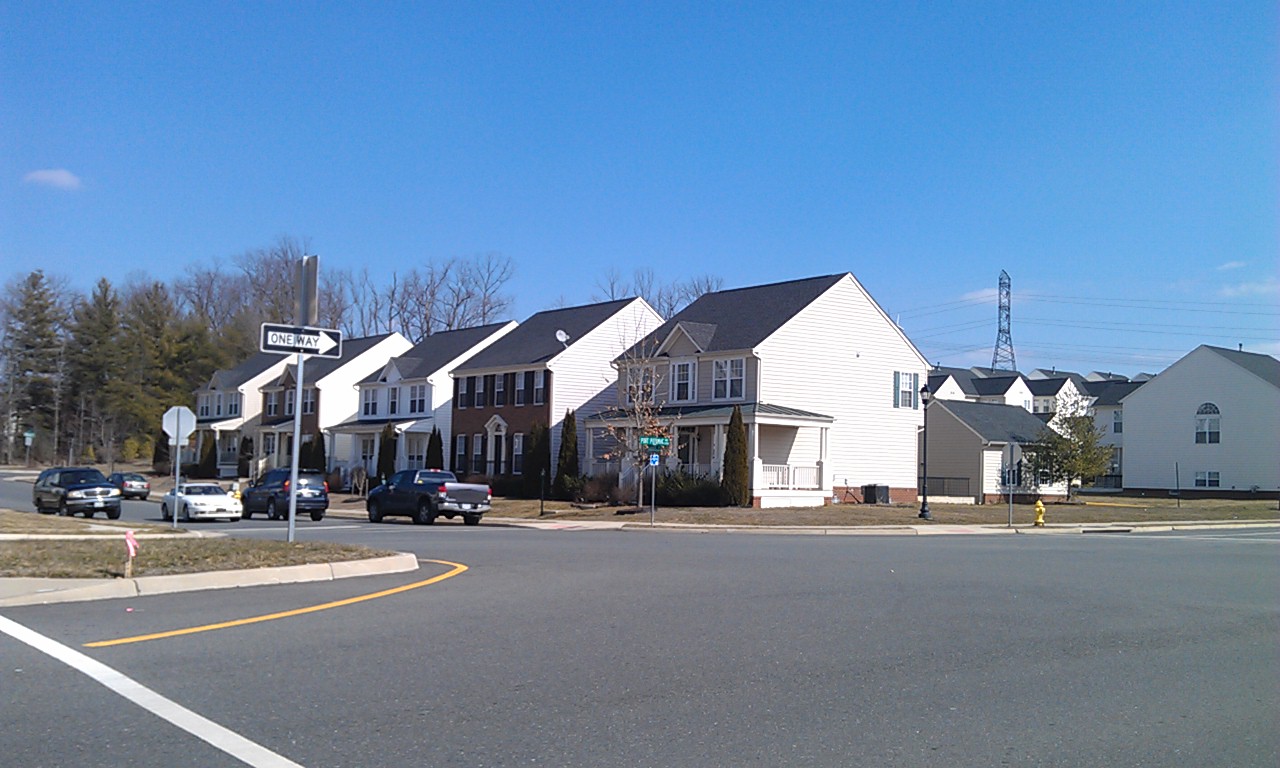
Inlet Cove is alongside Route 1 This neighborhood of townhouses is near grocers and eateries Inlet Cove is close to Fort Belvoir, Alexandria, and Potomac Mills shops, in the city of Woodbridge Interior to these properties are multilevel Inlet Cove is serene
Pending home sales increased again in March, affirming that a surge of home sales is unfolding for the spring home buying season, according to the National Association of REALTORS®. The Pending Home Sales Index, a forward-looking indicator based on contracts signed in March, rose 5.3 percent to 102.9 from 97.7 in February, and is 21.1…
Some of the best housing deals are on high-end homes, many over $1 million. Some of them need TLC or they aren’t in the most-coveted locations. But there are plenty of desirable properties and lots of sellers who are getting impatient. Buyers with cash have the best opportunities. Buyers who need a mortgage should move…
The National Association of Realtors recently did a study about the characteristics of home buyers. Some of the findings might surprise you. Thirteen percent of buyers purchased a home with one or more parents and grandparents together with adult children. There were several reasons given for purchasing a multi-generational home. Cost savings; Children over the…

.jpg) If you're thinking of buying a new construction, you probably already know that every new development will have its own sales staff. These people are often friendly, helpful and very knowledgeable about the new condominium or new house. However, the on-site sales people work to sell this property only. That means that the on-site staff of a new condominium knows the property as-well-as or better than anyone around and they are there to assist you. But that also means that the on-site sales staff works for the builder.
When in the market for a new condo or a new home, it's a good idea to employ a buyer's agent such to protect your interests. A condominium agent knows the entire area, not just one property. A buyer's agent knows the pitfalls and benefits of buying new, and best of all it won't cost you one dime more than if you use the onsite staff. You have a right to representation: exercise that right today!
[read more about Buyer's Representation]
[new homes for sale]
If you're thinking of buying a new construction, you probably already know that every new development will have its own sales staff. These people are often friendly, helpful and very knowledgeable about the new condominium or new house. However, the on-site sales people work to sell this property only. That means that the on-site staff of a new condominium knows the property as-well-as or better than anyone around and they are there to assist you. But that also means that the on-site sales staff works for the builder.
When in the market for a new condo or a new home, it's a good idea to employ a buyer's agent such to protect your interests. A condominium agent knows the entire area, not just one property. A buyer's agent knows the pitfalls and benefits of buying new, and best of all it won't cost you one dime more than if you use the onsite staff. You have a right to representation: exercise that right today!
[read more about Buyer's Representation]
[new homes for sale]








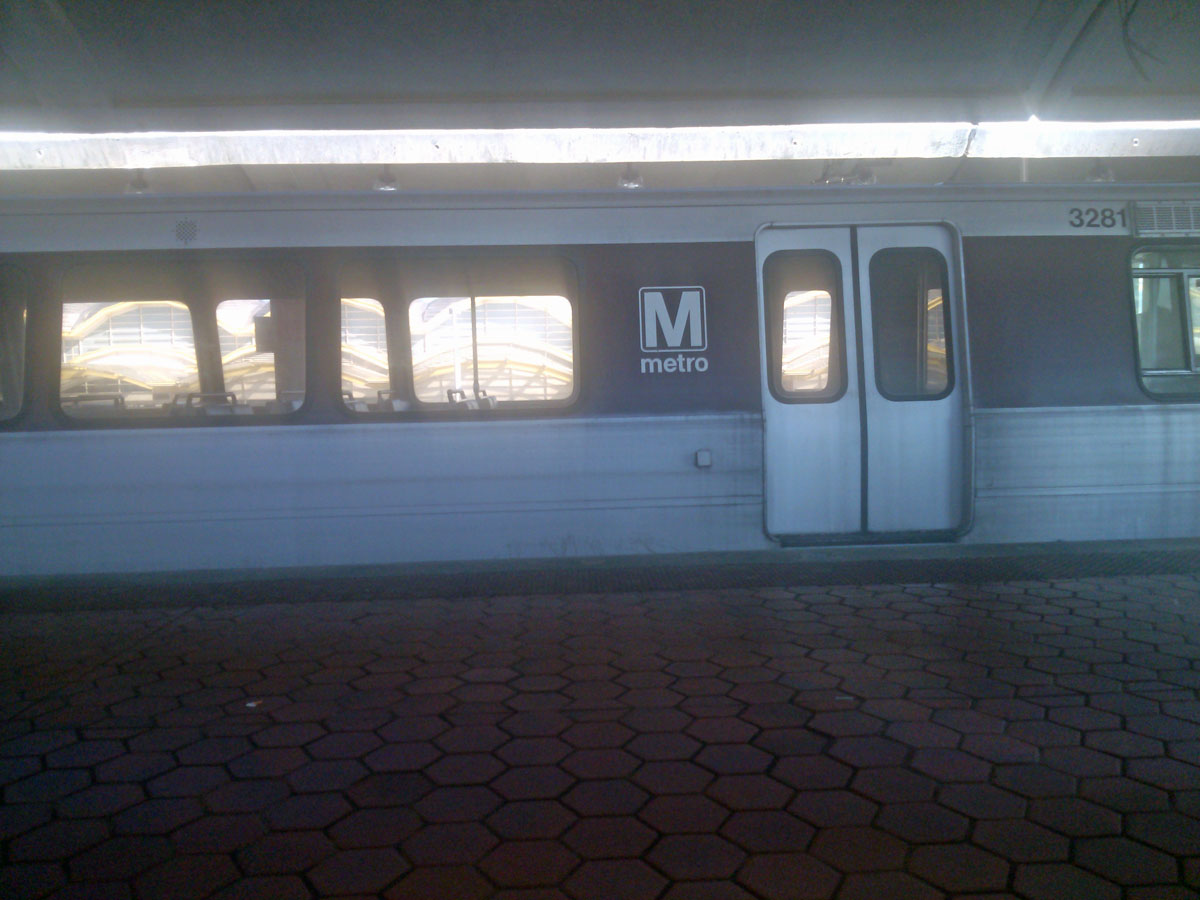 "Transit-oriented development" sounds like a solution to a variety of urban problems. If people could live and work within walking distance of a train or bus stop, people could save money on gas, people without cars could commute more easily, neighborhoods could reduce congestion and pollution, and economic growth could follow.
Generally, it makes sense for cities to invest in the hubs that connect people and the places they need to go. However, not every rail stop is equally primed for a new apartment complex or retail development, and determining why is a significant challenge. For example, there is little sense in pushing transit-oriented development in a community where every household already has multiple cars, and likewise there is little sense in developing stops in areas divided by highways and mega blocks where people are unlikely to walk to a train.
In early February, the Center for Transit-Oriented Development released a study of more than 100 transit stops in the Pittsburgh area, assessing the suitability for transit-oriented development. A quarter to half of the station areas in the system could benefit from a small infrastructure investment, such as a pedestrian bridge or tunnel, signage showing where the station is, or paved pathways or sidewalks. The assessment uses pentagonal graphs to illustrate ways that density, land use, care dependency and distance all shape communities differently.
"It’s a very simplistic way of measuring what you need," says CTOD director Abigail Thorne-Lyman. "But if you don’t have the resources to even know where to begin, it’s very powerful to say ‘I’m just going to look at these five things, and what do I need to improve to push myself into a more transit-oriented urban form?'"
Source: "The Geometry of Transit-Friendly Neighborhoods," The Atlantic Cities (02/11/13)
"Transit-oriented development" sounds like a solution to a variety of urban problems. If people could live and work within walking distance of a train or bus stop, people could save money on gas, people without cars could commute more easily, neighborhoods could reduce congestion and pollution, and economic growth could follow.
Generally, it makes sense for cities to invest in the hubs that connect people and the places they need to go. However, not every rail stop is equally primed for a new apartment complex or retail development, and determining why is a significant challenge. For example, there is little sense in pushing transit-oriented development in a community where every household already has multiple cars, and likewise there is little sense in developing stops in areas divided by highways and mega blocks where people are unlikely to walk to a train.
In early February, the Center for Transit-Oriented Development released a study of more than 100 transit stops in the Pittsburgh area, assessing the suitability for transit-oriented development. A quarter to half of the station areas in the system could benefit from a small infrastructure investment, such as a pedestrian bridge or tunnel, signage showing where the station is, or paved pathways or sidewalks. The assessment uses pentagonal graphs to illustrate ways that density, land use, care dependency and distance all shape communities differently.
"It’s a very simplistic way of measuring what you need," says CTOD director Abigail Thorne-Lyman. "But if you don’t have the resources to even know where to begin, it’s very powerful to say ‘I’m just going to look at these five things, and what do I need to improve to push myself into a more transit-oriented urban form?'"
Source: "The Geometry of Transit-Friendly Neighborhoods," The Atlantic Cities (02/11/13)