Nesbitt Realty never makes any money from your loan. This frees us to make the most objective recommendation possible.
FHA 203K Loan - Eligible Property
To be eligible for the FHA 203k mortgage loan, the property must be a one- to four-family dwelling that has been completed for at least one year. The number of units on the site must be acceptable according to local zoning requirements. All newly constructed units must be attached to the existing dwelling. Cooperative units are not eligible.
Homes that have been demolished, or will be razed as part of the rehabilitation work, are eligible provided some of the existing foundation system remains in place.
In addition to typical home improvement loan projects, the FHA 203-k mortgage loan program can be used to convert a one-family dwelling to a two-, three-, or four-family dwelling. An existing multi-unit dwelling could be decreased to a one- to four-family unit.
An existing house (or modular unit) on another site can be moved onto the mortgaged property; however, release of loan proceeds for the existing structure on the non-mortgaged property is not allowed until the new foundation has been properly inspected and the dwelling has been properly placed and secured to the new foundation.
health and safety of the occupants of the residential property; and (3) the rehabilitation funds will only be used for the residential functions of the dwelling and areas used to access the residential part of the property.
What is the minimum amount of repairs required on a FHA 203k home improvement loan?
There is a minimum $5,000 requirement of eligible home improvement loan projects on the existing structure of the property. Minor or cosmetic repairs may be included after meeting the first $5,000 worth of repairs.
What are some of the repairs that qualify for the first $5,000?
Structural alterations and reconstruction: (Repair or replacement of structural damage, chimney repair, additions to the structure, installation of additional bath(s), skylights, finished attics and/or basements, repair of termite damage and the treatment against termites);
Elimination of health and safety hazards;
Changes for aesthetic appeal:
(New siding, adding a dormer, covered porch, attached garage);
Air Conditioning or replacement:
(plumbing, heating, air conditioning and electrical systems);
Installation of well, septic system or connection to public utilities;
Roofing, Gutter Downspouts, Flooring, Tiling and carpeting;
Major landscape and site improvement;
Improvements to improve accessibility and functions for the disabled.
What are the qualifications to be able to obtain a FHA 203-k loan?
The qualifications requirements are the same as a typical FHA mortgage loan. The only additional item that the borrower needs is either enough cash reserved to pay for materials and labor until they are reimbursed through a draw, or a credit card with an adequate available balance. If there is to be a contractor involved, the contractor may choose to cover these costs.
The interest rate on a typical FHA 203k mortgage loan is a little higher than a standard FHA or conventional 30/15-year fixed-rate loan. The cash requirements are the same as an FHA loan, 3 percent to 5 percent, which is less than a typical conventional loan. There are a couple of additional fees which pertain to the construction aspects of the FHA 203k loan.
Can I pick my own contractor to do the work?
Dillon Lee
You may decide on your own contractor, and they should be brought into the process in the beginning stage of the loan process. Check out the credentials of the contractor thoroughly, making sure he is knowledgeable in all aspects of rehabilitation work.
The home improvements or repairs need not be made before moving into the property, depending on how extensive the repairs are and whether the house is habitable while the repairs are being made. The home improvement loan provides the ability to include up to 6 months of mortgage payments in the improvement escrow, should you not be able to occupy the property and have to pay rent during rehabilitation.
Can the FHA 203k loan be used to improve a condominium unit?
Yes, however, condominium rehabilitation is subject to the following conditions:
Owner/occupant and qualified non-profit borrowers only;
Rehabilitation is limited only to the interior of the unit. Mortgage proceeds are not to be used for the rehabilitation of exteriors or other areas which are the responsibility of the condominium association, except for the installation of firewalls in the attic for the unit;
Only the lesser of five units per condominium association, or 25 percent of the total number of units, can be undergoing rehabilitation at any one time;
The maximum mortgage amount cannot exceed 100 percent of after-improved value. After rehabilitation is complete, the individual buildings within the condominium must not contain more than four units.
By law, FHA 203k loans can only be used to rehabilitate units in one-to-four unit structures. However, this does not mean that the condominium project, as a whole, can only have four units or that all individual structures must be detached. Example: A project might consist of six buildings each containing four units, for a total of 24 units in the project and, thus, be eligible for an FHA 203k loan. Likewise, a project could contain a row of more than four attached townhouses and be eligible for a FHA 203k loan because HUD considers each townhouse as one structure, provided each unit is separated by a 1 1/2 hour firewall (from foundation up to the roof). Similar to a project with a condominium unit with a mortgage insured under Section 234(c) of the National Housing Act, the condominium project must be approved by HUD prior to the closing of any individual mortgages on the condominium units.
Julie Nesbitt
Julie Nesbitt knows the back trails and by-ways of Northern Virginia real estate.
Established in 1974 with a mission to reduce homelessness, increase community support and promote self sufficiency, the Good Shepherd Housing and Family Services is operated by a multi-denominational board of directors and staff managing over 70 housing units. Good Shepherd Housing and Family Services is located in the Mount Zephyr Business Center at 8305 Richmond…
In the Commonwealth of Virginia (and in other states) the buyer must be allowed an opportunity to review the condo docs. From the time the condo docs are delivered, the buyer has 3 days to cancel the contract without cause, other than to say the condo docs contained information which caused the cancellation. The buyer doesn't have to explain why or what the problem was.
Recently a client of mine was buying a condo and when he received the documents, the condo docs said that the unit did not pass architectural review. The problem was that the client had made changes to his unit without first seeking permission of the association and then never had the changes inspected.
The change that the seller made? The seller had installed an overhead microwave and changed a cabinet without seeking any approval from the association. This was indeed a minor change. Furthermore, the seller claimed that he didn't actually make the change. It was his claim that a previous owner made that change and that the seller had NEVER read his condo docs.
My client, the buyer, was a very above-board and by-the-book type of character. It was his position that if this guy "hid this fact" who knows how much else he withheld? Even if he believed the seller's story (he did not) then it would show that this is a very inattentive owner. My client canceled the contract based on condo docs.
At another location and with another buyer and seller, the property went under contract and the seller did not deliver the condo docs, because the seller didn't have condo docs. The seller didn't have the condo docs because the seller didn't order his condo docs. The selling agent explains that the law allows for 14 days for the delivery of condo docs. I replied, "That's why you order docs when you list." Because if you allow 14 days for preparation and 2 days for delivery and then 3 days for review, then the buyer can cancel the sale 22 days after the contract is signed.
Here are the lessons for sellers:
Order you condo docs when you list your condo for sale.
Review your condo docs to make sure that your condo doesn't have any defects according to the association.
Have your agent deliver your condo docs PROMPTLY once your contract is ratified.
Julie Nesbitt
Julie Nesbitt knows the back trails and by-ways of Northern Virginia real estate.
Established in 1974 with a mission to reduce homelessness, increase community support and promote self sufficiency, the Good Shepherd Housing and Family Services is operated by a multi-denominational board of directors and staff managing over 70 housing units. Good Shepherd Housing and Family Services is located in the Mount Zephyr Business Center at 8305 Richmond…
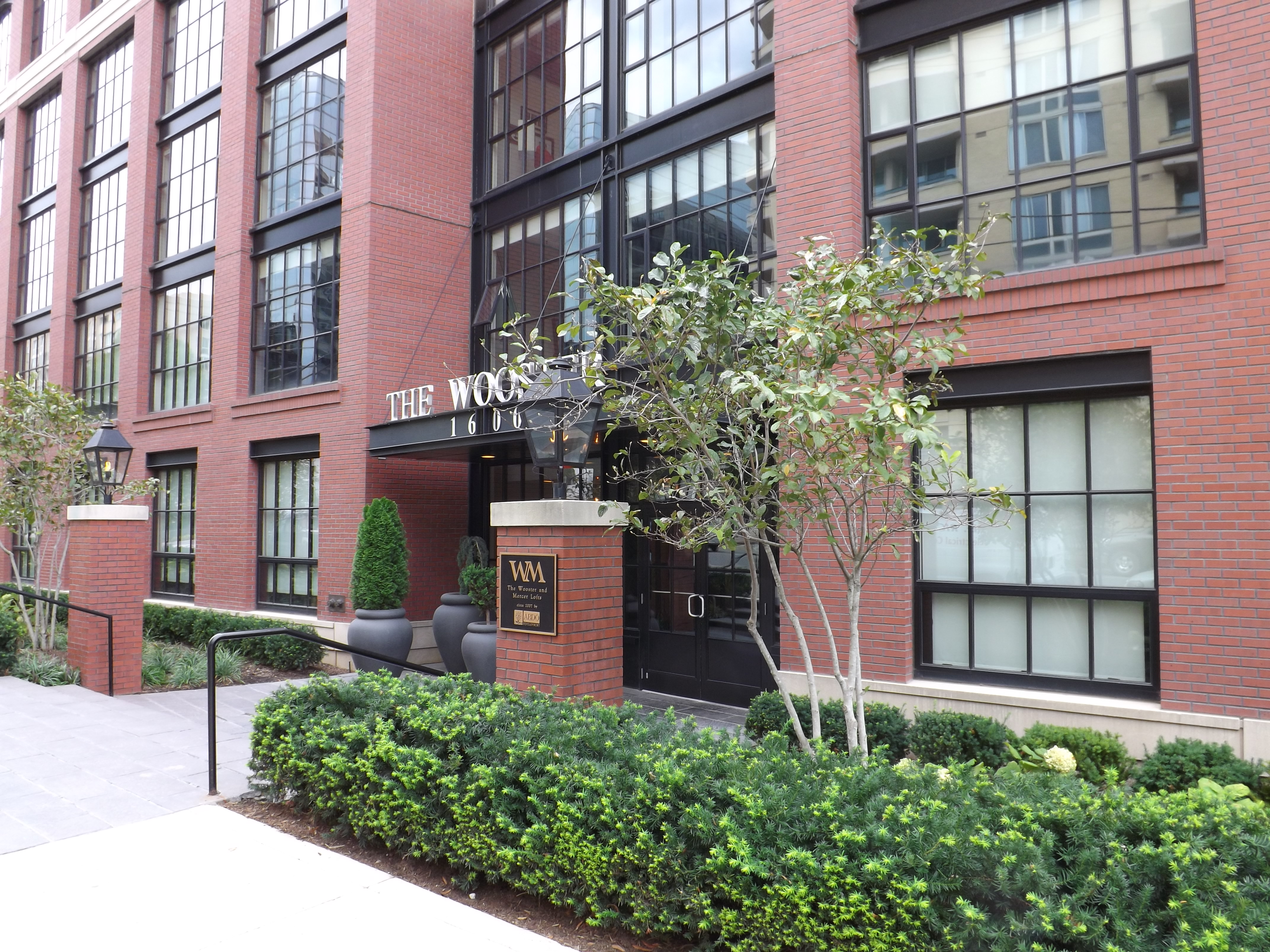
The Wooster Mercer Lofts are located in Rosslyn in Arlington County Virginia
As with any home purchase, location, size and price are important. With a condominium you'll also want to understand the ownership scheme. This type of information is found in the "condo docs" or condominium documents. Most states, and the Commonwealth of Virginia, require condo doc disclosure before any purchase contract is finalized.
The condo docs will contain detailed information on the ownership and property rights of the condo and its owners. The rules of the homeowners association are generally explained in the condo docs in plain English and not in legal jargon. It's important to read the condo documents to understand the annual maintenance and upkeep fees, as well as to obtain a full understanding of exactly how much control the association has over the regulation of the property.
Condominiums can be found all over the country, with more being developed each year. Condominiums are quite common in Northern Virginia and the National Capitol area. Some condos are new construction and a few are apartment buildings that were rental apartments before making the switch. In newly constructed condos, it's common to find a sales office onsite at the condominium.
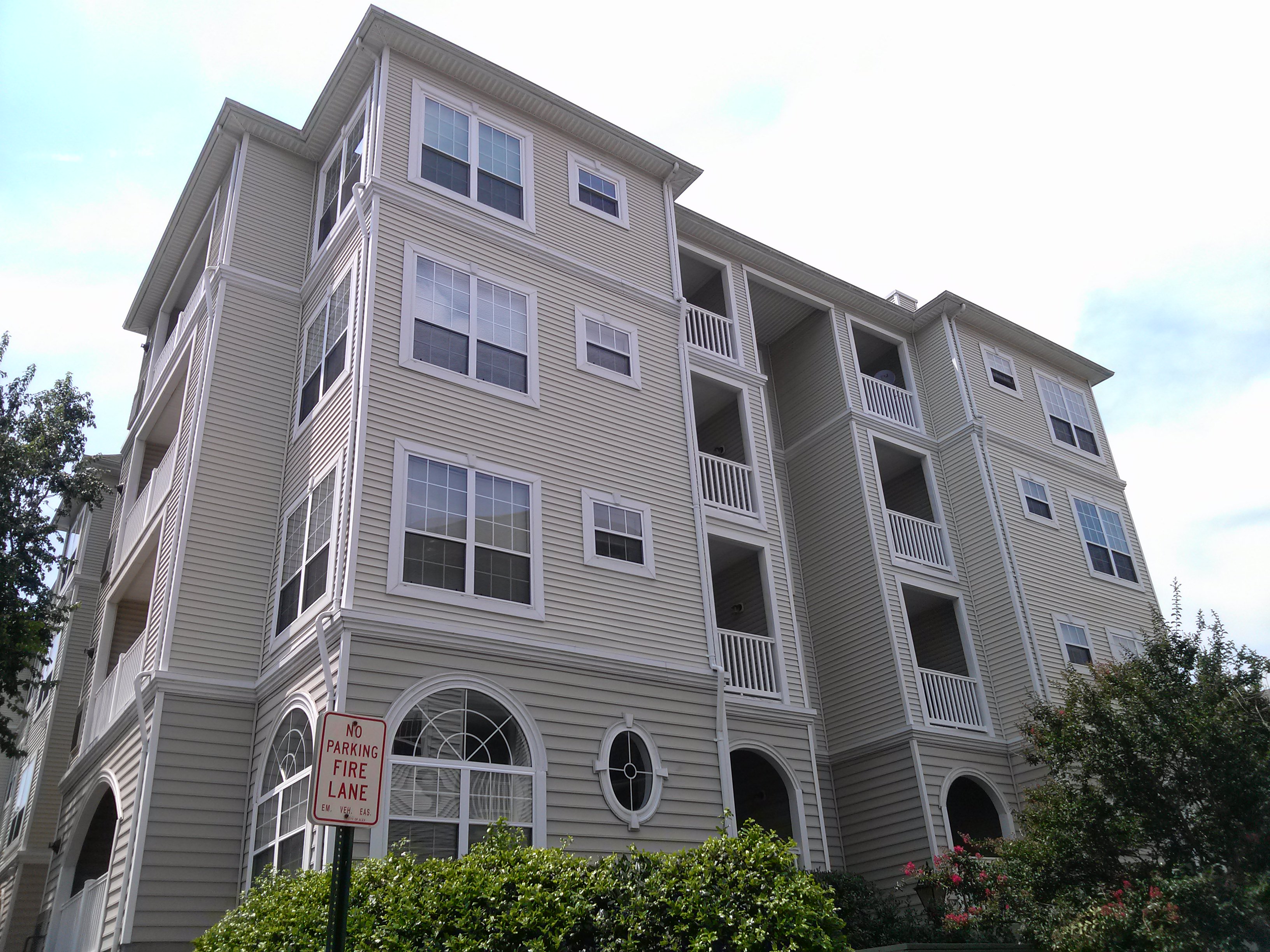
The outside of the building during summer
Decide what you can afford. Generally, you can afford a home equal in value to between two and three times your gross income.You can also check out our affordability calculator.
Develop your home wish list. Then, prioritize the features on your list.
Select where you want to live. Compile a list of three or four neighborhoods you’d like to live in, taking into account items such as schools, recreational facilities, area expansion plans, and safety.
Do you prefer a commuter-friendly location or perhaps even a "walkable" home?
Perhaps you want to live near a specific military installation such as the Pentagon or Fort Belvoir?
Are you looking for a particular ?
Start saving. Do you have enough money saved to qualify for a mortgage and cover your down payment? Ideally, you should have 20 percent of the purchase price saved as a down payment. Also, don’t forget to factor in closing costs. Closing costs — including taxes, attorney’s fee, and transfer fees — average between 2 and 7 percent of the home price. Check out our closing cost estimator.
Get your credit in order. Obtain a copy of your credit report to make sure it is accurate and to correct any errors immediately. A credit report provides a history of your credit, bad debts, and any late payments.
Determine your mortgage qualifications. How large of mortgage do you qualify for? Also, explore different loan options — such as 30-year or 15-year fixed mortgages or ARMs — and decide what’s best for you.
Get preapproved. Organize all the documentation a lender will need to preapprove you for a loan. You might need W-2 forms, copies of at least one pay stub, account numbers, and copies of two to four months of bank or credit union statements.
Weigh other sources of help with a down payment. Do you qualify for any special mortgage or down payment assistance programs? Check with your state and local government on down payment assistance programs for first-time buyers. Or, if you have an IRA account, you can use the money you’ve saved to buy your fist home without paying a penalty for early withdrawal.
Calculate the costs of homeownership. This should include property taxes, insurance, maintenance and utilities, and association fees, if applicable.
Will Nesbitt is the principal broker of Nesbitt Realty
Contact Nesbitt Realty. Nesbitt Realty is a local family-run business that cares about your needs and has helped many people like you successfully navigate the home buying process.
For more information or to set up an appointment call Nesbitt Realty at (703)765-0300.
Lyon Village is located in Arlington VA
Of course as a homeowner you’ll be responsible for maintenance and repairs on the house. As a condo owner, many of these responsibilities are handled by the condo association. Either way, if you commit to buying a home you've identified yourself as the type of person who has taken charge of his or her life. A homeowner can paint the wall any color. A home owner doesn’t need the landlord’s permission to get a cat.
As a homeowner you’re more likely to be a part of the neighborhood watch and the garden club. According to some studies, home owners are more likely to vote, and more likely to participate in local government activities. As a condominium owner you have become one of America’s landed gentry. According to the Rossi and Weber National Survey of Families, home owners possess significantly higher levels of self-confidence than renters.
Tax advantages are one of the biggest financial benefits of home ownership. The typical home owner that pays a $1,000 house payment will realize tax savings of about $120 each month. (As a general rule, most homeowners can deduct most or all of their interest payments on their home loan, property taxes and loan points, but check with your tax adviser about your situation.) What this means is that next year your rent won’t go up, but your liability will go down. Generally if you can afford the cash flow, it’s cheaper to buy than to rent. Because you’re a homeowner, you know what this means.
This increase confidence and wealth will have an impact on your family life as well. According to Boehm & Schlottmann, University of Tennessee, “Children of home owners are 59% more likely to become homeowners. Their children are also 25% more likely to graduate from high school and 116% more likely to graduate from college.”
Palazzo is located near King St. and I-395.
As an owner, you’ll stop paying rent and you’ll start building ownership equity. A survey of consumer finance by the Federal Reserve Board found that the median net worth of most modest-income owners is almost $60,000 compared to less than $10,000 for renters in the same income group.
In many cases, your home will provide you with more privacy than rental living. For some, this means a quieter living environment, for others it’s the ability to have a grow garden, have a backyard barbecue or a build a garage. You’ll have the freedom to make whatever changes or improvements you like. Now that you control your living environment, you can make adjustments as your family changes or just as your personal taste dictates.
The ABR acronym is short for Accredited Buyer Representative. The Accredited Buyer’s Representative (ABR®) designation is designed for real estate buyer agents who focus on working directly with buyer-clients. When you work with an Accredited Buyer's Representative you know that your rights are represented by a professional agent who is trained and experienced in handling the needs of buyers. There are four requirements which a real estate agent must meet to attain and use the ABR® designation:
Previous and documented experience representing the needs of buyers and experience actually closing real estate sales.
Successful completion the Accredited Buyer’s Representative (ABR®) Designation Course.
Successful completion of one of the ABR® elective courses.
Membership in good standing in the Real Estate Buyer’s Agent Council (REBAC) and the National Association of REALTORS®.
Julie is on the rooftop deck at the Waterview in Rosslyn VA. Julie is an Accredited Buyer's Representative.
Deciding on whether a single family home is much more suitable than a condominium or townhouse home requires much thought and consideration. But in the end it still comes down to what you want.
Here are a few facts to consider:
Single Family Homes
Close knit community with possible green spaces
No monthly homeowners/condo fees
Less strict community rules and regulations
Restrictions cannot be imposed by an association without your consent.
Less restriction and fees with parking
Condo and Townhomes
All expenses towards maintaining your home is covered by the condo fees such as common area repairs, roof repairs, other maintenance and repairs.
Controlled access for some
Amenities available for the community such as clubrooms, pools, gyms and more
Shuttle services are offered as well as public transit service
After the process of picking out your dream property, the offer is to be written along with proof of Earnest Money and lender approval, your real estate agent will present the offer to the selling said.
This is where we, real estate agents use our expertise in presenting the offer, because it just doesn’t end there. It’s not simply handing the documentation to the listing agent and then wait patiently for their response. It is essential that the offer be over and for the fact that bargains do not last forever, we call up the listing agent to inform that the offer had already been sent over.
It is during this conversation that details be shared with the listing agent such as background information about our clients as to what would reflect as to what you would be looking for. We can describe as to how qualified you are to buy the property and how many properties we have looked at and that there are certain aspects or features about that home you sincerely appreciate.
As real estate agents, we review and explain all details of the offer such as inspections, date of closing, contingent or non contingent, pricing and the like. We also discuss a timeline to outline the milsestyones from the offer to settlement.
Contact Nesbitt Realtyhttp://nesbittrealty.com
1451 Belle Haven Rd. #222
Alexandria VA 22307
LICENSED IN VIRGINIA
703 765 0300
888 783 6391 (fax)
Purchasing a home is a process that cannot go smoothly unless you take it step by step. This is where having a real estate agent is important.
It is essential that you are prepared and already have a loan secured. Securing it early will assist you in making decisions with your home purchase.
With a secured loan, you can either broaden or lessen your prospective homes as you would need the price to be within your budget while your offer will be good one as you are ready to buy. Getting the finances in order will make the process quicker without hindrances.
Let a real estate agent assist you with your home purchase decisions.
Julie Nesbitt
Julie Nesbitt knows the back trails and by-ways of Northern Virginia real estate.
Established in 1974 with a mission to reduce homelessness, increase community support and promote self sufficiency, the Good Shepherd Housing and Family Services is operated by a multi-denominational board of directors and staff managing over 70 housing units. Good Shepherd Housing and Family Services is located in the Mount Zephyr Business Center at 8305 Richmond…
Finding a quality home to suit your taste will require a licensed real estate agent who offers expertise and connections if it is to purchase or rent a home. What would a realtor’s purpose be then?
Security. Even if you know what exactly what you are looking for in a home, you’ll need a realtor’s expertise to assure the quality of your potential home
Economy. You wouldn’t want to pay more for your new home and sell your old home for less than what it should be. A realtor has the access to the market information to make sure you get your right price.
Diversity. You may be able to view homes through public listings, but many of the best and perhaps your desired home will require you to have a realtor to view them.
Most of all, the whole process of hunting for your new home will be time consuming and challenging and that includes the right title transfer, financing and negotiating. If you want the peace of mind of finding your dream home, a realtor’s expertise serves its purpose.
Let our licensed real estate agent assist you, contact us at:
Established in 1974 with a mission to reduce homelessness, increase community support and promote self sufficiency, the Good Shepherd Housing and Family Services is operated by a multi-denominational board of directors and staff managing over 70 housing units. Good Shepherd Housing and Family Services is located in the Mount Zephyr Business Center at 8305 Richmond…









.jpg)