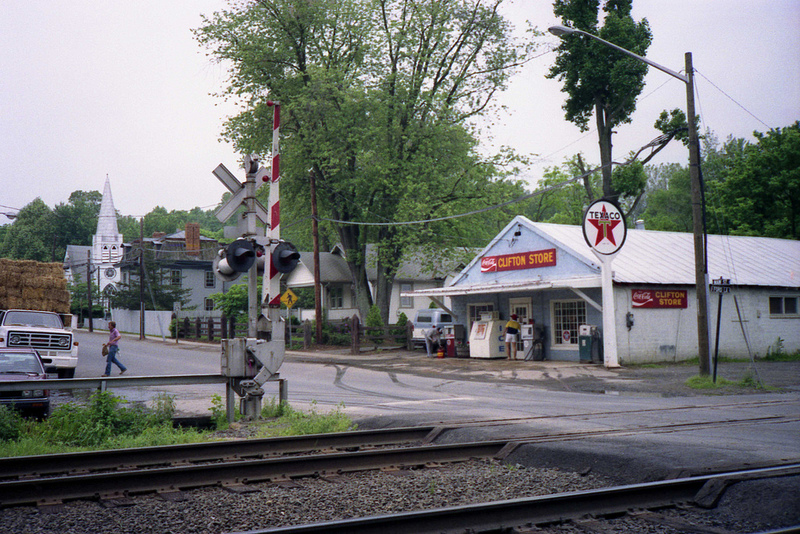
Back in the 1980's Clifton was an intersection with a gas station and a church. There wasn't much to see or do here, and there weren't any houses. Compare that to today.
Clifton's gas station in the 1980's
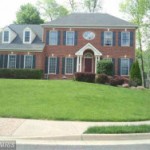
Single-family house at Cavalier Woods is in Clifton 20124
Manor with wide frontyard
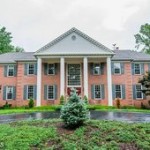
Manor with many rooms
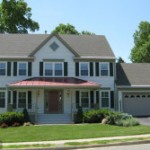
House with garage
Single-family house at Prospect Hills is in Clifton 20124
The City of Alexandria is a City has more than 140,000 residents within about 16 square miles. Alexandria VA is known for its rich history as well as its exciting present day environment. Alexandria, which is almost 50 years older than Washington, D.C., is one of America's most historic communities. It has many authentic eighteenth-century buildings and neighborhoods which are carefully preserved by strict architectural and demolition
control. Alexandria has become a mecca for divisional, regional, national, and multinational headquarters for operations ranging from research and development to information technology companies, associations, and professional services.
A large part of the land in present-day Alexandria was a 6,000-acre land grant from Sir William Berkeley, Governor of Virginia. That land grant was awarded to Robert Howson, a tobacco merchant and sea captain, on October 21, 1669. This land overlapped a 700-acre patent that had previously been issued to Dame Margaret Brent in 1654. The Howson tract extended along the Potomac River from Hunting Creek on the south to the Little Falls on the north. The grant was made by authority of King Charles II in recognition of Captain Howson's bringing 120 people to live in Virginia. Less than a month later, Howson sold the land.
By 1732, Hugh West had established tobacco warehouses one mile north of Hunting Creek. The adjacent land had been cleared and farmed as early as the 1720s by John Summers and Gabriel Adams. To facilitate shipping, Scottish and English merchants who owned real estate at Cameron, a small hamlet two miles west near present day Cameron Station, petitioned the Virginia General Assembly in the fall of 1748 to establish a town at West's Hunting Creek Warehouse. In the spring of 1749, this site was selected and the new town was named Alexandria in honor of its original owner--John Alexander. John West Jr., Fairfax County assistant surveyor, laid out 60 acres, and lots were auctioned off July 13 and 14, 1749.
Alexandria was officially incorporated in 1779, and it became a port of entry for foreign vessels and a major export center for flour and hemp. Its bustling harbor teemed with brigs, schooners, and ships of the line, which traversed the high seas and engaged in international and coast wide trade. The streets were lined with substantial brick houses and the "sound of the hammer and trowel were at work everywhere." In 1796, a visitor, the Duc de La Rochfoucauld Liancourt, commented that: "Alexandria is beyond all comparison the handsomest town in Virginia--indeed is among the finest in the United States." (Quotes by Fairfax Harrison: See Page 417 of Landmarks of Old Prince William County, 1964, Chesapeake Book Company, Berryville, Virginia)
In 1789, Alexandria and a portion of Fairfax County were ceded by the State of Virginia to become a part of the newly created 10-mile-square District of Columbia.
Formally accepted by Congress in 1801, Alexandria remained under the aegis of the new federal government. In 1847 Alexandria was retroceded to Virginia. In 1852, Alexandria acquired city status and gained a new charter. George Washington drilled militia troops at Market Square in 1754, and the town served as a supply and hospital center during the Revolutionary conflict. In 1812 Alexandria was captured and held for ransom by the British who plundered Alexandria's warehouses.
During the Civil War, the City was immediately occupied by the Union military forces on May 24, 1861, and became a logistical supply center for the federal army. It was during this era that several forts were constructed in Alexandria as a part of the defenses of the City of Washington. Fort Ward Park contains one of these restored forts. From 1863 to 1865, the City was the capital of the Restored Government of Virginia, which represented the seven Virginia counties remaining under federal control during the Civil War.
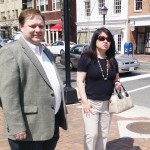
Julie and Will Nesbitt in Old Town
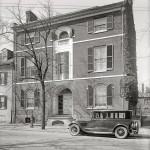
607 Cameron Street in Old Town Alexandria 1926
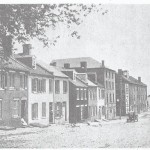
Captains Row 100 block of Prince St. in 1924 ,Alexandria Va.
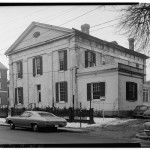
Lyceum, 201 South Washington Street, Alexandria VA in 1968
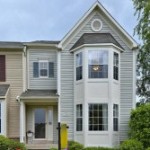
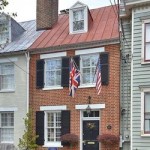
Townhouse at Old Town is in Alexandria 22314
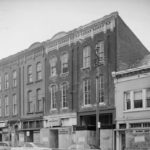
408-414 King Street 1960
Since 1988, Alexandria has experienced unprecedented commercial development. Today the Old Town historic district is known for its array of museums, architecture, special events, fine restaurants and hotels, and other attractions that draw more than 1.5 million international and domestic visitors to it each year. More than two million square feet of new office complexes have been constructed. With this development, the City has become a mecca for divisional, regional, national, and multinational headquarters for operations ranging from research and development to high technology, associations, and professional services. Alexandria the site of the U.S. Patent and Trademark Office in the Carlyle District. And the future site of the National Science Foundation.
A cross section of headquarters operations that have expanded or relocated to Alexandria includes the
American Diabetes Association,
Capitol Publications,
the American Oncology Association,
United Way,
American Peanut Council,
Boat USA,
National Center for Missing and Exploited Children,
Motley Fool, H2Gen Innovations,
and
the American Society for Training and Development.
With the development of the Carlyle Project, the Eisenhower Valley area now includes the Federal Courthouse, hotels, a 12-screen movie theater, apartments, and condominiums. In addition, the U.S. Patent and Trademark Office, with 7,100 employees, relocated to five new buildings in the area. This is the largest federal lease of real estate in U.S. history.
Aubrey Nesbitt gets a picture with the Lennon & McCartney
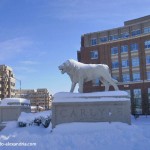
The lion in the snow at Carlyle District
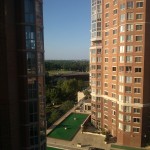
The view of a Carlyle Towers condo facing towards DC during the day
Condos At Carlyle Square is in Alexandria
Carlyle Towers is in Alexandria 22314
Skyline of Carlyle District
About the Author --- Aubrey Nesbitt is a native of Northern Virginia who attended Virginia Commonwealth University. He is a veteran of the US Army and helps his family business by providing informational articles like this one. In addition to photography and blogging, Aubrey provides administrative support for the office.
About the Author --- Aubrey Nesbitt is a native of Northern Virginia who attended Virginia Commonwealth University. He is a veteran of the US Army and helps his family business by providing informational articles like this one. In addition to photography and blogging, Aubrey provides administrative support for the office.
Across the Potomac River from Washington D.C. lies Alexandria, Virginia. For some, the fact that it is just a river’s cross away from the national capital adds to the appeal that establishing a home in Alexandria offers.
At the Torpedo Factory and Potomac in Old Town
However, a closer look at the areas available in Alexandria will show that this city has more to offer, with a certain ambiance made to fit the tastes of those seeking a suitable residence – whether they’re gearing more towards the classic or the modern.
Alexandria originated from Old Town and this particular location, situated right beside the Potomac River, has the classic ambiance of a riverside town and has quite a charming array of waterfront restaurants, shopping areas, condominiums, houses, and of course, townhomes.
Some of the best deluxe condos and townhouses can be found in Old Town, including Rivergate Townhouse and the Torpedo Factory Condos to name a few.
While Old Town sports the charm and benefits of being the original Alexandria, Kingstowne competes through its modern fixtures, brought about by thorough planning and careful implementation. This modern housing suburban area offers a variety of homes, townhouses and a couple of garden condo compounds, not to mention plenty of community parks and fields.
In conclusion, if you’re looking for classic old school simplicity, Old Town has that charm. Either way, Alexandria offers something to fit everyone’s needs and tastes.
For more information or to set up an appointment call Stuart at (703)765-0300.
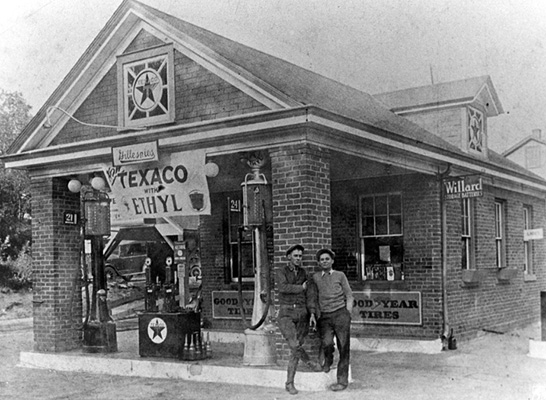
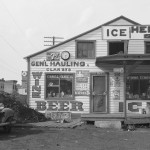
Gillespies Texaco Gas Station was located close to the intersection of Lee Highway and Main Street. Check out how this station looked back in the 1920's.
Gillespies Texaco Gas Station was located close to the intersection of Lee Highway and Main Street. 1920's
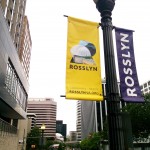
Rosslyn is an urban village in Arlington County Virgina. It's at the epicenter of the world, located just across the Potomac within eye-shot of just about every recognizable structure in Washington DC. Today Rosslyn is the location of the Rosslyn Metro, several high-rise communities, the Newseum and the Iwo Jima Memorial. But at one time it was a sleep village outside of Washington.
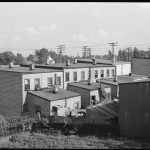
If you don't remember, that's okay. Most of us don't. This picture was taken in 1937.
Backyards. Rosslyn, Virginia 1937Rosslyn offers great views and beautiful landscapes in Arlington County, Virginia. The area sits in view of the Potomac River, Arlington Cemetery, and Washington, D.C. Rosslyn is also home to the United States Marine Corps War Memorial and Freedom Park.
The name Rosslyn came from a local farm behind the shore. The farm was known as Ross Lynn, owned by William and Carolyn Ross. In the 1860’s Rosslyn’s largest development was a large brewery. It was changed to the Cherry Crush Bottling Co. after prohibition. When electric trolleys were introduced the real estate business picked up.
Some of the more prominent businesses of Rosslyn include the “ABC” T.V. Affiliate, and the Art Institute of Washington. In the 1960’s Rosslyn had a development growth with the opening of the Theodore Roosevelt Bridge. This brought construction of high rise office buildings, hotels, and living spaces.
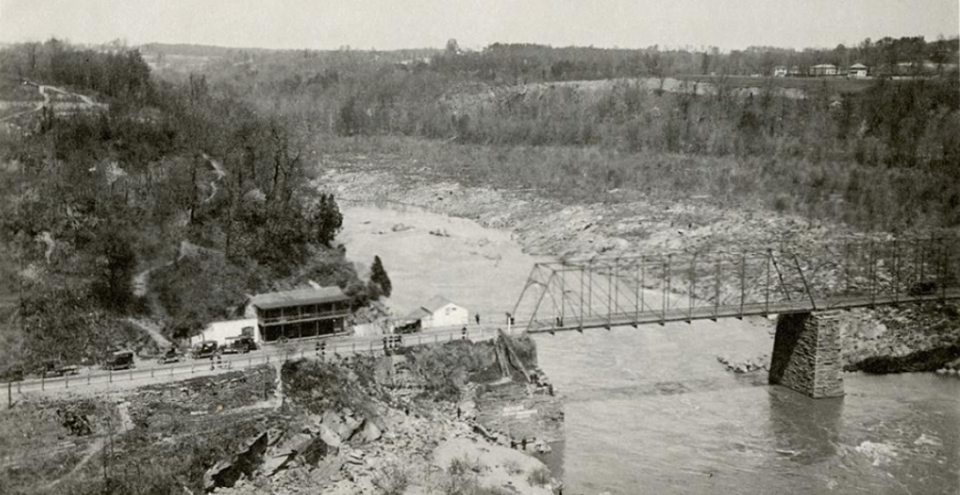
The Chain Bridge is a viaduct which crosses the Potomac River at Little Falls in Washington, D.C. It carries close to 22,000 cars a day. It connects Washington with affluent sections of Arlington and Fairfax counties in Virginia. In 1919, Chainbridge had a roadhouse on the Virginia side.
Chain Bridge, with the roadhouse on the Virginia side - 1919




 About the Author --- Aubrey Nesbitt is a native of Northern Virginia who attended Virginia Commonwealth University. He is a veteran of the US Army and helps his family business by providing informational articles like this one. In addition to photography and blogging, Aubrey provides administrative support for the office.