If you're thinking of buying a new construction, you probably already know that every new development will have its own sales staff. These people are often friendly, helpful and very knowledgeable about the new condominium or new house. However, the on-site sales people work to sell this property only. That means that the on-site staff of a new condominium knows the property as-well-as or better than anyone around and they are there to assist you. But that also means that the on-site sales staff works for the builder.
When in the market for a new condo or a new home, it's a good idea to employ a buyer's agent such to protect your interests. A condominium agent knows the entire area, not just one property. A buyer's agent knows the pitfalls and benefits of buying new, and best of all it won't cost you one dime more than if you use the onsite staff. You have a right to representation: exercise that right today!
[read more about Buyer's Representation]
[new homes for sale]
Define your needs. Write down all the reasons for selling your home. Ask yourself, "Why do I want to sell and what do I expect to accomplish with the sale?" For example, a job opportunity in another city may necessitate a move or a growing family may prompt your need for a larger home. For your goals, write down if you'd like to sell your house within a certain time frame or make a particular profit margin. Work with your Nesbitt Realty real estate agent to map out the best path to achieve your objectives and set a realistic time frame for the sale. Continue reading
On the roof at Waterview in Arlington VA
Fairly recently the Commonwealth of Virginia implemented new laws requiring an agency relationship prior to showing homes. (Effective July 1st, 2012, the Commonwealth of Virginia required an agency agreement prior to showing homes to clients.) This can be frustrating to some folks who "just want to see houses". Once you've signed an agency agreement we can run out to look at houses, but we've found this to be generally ineffective.
Instead, we prefer to take a little time to answer your questions, give you a copy of all the documents you’ll be seeing, and put you in a position to make better decisions. The choice is yours, and I think you will find the second way extremely valuable.
Established in 1974 with a mission to reduce homelessness, increase community support and promote self sufficiency, the Good Shepherd Housing and Family Services is operated by a multi-denominational board of directors and staff managing over 70 housing units. Good Shepherd Housing and Family Services is located in the Mount Zephyr Business Center at 8305 Richmond…
Low interest rates helped keep housing affordability high in the final quarter of 2012, according to the National Association of Home Builders/Wells Fargo Housing Opportunity Index released on Thursday.
Nearly 75 percent of homes sold between October and the end of December were affordable to families earning the median income of $65,000.
"The most recent housing affordability data should be encouraging to many prospective home buyers, because it shows that home ownership remains within reach of median-income consumers even as most local markets appear to be on a recovery path," says NAHB Chairman Rick Judson.
The median price of all new and existing homes sold in the fourth quarter of 2012 was $188,000.
"It is noteworthy that affordability remains historically high thanks to favorable mortgage rates even as national home price indexes show some rise in values," says NAHB Chief Economist David Crowe.
The nation’s most affordable major housing market? For the second-consecutive quarter, it's Ogden-Clearfield, Utah, according to the index. Nearly 94 percent of all home sales there were affordable to families earning the median household income of $71,500. Other affordable major housing markets were Dayton, Ohio; Indianapolis-Carmel, Ind.; Lakeland-Winter Haven, Fla.; and Syracuse, N.Y.
Meanwhile, the most expensive major housing market remains San Francisco-San Mateo-Redwood City, Calif. Twenty-eight percent of homes sold in San Francisco during the fourth quarter were affordable to families earning the area’s median income of $103,000, according to the index.
Source: National Association of Home Builders
[affordability]
Julie sold another!
Existing-home sales edged up in January, while a seller’s market is developing and home prices continue to rise steadily above year-ago levels, according to the National Association of REALTORS®. Sales rose in every region but the West, which is the region most constrained by limited inventory.
Total existing-home sales, which are completed transactions that include single-family homes, townhomes, condominiums and co-ops, increased 0.4 percent to a seasonally adjusted annual rate of 4.92 million in January from a downwardly revised 4.90 million in December, and are 9.1 percent above the 4.51 million-unit pace in January 2012.
Lawrence Yun, NAR chief economist, said tight inventory is a major factor in the market. “Buyer traffic is continuing to pick up, while seller traffic is holding steady,” he said. “In fact, buyer traffic is 40 percent above a year ago, so there is plenty of demand but insufficient inventory to improve sales more strongly. We’ve transitioned into a seller’s market in much of the country.”
Total housing inventory at the end of January fell 4.9 percent to 1.74 million existing homes available for sale, which represents a 4.2-month supply at the current sales pace, down from 4.5 months in December, and is the lowest housing supply since April 2005 when it was also 4.2 months.
Listed inventory is 25.3 percent below a year ago when there was a 6.2-month supply. Raw unsold inventory is at the lowest level since December 1999 when there were 1.71 million homes on the market.
“We expect a seasonal rise of inventory this spring, but it may be insufficient to avoid more frequent incidences of multiple bidding and faster-than-normal price growth,” Yun explained.
The national median existing-home price for all housing types was $173,600 in January, up 12.3 percent from January 2012, which is the 11thconsecutive month of year-over-year price increases; that last occurred from July 2005 to May 2006. The January gain is the strongest since November 2005 when it was 12.9 percent above a year earlier.
Distressed homes — foreclosures and short sales — accounted for 23 percent of January sales, down from 24 percent in December and 35 percent in January 2012. Fourteen percent of January sales were foreclosures and 9 percent were short sales. Foreclosures sold for an average discount of 20 percent below market value in January, while short sales were discounted 12 percent.
According to Freddie Mac, the national average commitment rate for a 30-year, conventional, fixed-rate mortgage rose to 3.41 percent in January from a record low 3.35 percent in December; it was 3.92 percent in January 2012.
Sales Trends
NAR President Gary Thomas said homes are selling faster. “The typical home is selling nearly four weeks faster than it did a year ago,” he said. “In this environment, REALTORS® can help buyers strike a balance between moving quickly and protecting their interests, such as making offers contingent upon a satisfactory home inspection and obtaining a loan; of course, a loan pre-qualification may help too.”
The median time on market for all homes was 71 days in January, down from 73 days in December and is 28.3 percent below 99 days in January 2012. Short sales were on the market for a median of 94 days, while foreclosures typically sold in 47 days and non-distressed homes took 75 days; 31 percent of all homes sold in January were on the market for less than a month.
First-time buyers accounted for 30 percent of purchases in January, unchanged from December; they were 33 percent in January 2012.
All-cash sales were at 28 percent of transactions in January, down from 29 percent in December and 31 percent in January 2012. Investors, who account for most cash sales, purchased 19 percent of homes in January, down from 21 percent in December and 23 percent in January 2012.
Single-family home sales increased 0.2 percent to a seasonally adjusted annual rate of 4.34 million in January from 4.33 million in December, and are 8.5 percent above the 4.00 million-unit level in January 2012. The median existing single-family home price was $174,100 in January, up 12.6 percent from a year ago.
Existing condominium and co-op sales rose 1.8 percent to an annualized pace of 580,000 in January from 570,000 in December, and are 13.7 percent higher than the 510,000-unit level a year ago. The median existing condo price was $169,600 inJanuary, up 9.4 percent from January 2012.
Performance by Region
Regionally, existing-home sales in the Northeast increased 4.8 percent to an annual rate of 650,000 in January and are 12.1 percent above January 2012. The median price in the Northeast was $230,500, up 2.4 percent from a year ago.
Existing-home sales in the Midwest rose 3.6 percent in January to a pace of 1.16 million and are 17.2 percent higher than a year ago. The median price in the Midwest was $131,800, which is 8.6 percent above January 2012.
In the South, existing-home sales increased 1.0 percent to an annual level of 1.96 million in January and are 14.0 percent above January 2012. The median price in the South was $152,100, up 13.4 percent from a year ago.
Existing-home sales in the West fell 5.7 percent to a pace of 1.15 million in January and are 5.7 percent below a year ago. The median price in the West was $239,800, which is 26.6 percent above January 2012.
Source: NAR
Established in 1974 with a mission to reduce homelessness, increase community support and promote self sufficiency, the Good Shepherd Housing and Family Services is operated by a multi-denominational board of directors and staff managing over 70 housing units. Good Shepherd Housing and Family Services is located in the Mount Zephyr Business Center at 8305 Richmond…
Hotel Palomar occupies the same building as the Waterview.
According to Tom Meyer of Condo 1, "Arlington is a boom town. Just look at the cranes in Courthouse, Clarendon, Ballston. New office buildings, new rental projects, new restaurants and retail. BUT .... New condos? Nope!"
Real estate data seems indicate that condo and home prices in Arlington are about to rise. Tom says, "We are about to enter a phase of economic recovery in which thousands of new Arlington residents will be paying lots of $$$ for rental apartments. Of course, they move in and immediately realize that they would be better off converting that money into home equity in their own condo. But there has been virtually no new supply built in the past five years. This bodes very well for future condo prices in the R-B Corridor."
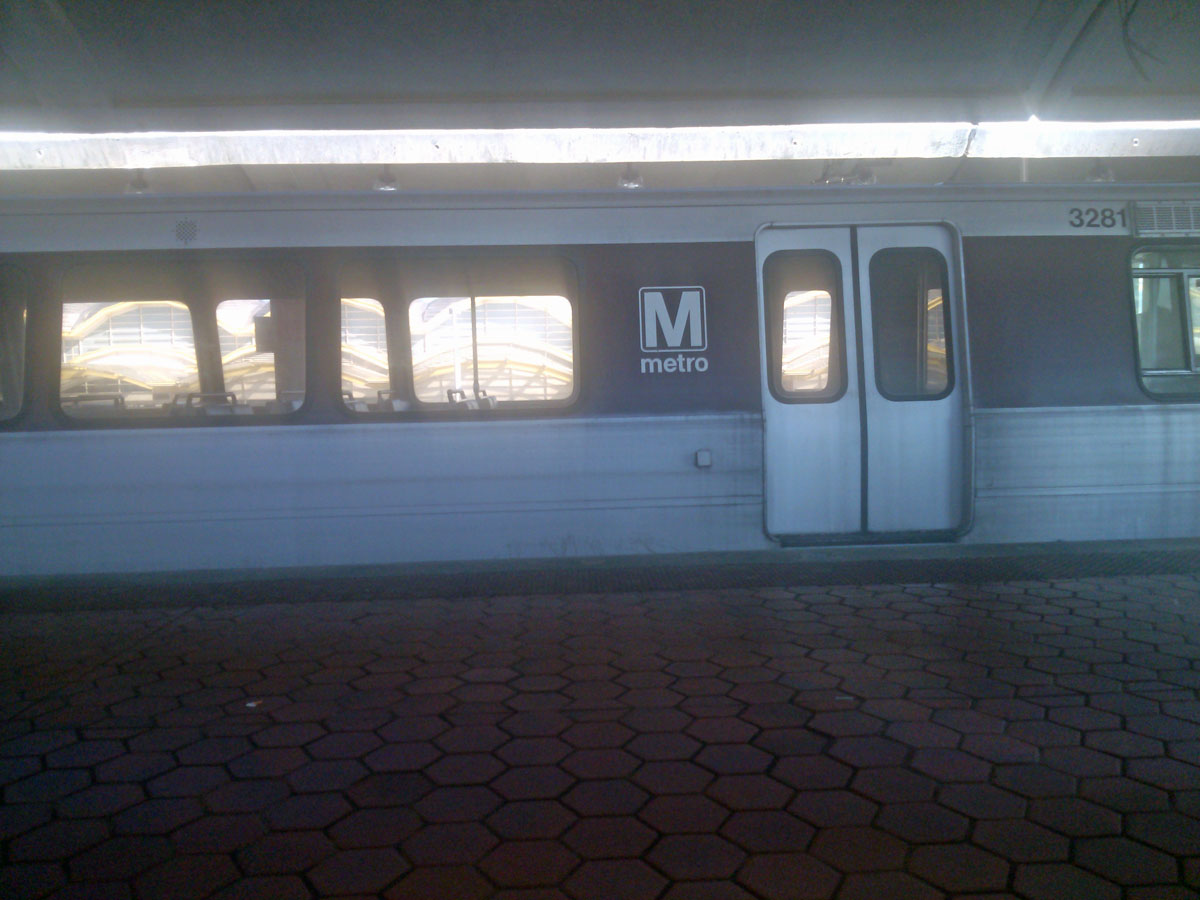
"Transit-oriented development" sounds like a solution to a variety of urban problems. If people could live and work within walking distance of a train or bus stop, people could save money on gas, people without cars could commute more easily, neighborhoods could reduce congestion and pollution, and economic growth could follow.
Generally, it makes sense for cities to invest in the hubs that connect people and the places they need to go. However, not every rail stop is equally primed for a new apartment complex or retail development, and determining why is a significant challenge. For example, there is little sense in pushing transit-oriented development in a community where every household already has multiple cars, and likewise there is little sense in developing stops in areas divided by highways and mega blocks where people are unlikely to walk to a train.
In early February, the Center for Transit-Oriented Development released a study of more than 100 transit stops in the Pittsburgh area, assessing the suitability for transit-oriented development. A quarter to half of the station areas in the system could benefit from a small infrastructure investment, such as a pedestrian bridge or tunnel, signage showing where the station is, or paved pathways or sidewalks. The assessment uses pentagonal graphs to illustrate ways that density, land use, care dependency and distance all shape communities differently.
"It’s a very simplistic way of measuring what you need," says CTOD director Abigail Thorne-Lyman. "But if you don’t have the resources to even know where to begin, it’s very powerful to say ‘I’m just going to look at these five things, and what do I need to improve to push myself into a more transit-oriented urban form?'"
Source: "The Geometry of Transit-Friendly Neighborhoods," The Atlantic Cities (02/11/13)
Brick sidewalks are common in the 22314 zipcode
Moves across county and state lines are falling, with the 2007-2009 recession blamed for changing Americans’ moving patterns, according to an analysis of census data through 2010. The Great Recession caused more Americans to move because they could no longer afford to remain where they were. That's a big change in what traditionally motivates Americans to move -- a bigger home or higher paying job, USA Today reports about the analysis.
Nine percent of Americans stayed local with their moves during 2007-2009 period -- the highest in a decade.
"Typically, over the last couple of decades, when Americans moved, they moved to improve their lives," says Michael Stoll, author of the research and chairman of UCLA's public policy department. "This is the shock: For the first time, Americans are moving for downward economic mobility. Either they lost their house or can't afford where they're renting currently or needed to save money.”
More than 23 percent moved for more affordable housing during the recession. Prior to the recession, that percentage stood at 20.8 percent.
Also, prior to the recession, 41.3 percent of Americans moved in order to own a home or settle into a better neighborhood. However, during the recession, that percentage dropped to 30.4 percent.
Source: “Americans on the Move Start Moving Down, Not Up; Setback in Upward Mobility Hits Blacks, Sun Belt Spots Hardest,” USA Today (Feb. 20, 2013)
Home Prices In Arlington Continue To Hike
The housing market in Arlington County is getting more and more expensive as potential buyers continue to have fewer homes and condos to choose from.
Inlet Cove is alongside Route 1 This neighborhood of townhouses is near grocers and eateries Inlet Cove is close to Fort Belvoir, Alexandria, and Potomac Mills shops, in the city of Woodbridge Interior to these properties are multilevel Inlet Cove is serene
Pending home sales increased again in March, affirming that a surge of home sales is unfolding for the spring home buying season, according to the National Association of REALTORS®. The Pending Home Sales Index, a forward-looking indicator based on contracts signed in March, rose 5.3 percent to 102.9 from 97.7 in February, and is 21.1…
Some of the best housing deals are on high-end homes, many over $1 million. Some of them need TLC or they aren’t in the most-coveted locations. But there are plenty of desirable properties and lots of sellers who are getting impatient. Buyers with cash have the best opportunities. Buyers who need a mortgage should move…
The National Association of Realtors recently did a study about the characteristics of home buyers. Some of the findings might surprise you. Thirteen percent of buyers purchased a home with one or more parents and grandparents together with adult children. There were several reasons given for purchasing a multi-generational home. Cost savings; Children over the…
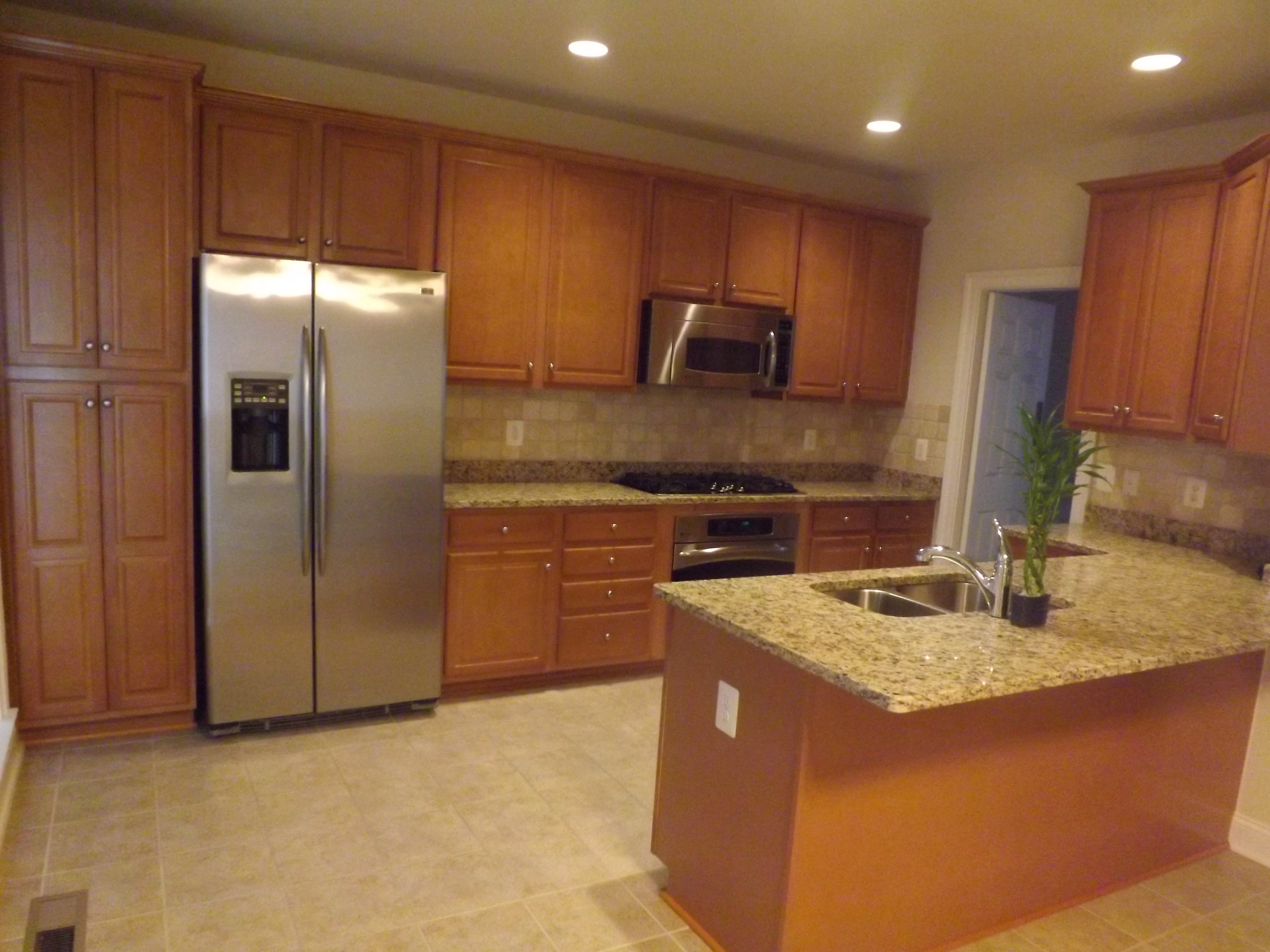
This is new kitchen in at Potomac Branch.
As kitchens have become rooms for doing more than just cooking, the need to maximize space has become paramount. That’s where cabinets come in handy. Learn about home owners’ options in using these to creative aesthetically pleasing storage solutions.
As the number of kitchen accessories has increased, cabinetry has become both a major necessity and a challenge. That’s because kitchens have become a place for additional tasks besides cooking — entertaining, bill paying, and homework, for example. Also, the cost of cabinetry can be staggering, sometimes as much as 50 to 60 percent of a total kitchen redo.
When it comes to working with buyers or sellers on improving a kitchen, your goal should be to help them understand the pros and cons of overhauling cabinet storage — or whether they should do anything dramatic, as there are ways they can improve cabinetry without replacing it. The key questions home owners should ask are:
Do the kitchen and its existing cabinetry appeal visually?
How well does the cabinetry work to sufficiently store pots and pans, dishes, glassware, cutlery, spices, cookbooks, and other cooking and entertaining accessories?
Based on those responses, they can decide whether to undertake a limited redo or embark on an extensive transformation. Here’s how they can proceed:
Partial Tweak
If a layout works and home owners like their current appliances and surfaces, sometimes they can just reface cabinet fronts with newer materials such as popular cherry, maple, or bamboo. Other times, still less is needed and the fronts can be retained and the knobs or pulls changed out to a more stylish brushed or satin nickel. If space has been wasted in the room, they also might be able to find a place to construct a walk-in pantry that has easy-to-access shelves with specialized inserts to keep everything accessible but out of sight behind a full-height wood or obscured glass door. The latter can provide visual information about what’s inside without home owners having to keep contents meticulously ordered, says Chicago designer Tom Segal of Kaufman Segal Design.
Pantries can vary in size from a basic 2-by-2-foot space to a more generous 4-by-4 with room for shelves on three sides and space to maneuver, or an even bigger 4 by 8 feet with outlets for extra appliances and a secondary sink, says architect David Barbour, whose eponymous firm is based in Bridgeport, Conn. Partial redos may cost just half of what a total overhaul would, he says.
Total Gut
When it comes to replacing cabinets completely because they’re worn or inefficient, home owners have a choice of three major options. They can go for the crème de la crème of custom at the top, semicustom in the middle, and stock at the budget end. The choice depends in part on the level of quality of other items in the room — appliances, countertops, flooring, backsplashes, and lighting — as well as the home’s overall value and how long home owners plan to remain. There’s little point in putting an $115,000 kitchen in a $350,000 home or going through the expense and hassle if home owners will stay put for only a few years, says Segal, who’s redone both clients’ and his own kitchens. He and other design experts recommend not spending more than 15 percent of a home’s value on a kitchen redo. So for that $350,000 home, he advises keeping the budget limited to a maximum of $52,500.
The best way to start is for home owners to add up the linear feet of their existing cabinetry to be sure they’ll gain as much or more storage and then decide, probably with professional expertise, where to locate each type of storage — for example, spices and knives adjacent to an oven, Segal says. Tall, deep cabinets with pull-out shelves make efficient use of space and can be an alternative to a walk-in pantry, if the area of the kitchen is limited. Home owners should also decide whether they want drawers or cabinets — depending on how they like to store their belongings — and if they have enough room to include an island with base cabinetry. The best-designed islands allow 42 inches all around to navigate, measure 36 inches long and 24 inches wide, and have a 12-inch overhang on at least one side to make it work as an eating, bill paying, or homework center, says building contractor and licensed remodeling expert Philip A. Beaubien, whose Beaubien Construction is based in Santa Barbara, Calif.
With all this information in hand, home owners should be able to decide which of the following three levels to go with:
▪ Custom cabinets are constructed from scratch to a room’s specific layout for a seamless built-in look with no gaps between boxes. Most custom manufacturers such as Wood-Mode, Fine Custom Cabinetry and Rutt Handcrafted Cabinetry offer an extensive array of woods, finishes, and custom paint colors; door styles, such as flat or with some type of raised paneling or perhaps glass; cabinet or drawer depths; varied styles and materials for the pulls or knobs; and a large number of specialized cabinet organizers to keep specific items in place. Custom cabinets also come with better exposed hinges for a tighter fit and smoother draw glides, some of which may retract on their own. Beaubien prefers custom cabinets for their handmade appearance.
▪ Semicustom cabinets are manufactured in a large range of sizes based on 3-inch increments, and numerous materials and finishes are available — just not as many as for the custom option, says Segal. While they typically present a seamless look and fit together well, adjustments sometimes are needed for a specific layout, which may bring additional costs. Hinges also are typically concealed, which means a less-tight fit, he says. Home owners should verify specifics so they don’t end up spending so much to adjust them that the final price is close to a custom cabinet. Segal went with a semicustom design to save funds when he remodeled his kitchen. He found that with careful planning he gave up little and gained a quality product that should last years.
▪ Stock cabinets are the equivalent of off-the rack — or shelf — choices made in ready-made sizes, with fewer possibilities to pick among. They’re widely available at big-box stores like Lowe’s (a REALTOR Benefits® Partner), Home Depot, and IKEA. In kitchens with an uncomplicated layout or for home owners who are content with basics that will function well and help lower their budget, stock cabinets can be a good solution. Barbour likes to look first at these options, then have a carpenter add moldings to conceal gaps and lighting. He recommends carefully choosing the best stock boxes available—those from well-crafted wood versus composition or pressed board, which won’t wear as well. It’s also important to have sturdy shelves within — at least three-quarters of an inch thick — that don’t extend longer than 30 to 48 inches to avoid sagging. While Beaubien doesn’t use stock in most kitchen projects, he finds them acceptable for garage storage. They also can be a wise choice for a vacation home where home owners spend less time indoors, Segal says.
Another way to cut costs when going with any of the three choices is to incorporate some open shelves above countertops, which can sometimes accomplish what a closed cabinet could at a quarter of the cost, Barbour says. They also allow home owners to see everything stored at a glance and add instant color and pattern. Of course, the downside is a continual need to keep the contents neat.
The bottom line: Home owners should make their decision based on their home’s price, how long they plan to stay in it, how complicated or simple their kitchen layout is, what they’re storing, and their overall kitchen priorities. If having an expensive restaurant-style range and marble countertops are at the top of their wish list, they may want to scale back their cabinet budget. The decision should suit them rather than the next buyer.
January 2013 | By Barbara Ballinger
Stuart Nesbitt, a chip off the old block
A buyer agent is a real estate agent that represents the buyer. A Listing Agent is an agent that represents the Seller. The buyer agent does not get paid to show homes to clients. A buyer agent only gets paid if the buyer contracts for and purchases a home.
Your buyer agent can show you one house or show you dozens of houses. Your buyer agent can work with you one day before writing an offer for you to purchase a home, or your agent can work with you for months. Often, a buyer agent will tour houses with their clients to get better understanding of what the client wants. The buyer's agent also does extensive research of the local real estate market. Once the buyer agent has identified a number of prospective purchases the agent follows up with phone calls to listing agents. The wise buyer's agent calls listing agent to learn details which my exclude some homes and bring other homes to the forefront.
After a buyer finds a home to purchase, the buyer agent works to prepare and present the offer, negotiate the contract. The agent attends to deadlines, inspections, appraisals, loan approval,o ordering title and so on. In order to perform these duties, the Commonwealth of Virginia requires the broker and prospective buyer sign a Buyer Agency Agreement. Some of the points addressed in that Agreement are:
The type of property the buyer seeks
The length of time the agreement will be in effect
The duties and responsibilities of a buyer's agent
A commitment to protect the buyer's privacy
The nature of the legal, ethical and fiduciary responsibilities of the agent
How the agent is paid. (The buyer does not pay any fee for a buyer's agent.)
The buyer acknowledges that they are not the client of another Broker.
The agreement makes clear that we will not unlawfully discriminate against any prospective Seller
The purpose and place of legal and tax counsel
The agency agreement is governed by the laws of the Commonwealth of Virginia
The agreement may contain additional provisions that might be unique to this particular relationship between the buyer and the agent

.jpg) If you're thinking of buying a new construction, you probably already know that every new development will have its own sales staff. These people are often friendly, helpful and very knowledgeable about the new condominium or new house. However, the on-site sales people work to sell this property only. That means that the on-site staff of a new condominium knows the property as-well-as or better than anyone around and they are there to assist you. But that also means that the on-site sales staff works for the builder.
When in the market for a new condo or a new home, it's a good idea to employ a buyer's agent such to protect your interests. A condominium agent knows the entire area, not just one property. A buyer's agent knows the pitfalls and benefits of buying new, and best of all it won't cost you one dime more than if you use the onsite staff. You have a right to representation: exercise that right today!
[read more about Buyer's Representation]
[new homes for sale]
If you're thinking of buying a new construction, you probably already know that every new development will have its own sales staff. These people are often friendly, helpful and very knowledgeable about the new condominium or new house. However, the on-site sales people work to sell this property only. That means that the on-site staff of a new condominium knows the property as-well-as or better than anyone around and they are there to assist you. But that also means that the on-site sales staff works for the builder.
When in the market for a new condo or a new home, it's a good idea to employ a buyer's agent such to protect your interests. A condominium agent knows the entire area, not just one property. A buyer's agent knows the pitfalls and benefits of buying new, and best of all it won't cost you one dime more than if you use the onsite staff. You have a right to representation: exercise that right today!
[read more about Buyer's Representation]
[new homes for sale]