Everything built by man requires some maintenance at some point.
Even so-called maintenance-free homes require some attention. So when making the transition from renting to buying, one aspect of home ownership that must be considered carefully is maintenance.
Renters enjoy few advantages over buyers, but one benefit of renting is that in most cases renters needn't worry about the expense of maintaining a property. Many first time buyers aren't ready to take on the hassles and expenses of yard work, gutter cleaning, painting and so on, and for this reason condos are a viable and interesting alternative.
In the case of a condo, maintenance can be separated into two categories: owner's responsibilities and association responsibilities.
These exact nature of these duties and responsibilities will vary from condo to condo, but there are a few rules of thumb. For example, certain retirement communities provide maid service as part of the condo, but most often the condo owner is responsible for cleaning his own unit.
In most cases, the condo owner must clean the condo interior, including all windows which are reachable from the interior. The condo owner must clean of his or her private balcony or patio. Most renters are accustomed to this type of arrangement already.
Unlike renters, condo owners own the appliances in the unit. Thus, the condo owner cleans and maintains all the appliances, but the condo owner also pays for repairs and replacements as needed. A condo owner
has the power to pick his own appliances, but with that benefit comes the duty of maintaining that unit.
In most older condos, the association supplies the heating and cooling to the unit, and the condo owner owns the convector or radiator (heat transfer appliance) in the unit. In new condos, the owner typically owns the HVAC (heat pump / air conditioner) that heats and cools his unit.
Plumbing and electrical concerns remain for owners of single family homes and townhouses, but in all but a few rare cases the condo owner need only worry about systems that are outside the walls. For example, the condo owner typically owns the bathroom vanity and the pipes supporting that vanity but not the pipes which supply water and take sewage away from the bathroom. A condo owner owns his kitchen cabinets, but not the electrical wires inside the wall that bring power to his kitchen appliances.
Relaxing in Old Town
In general, the condominium owner is responsible for his personal space, but the condo association is responsible for all common areas. This includes maintaining and operating the elevators and outside doors. In most cases this includes the windows. Most always, the association maintains the lawns, flowers and shrubs. The condo association maintains the roof.
While the owner of a single family home must maintain his own driveway, a condo parking lot is maintained by the condominium association. The parking garage can be private, common, or common with assignments. If the parking garage is common, with or without assignments, the condo association will clean and maintain the parking. A private garage is the domain of the condominium owner.
Review your docs
Ultimately, you'll want review your condo documents, charter and by-laws to determine exactly how your condo association interprets its domain. Rest assured, a condo owner will have more to maintain than a renter, but significantly less responsibility than the owner of a single family residence or townhouse.
If you are a landlord, then you need a company you can trust to handle your operational responsibilities. Nesbitt Realty and Condo Alexandria have the experience you want in your property manager. Will has been a landlord for over 20 years and is a full service broker trained in property management. Nesbitt Realty and Condo Alexandria offers full service management for condos, townhouses and single family residential properties. Condo Alexandria is dedicated to maximizing your profits without sacrificing on service. Here's some of what we do for you:
Lease Administration
Our brokerage will prepare your lease, find and screen tenants.
Rental Servicing
There are a lot of annoying details that landlords must deal with: unless they have a property manager. Our team handles billing, collecting, processing and servicing your rental accounts, staying on top of your cash flow.
Rate Analysis
Nesbitt Realty and Condo Alexandria will analyze the market and find the rental rates that will make you the most money.
Building Maintenance
Condo Alexandria and Nesbitt Realty keeps your properties in top operating order.
Marketing
Our strategy is designed to keep your occupancy and tenant retention rates at maximum efficiency.
Vendor Negotiations
We only deal with reputable handymen, landscapers, appliance repairmen and service people. We'll negotiate you best deal and keep your rental operating smoothly.
For more information or to set up an appointment call Stuart at (703)765-0300.
Marco: Question for you--if you had a choice between investing in a small house, or investing in a condo, which one would you choose?
Will Nesbitt: As a rental, I might do a condo, if it's a well-managed association, because there are few hassles. But it's more complicated than that. Feel free to call me if you want to download the full lecture.
Marco: Here's the situation: My parents are retiring and need a place to live. They'd like to live in Northern Virginia. They have a sizable down payment but bad credit, so we have offered to buy them a little house. We're somewhat limited in what we can get because of Mom's health issues---they need a place that has at least 2 bedrooms, 2 baths, all on one level and wide hallways because she will eventually be in a wheelchair. I think they'd be happier in a house because they haven't lived in an apartment ever. But we're having a hard time finding the "right" house and they're on a deadline to move out of the parsonage they're in. They were looking at a condo in an outlying suburb, but Paul doesn't want to buy a condo. He doesn't feel like it will keep its value.
Will: That's something that comes up from time to time when you talk about purchasing a condo. There are no hard and fast rules that apply to all condos everywhere, but I'll share a few of the lessons of my experience.
Why are you buying a condo? The Location or tbe price?
Location. Yes, we've all heard "location, location, location" when it comes to real estate, and of course most of what you've heard is probably true. But here's my take on it when it comes to valuing a condominium property: if the property is in a highly desirable location the property will hold its value. There are only so many places to live within walking distance of a Metro in Northern Virginia. Until the day people stop using the Metro those properties will retain a measure of demand. Condos on the perimeter, condos at the periphery, condos that entice the buyer with a low price, won't keep pace with increases in other communities and worse yet, can lose value. So ask yourself is, is the appeal of this condo that has a fantastic location or is the appeal that the condo is cheap?
Lesson: If the price and not the location is the primary driver in the purchase, then this condo might not be a good investment.
Management. Condos are managed by an all-volunteer board of directors elected by the community. Some boards are thoughtful, logical, practical and deliberate. Some boards are incompetent, petty, well-intentioned or corrupt. Take a hard look at the condominium documents before you buy your condominium. If you see that the board has repeatedly directed large amounts of funds to the same contractor you might want to dig a little deeper. If you see that the board has repeatedly spent money on frivolous expenses, that might give you reason to pause. If the board has just authorized a large contract for debt to pay for bills the association cannot afford, that might give you reason to move on to the next opportunity.
Lesson: The condominium management can make or break the community.
Condo Fee. Let's start with this premise: every property owner everywhere pays a condo fee. This is true once you realize that utilities and building maintenance are condo fees. An owner of a single-family home might pay zero condo fees for 10 months and then pay a $15,000 condo fee for a roof repair. But a well-managed condo association puts money in reserves to prepare for future problems when they arise. A condo owner doesn't get bogged down in details of property management, but a home owner usually spends money more efficiently than a democratically elected board.
Lesson: Condo fees are not a problem. Poor management of maintenance and utilities is a problem no matter if you have 1 member or 1500 members in your association.
Bottom Line. "Location. Location. Management." If your property is located in a less than desirable neighborhood, don't expect the property to appreciate. (That doesn't means the property is a bad-buy for you or for some people, it just means don't count on appreciation from this investment.) You can minimize your exposure by picking properties that are in highly desirable locations, even if they are smaller or more costly per square-foot.
But when it comes to condos, property management is almost as important as location. A poorly management property can deteriorates or can have high condo fees, or worst of all, a poorly managed property can have both a poor condition and high fees. Nothing will kill your value faster than condo fees which are not justifiable. You can minimize your exposure to the risk of management incompetence by purchasing in condominiums with minimal amenites, no elevators, common areas that are open to the elements, etc.
https://youtu.be/l17lcYQmMcs
| Search Homes | About Our Service | Save Money When You Purchase
For more information or to set up an appointment call Nesbitt Realty at (703)765-0300.
The National Association of Home Builders says its new study shows that home buyers can buy a more expensive, newer house and still have the same operating costs as owning an older existing home.
NAHB examined data from the Census Bureau and Department of Housing and Urban Development’s 2011 American Housing Survey to determine how utility, maintenance, property tax, and insurance costs vary depending on the age of a home.
Houses built prior to 1960 have average maintenance costs of $564 per year. On the other hand, homes built after 2008 have average maintenance costs less than half that — $241, according to the study.
For homes built prior to 1960, operating costs average nearly 5 percent of the home’s value while the average was less than 3 percent for homes built after 2008, the NAHB study found.
The study also took into account the first year after-tax cost of owning a home by its age, examining the purchase price, mortgage payments, annual operating costs, and income tax savings. “A buyer can afford to pay 23 percent more for a new house than for one built prior to 1960 and still maintain the same amount of first-year annual costs,” according to NAHB.
New houses tend to cost more than existing homes, so the mortgage payments will likely be higher — but the lower operating costs of a newer home will give buyers annual costs that could be about equal if they purchase a lower priced, older home with a smaller mortgage payment but higher operating costs, NAHB says.
"Home buyers need to look beyond the initial sales price when considering whether to buy new construction or an existing home," says NAHB Chairman Rick Judson. "They will find that with the higher costs of operating an older home, they can often afford to spend more to buy a new home and still have annual operating costs that fit their budget."
Source: National Association of Home Builders
Are you looking for a new condo or a newly built home? The on-site staff works for the builder. Our brokerage represents the buyer's interests and doesn't work for the builder. Start your search here to see our suggestions.
Nesbitt Realty doesn't work for the builder. We work for you and we'll help you find the best new home for you. Best of all there is no charge to the buyer for our services!
Julie Nesbitt
Property managers work for landlords to manage the day to day operations of rental properties.
Lease Administration --- Nesbitt Realty will prepare your lease, find and screen tenants.
Rental Servicing ---There are a lot of annoying details that landlords must deal with: unless they have a property manager. Our team handles billing, collecting, processing and servicing your rental accounts, staying on top of your cash flow.
Rate Analysis --- Nesbitt Realty will analyze the market and find the rental rates that will make you the most money.
Building Maintenance --- Nesbitt Realty keeps your properties in top operating order.
Marketing --- Our strategy is designed to keep your occupancy and tenant retention rates at maximum efficiency.
Vendor Negotiations --- We only deal with reputable handymen, landscapers, appliance repairmen and service people. We'll negotiate you best deal and keep your rental operating smoothly.
Compliance with Fair Housing Laws --- We also provide all necessary legal disclosures and disclaimers.
Will Nesbitt
If you are a landlord, then you need a company you can trust to handle your operational responsibilities. Nesbitt Realty and Condo Alexandria have the experience you want in your property manager. Will has been a landlord for over 20 years and is a full service broker trained in property management. Nesbitt Realty and Condo Alexandria offers full service management for condos, townhouses and single family residential properties. Condo Alexandria is dedicated to maximizing your profits without sacrificing on service.
Julie Nesbitt
Julie Nesbitt knows the back trails and by-ways of Northern Virginia real estate.
Established in 1974 with a mission to reduce homelessness, increase community support and promote self sufficiency, the Good Shepherd Housing and Family Services is operated by a multi-denominational board of directors and staff managing over 70 housing units. Good Shepherd Housing and Family Services is located in the Mount Zephyr Business Center at 8305 Richmond…
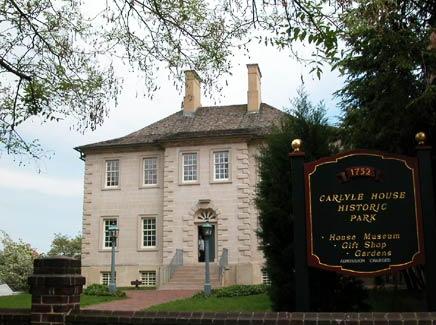
The historic Carlyle House in Old Town Alexandria is more than 250 years old.
Everything built by man requires some maintenance at some point.
Even so-called maintenance-free homes require some attention. So when making the transition from renting to buying, one aspect of home ownership that must be considered carefully is maintenance.
Renters enjoy few advantages over buyers, but one benefit of renting is that in most cases renters needn't worry about the expense maintaining a property. Many first time buyers aren't ready to take on the hassles and expenses of yard work, gutter cleaning, painting and so on, and for this reason condos are a viable and interesting alternative.
In the case of a condo, maintenance can be separated into two categories: owner's responsibilities and association responsibilities.
These exact nature of these duties and responsibilities will vary from condo to condo, but there are a few rules of thumb. For example, certain retirement communities provide maid service as part of the condo, but most often the condo owner is responsible for cleaning his own unit.
In most cases, the condo owner must clean the condo interior, including all windows which are reachable from the interior. The condo owner must clean of his or her private balcony or patio. Most renters are accustomed to this type of arrangement already.
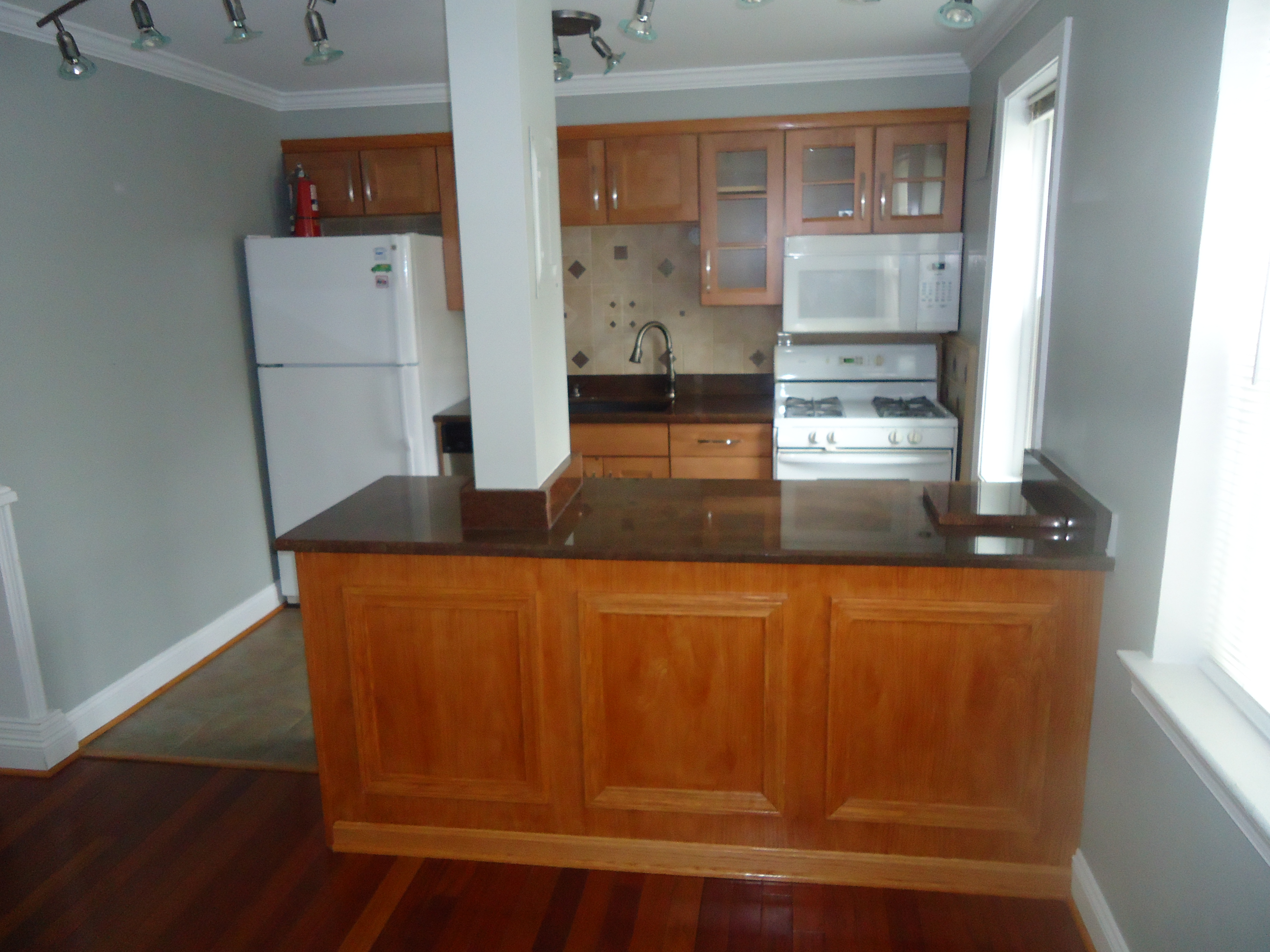
An updated kitchen in a Belle View condo.
Unlike renters, condo owners own the appliances in the unit. Thus, the condo owner cleans and maintains all the appliances, but the condo owner also pays for repairs and replacements as needed. A condo owner has the power to pick his own appliances, but with that benefit comes the duty of maintaining that unit.
In most older condos, the association supplies the heating and cooling to the unit, and the condo owner owns the convector or radiator (heat transfer appliance) in the unit. In new condos, the owner typically owns the HVAC (heat pump / air conditioner) that heats and cools his unit.
Plumbing and electrical concerns remain for owners of single family homes and townhouses, but in all but a few rare cases the condo owner need only worry about systems that are outside the walls. For example, the condo owner typically owns the bathroom vanity and the pipes supporting that vanity, but not the pipes which supply water and take sewage away from the bathroom. A condo owner owns his kitchen cabinets, but not the electrical wires inside the wall that bring power to his kitchen appliances.
In general, the condominium owner is responsible for his personal space, but the condo association is responsible for all common areas. This includes maintaining and operating the elevators and outside doors. In most cases this includes the windows. Most always, the association maintains the lawns, flowers and shrubs. The condo association maintains the roof.
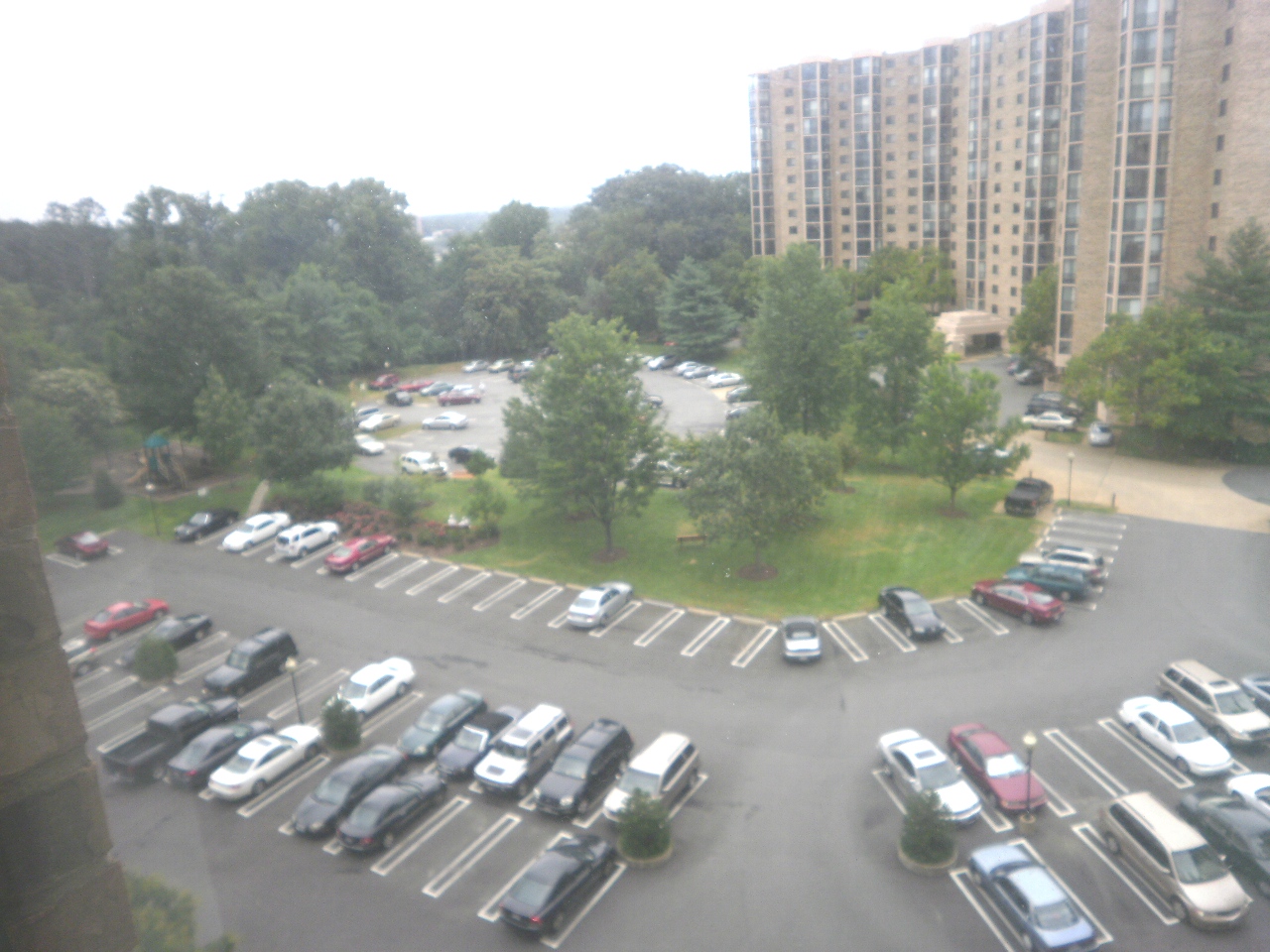
While the owner of a single family home must maintain his own driveway, a condo parking lot is maintained by the condominium association. The parking garage can be private, common, or common with assignments. If the parking garage is common, with or without assignments, the condo association will clean and maintain the parking. A private garage is the domain of the condominium owner.
Parking Grounds at Montebello
Review your docs
Ultimately, you'll want review your condo documents, charter and by-law to determine exactly how your condo association interprets its domain. Rest assured, a condo owner will have more to maintain than a renter, but significantly less responsibility than the owner of a single family residence or townhouse.