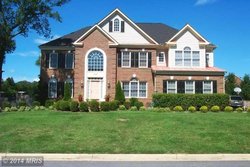
The hardest part is over: You've found the perfect home in Arlington, negotiated a deal you can live with, and secured a mortgage-- and now, you're in the home stretch of the home-buying process. Just one more critical hurdle lies on your way; the home closing.
Continue reading
Closing costs are often the last thing a person thinks of when buying a home. While closing is the joyous moment the home becomes yours, the costs can be surprisingly aggravating.
When you purchase a home, condo or other property, you will go through a period known as escrow. During escrow, various issues related to the property transfer are worked out. The last day of escrow is known as the closing day and you are going to be paying closing costs.
Closing costs come in many forms. Some involve significant dollars while others are relatively painless. Here’s a list of typical costs:
Continue reading
Here are some of the basics about title insurance:
1. Every mortgage lender requires title insurance. Title insurance protects the lender and the secondary markets to which they sell the loans from defects in the title to your home and property. It ensures the validity and enforceability of the mortgage document. Title defects could include mistakes made in the local property office, forged documents and claims from unknown parties. The amount of the policy is equal to the amount of your mortgage at its inception. You pay a one-time fee as part of your closing costs. If you are purchasing a home, you should also purchase an owner’s policy which provides coverage up to the purchase price of the home you are buying. In some states it is customary for the seller to purchase the owner’s policy on your behalf.
2. You have the right to choose your title insurance provider! You can shop around for a lower insurance premium rate on line at sites, or you can also ask your lender or real estate professional for help in getting quotes.
3. Check the companies out before you select one. Make sure the title insurance company you choose has a favorable Financial Stability Rating® with Demotech, Inc., the leading title insurance rating company.
4. It’s easy to save money on title insurance. Request quotes from a few companies and then reach out and speak to them. Ask about hidden fees and charges which could make one quote seem more attractive than another. Ask about discounts. There are often discounts available if you are refinancing and sometimes even when you are purchasing if the current policy issued to the seller on the property isn’t too old.
5. Even new construction needs coverage. Even though the home is new, the land isn’t. There may be claims to the land or liens placed during the construction which could negatively impact your home.
For more information or to set up an appointment call Julie at (703)765-0300.
For a first-time home buyer, one of the most difficult things to do is to just start the process? What does one actually do to buy a home? We've prepared this short list of links to help you begin your home buying quest.
Stuart Nesbitt is a real estate agent serving Northern Virginia.
Affordability Calculator -- How much home can you afford? The affordability will help you determine what your price range.
Buyers Tips -- Simple and effective tips for shopping homes.
Grist Mill Woods is in Alexandria 223091. Decide what you can afford. Generally, you can afford a home equal in value to between two and three times your gross income.
2. Develop your home wish list. Then, prioritize the features on your list.
3. Select where you want to live. Compile a list of three or four neighborhoods you'd like to live in, taking into account items such as schools, recreational facilities, area expansion plans, and safety.
4. Start saving.Do you have enough money saved to qualify for a mortgage and cover your down payment? Ideally, you should have 20 percent of the purchase price saved as a down payment. Also, don't forget to factor in closing costs. Closing costs --- including taxes, attorney's fee, and transfer fees --- average between 2 and 7 percent of the home price.
5. Get your credit in order.Obtain a copy of your credit report to make sure it is accurate and to correct any errors immediately. A credit report provides a history of your credit, bad debts, and any late payments.
6. Determine your mortgage qualifications.How large of mortgage do you qualify for? Also, explore different loan options --- such as 30-year or 15-year fixed mortgages or ARMs --- and decide what's best for you.
Odyssey is in Arlington 222017. Get preapproved. Organize all the documentation a lender will need to preapprove you for a loan. You might need W-2 forms, copies of at least one pay stub, account numbers, and copies of two to four months of bank or credit union statements.
8. Weigh other sources of help with a down payment. Do you qualify for any special mortgage or down payment assistance programs? Check with your state and local government on down payment assistance programs for first-time buyers. Or, if you have an IRA account, you can use the money you've saved to buy your fist home without paying a penalty for early withdrawal.
9. Calculate the costs of home ownership. This should include property taxes, insurance, maintenance and utilities, and association fees, if applicable.
10. Contact a REALTOR®. Find an experienced REALTOR® who can help guide you through the process.
For more information or to set up an appointment call Julie at (703)765-0300.
Here's a list some of the typical concerns for real estate purchases, with specific notes for the condominium purchaser. Some of these (like Home Inspection) are optional, and a few of these are only required from some buyers (like PMI).
Nesbitt Realty never makes any money from your loan. This frees us to make the most objective recommendation possible.
Bank costs, including application fee, credit report, appraisal or inspection fee, processing, bank attorney fee. These fees are related to the acquisition of the loan and thus an expense of the buyer and usually paid by the buyer. These fees include discount points and origination points. Each point is 1% of the mortgage amount. Discount points reduce the interest rate. Origination points are paid to the bank or broker to make the loan.
Attorney fee for representation of Buyer interest at settlement. In some states, a lawyer is paid to negotiate the interests of the buyer, but in the Commonwealth of Virginia, a settlement agent (who is often an attorney) works to ensure that the contract is followed. The settlement agent makes no representations or opinions about the deal that was negotiated. Rather the settlement agent ensures that all parties are fairly treated with regard to the contract presented.
Property tax escrows are usually moneys held by the lender to pay property taxes on the behalf of the owner. The seller is usually responsible for taxes up to the point that the sale closes and the buyer pays taxes during his ownership. The settlement agent reconciles this to the penny to determine who owes what taxes at closing.
Buyers often have to pay prorations to the seller for taxes, oil, water, sewer, rents or condo fees. The prorations are are paid to reimburse the seller for items that were paid in advance by seller. For example, if the condo fee due on the first covers the entire month, but the sale happens on the 15th, the buyer owes the seller for half of a month of condo fees.
Both the buyer and the seller have to pay fees for recording deed and mortgage. This is a nominal fee paid to the settlement agent.
Buyers must pay for their fire and liability insurance policy. Lenders usually require that this is prepaid for six months or a year. Condo owners rarely pay this fee as the policy is often included in the condo fee.
When the sale doesn't close on the first of the month, the buyer prepays a fraction of a month's interest.
Buyers who have a minimum down payment may have to pay Private Mortgage Insurance (PMI) premium.
Realtor
Many lenders require the purchaser to obtain (and pay for) a survey. This is rare for condo buyers, but condo buyers have to pay for "condo docs", the documents that spell out the condominium rules and finances.
Buyers who want a home inspection must pay for one.
Most usually, the seller pays the realtors.
Lenders require that buyers purchase title insurance to insure their interest against claims and fraud.
Buyers and sellers should be aware that almost all closing costs are open to negotiation, meaning several things. Firstly, sometimes the seller pays all or some of the closing costs. Sometimes the seller pays only the seller's closing costs. Furthermore the amount of some of these fees are negotiable. So while in any given contract, any expense can be paid by either the buyer or the seller; there are costs that typically related to the purchase, and those are paid by the buyer. Likewise there are costs related to the sale and those are most usually paid by the seller.
If this seems like a lot for a first time buyer to remember, don't worry, That's why you have professionals to help you along the way. Your agent, settlement agent and mortgage broker or lender will help you make the transition smooth and easy. In Northern Virginia, if you have questions or need further help, please contact Will Nesbitt.
See Also
 Continue reading
 Closing costs are often the last thing a person thinks of when buying a home. While closing is the joyous moment the home becomes yours, the costs can be surprisingly aggravating.
When you purchase a home, condo or other property, you will go through a period known as escrow. During escrow, various issues related to the property transfer are worked out. The last day of escrow is known as the closing day and you are going to be paying closing costs.
Closing costs come in many forms. Some involve significant dollars while others are relatively painless. Here’s a list of typical costs:
Closing costs are often the last thing a person thinks of when buying a home. While closing is the joyous moment the home becomes yours, the costs can be surprisingly aggravating.
When you purchase a home, condo or other property, you will go through a period known as escrow. During escrow, various issues related to the property transfer are worked out. The last day of escrow is known as the closing day and you are going to be paying closing costs.
Closing costs come in many forms. Some involve significant dollars while others are relatively painless. Here’s a list of typical costs: