Alexandria Union Station serving Amtrak and VRE in Alexandria VA

  • Contact Us

    [si-contact-form form='1'] Nesbitt Realty is a family-run business serving Northern Virginia. Your message will go directly to a real person who will respond prompty. Your email address and phone number will never be saved or sold to a marketing list.
Union Station
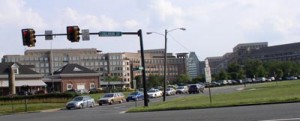
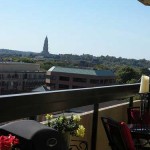
Carlyle District as seen from Union Station
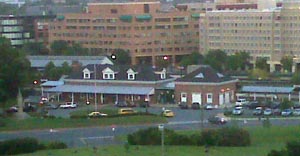
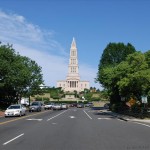
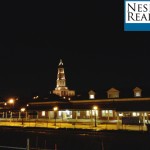
Union Station in Alexandria VA is a historic train station located between King and Duke Streets at the foot of the George Washington National Masonic Memorial. The station is within site of the USPTO and nearby Carlyle District. The station backs up against the King St. Metro, making it an excellent transfer point for riders of the VRE (Virginia Railway Express). Both Amtrak and VRE stop at the station and DASH and Metrobus lines stop at the King St. Station. Alexandria's Union Station shares a name with Union Station in nearby Washington DC. Locals usually refer to the station in Washington as Union Station and the station in Alexandria as Alexandria Station. Both stations were so-named because at one time they united several lines/companies. The Amtrak code is for this station is ALX.
Union Station in Alexandria
Union Station in Alexandria backs to the King Street Metro
The terminal itself was built in 1905 in the Federal Revival style. Although it has been renovated and improved the original 1905 terminal is still in use. The memorial before the terminal is dedicate to the Veterans of Foreign Wars.
  • Address of Union Station

    Alexandria Union Station 110 Callahan Dr. Alexandria VA 22314

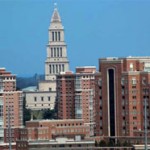
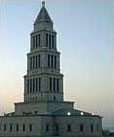
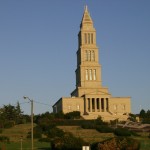
Alexandria’s George Washington Masonic Memorial

Masonic Temple
Masonic Temple
As a tribute to our first president, George Washington, the Masonic Memorial was created.  The memorial looks like the ancient Lighthouse of Alexandria. With 9 floors in the edifice, it has something for everyone. The first floor is dedicated to the Shriner's, with the George Washington Memorial Theater joining along side. The second floor features the Alexandria-Washington Lodge No. 22. On the third floor is the Grotto Exhibit, an organization featuring the Master Masons. The fourth and fifth floors are covered with paintings, and historical documents. The sixth contains the Memorial Library. Once on the seventh floor you will experience murals of Masonic lessons. On the eighth floor is The Knights Templar Chapel. Finally, as  you make your way to the ninth floor you will see a replica of King Solomon's throne. This historical site is a must see. It contains many reflections of one of our founding fathers and a glimpse inside the mysterious. The Masonic Memorial is easily accessible near the King Street Metro. The Masonic Memorial has a spectacular view of King St and is right in front of the Alexandria Amtrak station. For more information please contact: George Washington Masonic Memorial 101 Callahan Drive Alexandria, VA. 22301 703-683-2007

Gunston Hall Plantation

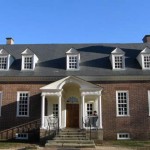
manor of George Mason IV
Gunston Hall
Gunston Hall Plantation is located in Fairfax County near Lorton and Mason Neck.  In it's heyday this Georgian-style home was at the center of a 5,500-acre tobacco and corn plantation. The owner of Gunston Hall was George Mason IV (1725-1792)---known historically as an author of the Virginia Declaration of Rights. Gunston Hall and it's gardens are a National Historic Landmark owned by the Commonwealth of Virginia and administered by a Board of Regents appointed from The National Society of The Colonial Dames of America. Gunston Hall is open to the public from 9:30 a.m. to 5:00 p.m. daily, except Thanksgiving, Christmas, and New Year’s Day. Each visitor will receive a guided tour of the mansion; the 550 acres of grounds and hiking trails are open until 6:00 p.m. A variety of special events are presented throughout the year.
Lorton real estate agents
Nesbitt Realty can help you buy and sell real estate in Lorton.

The Best Real Estate Deal in the History of Alexandria VA?

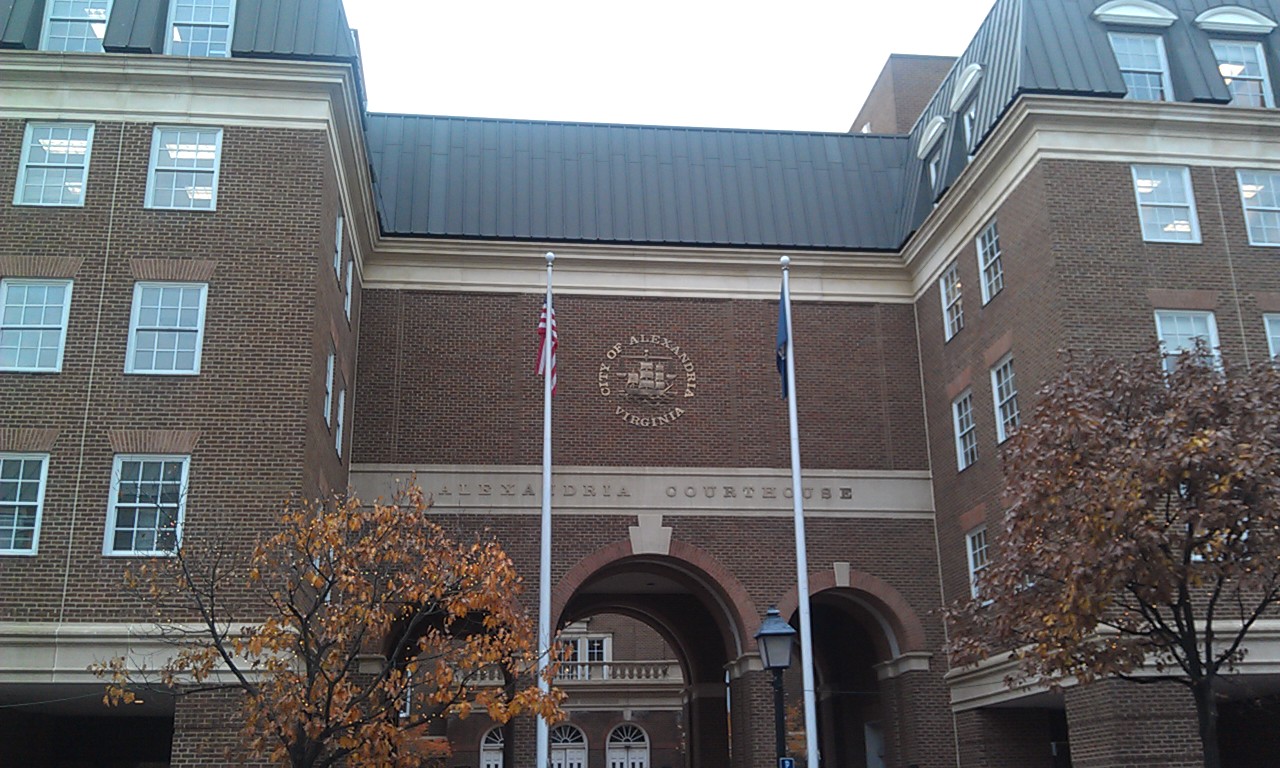
courthouse in the City of Alexandria
City of Alexandria Courthouse
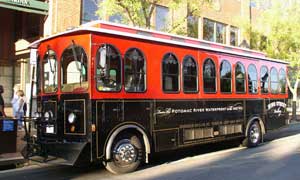
In 1669 John Alexander bought the land that became Old Town Alexandria from an English ship captain. John Alexander paid the tidy sum of 6,000 pounds of tobacco. Almost twenty years later, the town of Alexandria was formally established in 1749. Today, visitors, tourists and travelers alike come to Alexandria VA to taste the quaint colonial and historical feel of this city not far from Washington DC. It's a place frequented by historical figures like George Washington and Robert E. Lee. Even for those like me, who were born in Fairfax and who have lived for many years in Alexandria, one never tires of the rich heritage of Alexandria. Maybe that's because there's always something to do in Alexandria. A bike ride or a stroll along the Potomac Waterfront is pleasant, or perhaps a boat ride on the river. There are more than a hundred restaurants in Old Town alone. Standard favorites such as seafood, steak or Italian are here, as well as ethnic cuisine from around the world. For a taste of the colonial try Gadsby's Tavern, where George ate. Alexandria is easily accessed by Metro and free trolley. The King St. trolley passes antiques shops, art galleries, boutiques and shops. Take a walking tour of Alexandria, or visit the Ramsay House to get a feel of Old Town.
King Street Trolley
Trolley at King Street
With the new US Patent & Trademark Office, Alexandria's proximity to the Pentagon and DC and it's easy access to Fort Belvoir and Bowling AFB, every day more people discover why this is such a great place to live and work. I work, play and live in and around Alexandria VA. I'd love to help you find a place but doubt I can top the deal that John Alexander got when he paid 6,000 pounds of tobacco for his homestead. Today, that much tobacco might set you back $9000! The good news is that 6,000 pounds of tobacco will cover your closing costs for most condos in Alexandria!
United States Patent and Trademark Office
United States Patent and Trademark Office as seen from Alexandria's Union Station

Real Estate for Sale in 22314

Properties in

Potowmack Crossing Condos Offer Historic Charm

Built in 1942, the garden-style Potowmack Crossing Condos offer convenience and historic charm.  Located at 1600 West Drive Abingdon Drive in the Northern Section of Old Town Alexandria, these pet friendly condos are located near the Braddock Metro Station.  What's more, they are only a short drive away from  Route 1, Ronald Reagan National Airport, The Potomac River, and The BeltwayArlington, and Washington DC. Residents of Potowmack Crossing Condos never tire of local activities and often become members of local clubs, such as the Belle Haven Country Club, the Washington Golf Center, and the Army Navy Country Club.  Residents often take advantage of the private exercise area as well as the large community rooms, swimming pools and tennis courts. Potowmack Crossing students are served by Jefferson Houston Elementary School, George Washington Middle School, and T.C. Williams High School. Potowmack Crossing Condos for sale:

Properties in


The Lee-Fendall House Museum and Garden

Boasting its Victorian architectural beauty, the Lee- Fendall House interprets the life and living of the Lee family from 1850 to 1870 with the well restored house and cared for garden. The Lee-Fendall House is situated in the Historic District of Old Town Alexandria on Lee Corner, at the junction of North Washington and Oronoco Streets within the neighborhood where other Lee Homes were located in the 18th and 19th centuries. General Robert E. Lee’s father, Henry “Light Horse Harry” Lee who was a revolutionary war hero, sold the piece of land situated at the corner of Oronoco Street to his cousin Philip Richard Fendall who later on built his family home on this land in 1785. The Lee family resided on this land from 1785 to 1903 even when the Union Army had taken over the property to establish a hospital for its soldiers in 1863. After the departure of the last Lee member from the property, Robert Downham resided in the house till 1937 when he conveyed the property to John L. Lewin, who in turn lived there till his death in 1969. The half acre garden of the Lee-Fendall House is a well managed garden overseen by the Alexandria Council of Garden Clubs consisting of 24 garden clubs ever since 1974. A variety of heritage roses, collection of herbs, English boxwoods, Black Walnut Trees, Gingko, Magnolia Grandiflora and scampering squirrels along with the tombstone of Philip R. Fendall’s mother, Eleanor Fendall can be found in this cared for garden. The Lee- Fendall House Museum and Garden is located at 614 Oronoco Street in Alexandria VA 22314. For more information about tours, events, rentals and the like, please call 703 548 1789 or visit www.leefendallhouse.org.

Manassas National Battlefield Park of Prince William County

Located north of Manassas in Prince William County, the Manassas National Battlefield Park sites the area where the American Civil War battles took place in July 21, 1861 ( First Battle of Bull Run) and in August 28 and 30, 1862 ( Second Battle of Bull Run – First Battle of Manassas). The National Battlefield Park was established in 1940 and listed on the National Register of Historic Places in October 15, 1966, that now offers everyone the chance to discover the site where the battles took place years ago along with the Henry Visitor Center located at the south entrance to the park that showcases the civil war era uniforms, weapons, gear, exhibits and more to highlight the First Battle of Bull Run.

Featured at Manassas National Battlefield Park:

  • Stone House – Found at the intersection of Sudley Road and Lee Highway that was occupied as a hospital during the battles.
  • Stone Bridge – Located on Lee Highway and within proximity of Bull Run where the Union retreated after the battles.
  • Brawner’s Farm – Location where the second battle began and renovated as a museum exhibiting the Second Battle of Bull Run.
  • Battery Heights – The Confederate batteries were deployed at the Union troops.
  • Matthews Hill – Site where the first battle begun.
  • The Unfinished Railroad Grade – Site where Jackson deployed his men for the second battle.
  • The Deep Cut – Area where Pope fired his attacks against the Grade.
  • Groveton – A Civil War era neighborhood with remains of a small house that was occupied by Lucinda Dogan with a Confederate Cemetry nearby.
  • New York Monuments – Site where 123 5th New York Zouaves men lost in 5 minutes.
  • Hazel Plain – Chinn family plantation now in ruins located across the Henry Hill Visitors Center.
  • Chinn Ridge – Counterattack of General James Longstreet of the second battle took place.
  • Portici – Francis Lewis plantation used as the Confederate Headquarters in the second battle now in ruins.
  • The Robinsons House – The home of James Robinson.
Manassas National Battlefield 12521 Lee Highway Manassas, VA 20109

Woodlawn Plantation

Woodlawn Plantation is a 126-acre estate that was originally part of George Washington’s Mount Vernon Estate. Woodlawn is located at 9000 Richmond Highway, Alexandria, Virginia in Fairfax County near Fort Belvoir. Woodlawn's main Federal-style house was designed by the architect of the U.S. Capitol, Dr. William Thornton, and constructed between 1800 and 1805 for Washington’s nephew Major Lawrence Lewis and his bride, Eleanor "Nelly" Custis Lewis. During the Lewis’ years in residence, Woodlawn comprised over 2,000 acres and was worked by over 100 workers, at least 90 of whom were African American slaves. In 1846, the Lewis’s son sold the property to two families from New Jersey and Pennsylvania, the Troths and the Gillinghams, who were members of The Society of Friends (Quakers). Ethically opposed to slavery, the Troths and Gillinghams established Woodlawn as a "free labor colony," selling lots to both free black and white farmers, and employing only free laborers to demonstrate as false the argument that the abolition of slavery would mean the death of the Southern plantation economy. This belief in liberty and equality made Woodlawn a controversial social experiment in its time and place, and its residents became a target of raids and suspicion by Confederate forces during the Civil War. By the turn of the 20th century, Woodlawn was sadly deteriorated and, in 1896, severely damaged by a hurricane. In 1901, the playwright Paul Kester moved in — with his mother, brother and 60 cats — and began "restoring" the house to livable conditions. In 1905, Kester moved on to nearby Gunston Hall, and sold Woodlawn to Miss Elizabeth Sharpe, a Pennsylvania coal heiress who spent two decades lovingly rehabilitating Woodlawn and its grounds to suit contemporary views of an ideal early American estate. Woodlawn’s final private owners were Senator and Mrs. Oscar Underwood of Alabama. Following Mrs. Underwood’s death, it was purchased by a private organization to ensure its preservation. In 1952, Woodlawn became the first historic site owned by The National Trust for Historic Preservation. For more information call (703) 780-4000 or visit  www.woodlawn1805.org

Homes for Sale near Woodlawn Plantation

Occoquan Regional Park Historical and Recreational

Occoquan Regional Park located at 9751 Ox Road in Lorton VA 22079 conveniently situated along Occoquan River and right across the Town of Occoquan offering over 400 acres of recreational space to everyone. Facilities:
  • Baseball & Softball & Soccer Fields
  • Batting Cages
  • Marina
  • Boating
  • Fishing
  • Snack Bar
  • Trails
  • Turning Point Plaza
Picnic Shelters and Gazebos are available for rent and the option of having a Moon Bounce, Rock Wall and even a mechanical ride can add more fun into the occasion. Turning Point Plaza is a memorial dedicated to the women suffragists who were imprisoned at the Occoquan Workhouse in the 1900’s for defending their right to vote. The reports regarding the situation of the imprisoned suffragists led to the 19th Amendment permitting women to freely vote. Re-enactments and displays are featured at Turning Point Plaza at Occoquan Regional Park.

Gunston Hall Plantation in Fairfax County

manor of George Mason IV
Gunston Hall
Located in Fairfax County near Lorton and Mason Neck, Gunston Hall Plantation was the center of a 5,500 acre tobacco and corn plantation. Owned by the author of the Virginia Declaration of Rights, George Mason IV (1725 – 1792), this Georgian style home and garden is now a National Historic Landmark. It is now owned by the Commonwealth of Virginia and administered by a Board of Regents appointed from the National Society of the Colonial Dames of America. Gunston Hall is open from 9:30 am to 5:00 pm except holidays such as Thanksgiving, Christmas and New Year’s Day. And special events are showcased throughout the year. Guided tours are offered of the mansion and the 550 acres of ground. The hiking trails are open till 6:00pm.