Ever wanted to have access to the city without actually having to drive there? This desire is what has sky-rocketed the real estate market in the area of McLean. It has been a magnet for established and young professionals who want to escape the city commute and find a retreat for their hard earned cash. Although, McLean has typically housed old money, its recent growth has encouraged those who have just acquired it or at least desire to, to plant some roots.
Locals find that they have a vast number of options for upscale shopping, dining, and entertainment. With the beltway only a few minutes away, you still have the ability to get to all of the elements D.C. has to offer. The interesting point is that the area has recently begun to eliminate the need to travel elsewhere to find what you’re looking for. The Galleria mall has allowed access to upscale shopping. Restaurants like Ruth Kris, Morton’s Steakhouse, and Capital Grill are all within minutes and are considered local luxuries. Coincidentally, if you are a lover of the arts, you would be happy to know that Wolf Trap is around the corner. Perhaps you are looking for a posh location without the hassle of the commute. Then, McLean just might be the place for you.
Virginia lawmakers are fighting against “drive-by foreclosures,” saying the foreclosure process in the state is one of the fastest in the nation and needs to be slower and have judicial review.
Bills in the Virginia House and Senate will set out to slow the state’s fast foreclosure pace by increasing the time required for foreclosure notice from two weeks to 30 or 45 days. The goal is to give borrowers more time to challenge the foreclosure if needed.
"We simply don't have enough time to stop a foreclosure because of the fact that it's in 10 days or seven days," Todd Condren, a title insurance lawyer from Vienna, Va., told the House Courts of Justice Committee.
The bills also set out to require lenders to face court review before foreclosing on home owners. Lenders will also be subjected to fines if it's found that any foreclosure was based on fraudulent documents or documents that contained any errors. The proposed bills also will have a requirement that lenders maintain updated real estate loan records in county courthouses and give borrowers an opportunity to avert foreclosure by paying off any delinquency.
Virginia’s banking lobby officials argue that slowing foreclosures and requiring updated county land record filings would just prolong the already four year housing slump.
Source: “Bill Seek Judicial Review of Foreclosures in Va., Better Mortgage Ownership Records,” The Associated Press (Jan. 17, 2011)
It's easy to sell property. The hard part is selling real estate now. When there are more sellers than buyers, properties still sell. Staging your home is important, but not so important as some might lead you to believe. Advertising your property is critical and brochures can be beneficial. Ultimately, the most important factor is to get the home in the MLS and to price the home properly.
If a home is priced too high, few potential buyers will even see your house. After the home has sat on the market for a long time, buyers will expect a price drop even if the price has already dropped! For this reason it's important to price your home at a point where it will attract attention.
In a tough market like the services of a good Realtor are needed more than ever. Your agent should be a hard worker who has the temperament to guide you through the process. You agent should be your advocate, actively negotiating your best deal. Sometimes this means getting top dollar. But sometimes this means know what to trade-off to get what you really want from a deal.
Selling your home quickly.
Here are a few quick tips to sell your house quickly.
Choose a selling agent that cares about you and your situation.
Price it right. Price is the biggest differentiator in a tight market. Set a price at the lower end of your property’s realistic price range.
Put your house in order. Your property should be ready for the market before you begin showing it.
Be flexible about showings. Home selling is often disruptive to daily life. And it's a lot of work to have your house ready to show on the spur of the moment. But prospects that can't see your house won't buy your house. The more often your home is shown the greater your chances of selling the property.
Be ready for all offers. Decide in advance what price and terms you’ll find acceptable. Don't take offense at a ludicrous offer. Respond with a counter-offer to keep the ball moving.
In addition, Will Nesbitt has devised unique strategies to overcome the buyer's market and to sell your home quickly. Ask him how he can save you money and sell your home quickly at the same time!
Net Proceeds
To find out how much money you’ll net from your house, add up your closing costs and subtract them from the sale price of the house.
Closing Costs for Sellers
Mortgage payoff and outstanding interest
Prorations for real estate taxes
Prorations for utility bills, condo dues, and other items paid in arrears
Closing fees charged by closing specialist
Title policy fees
Home inspections
Attorney’s fees
Survey charge
Transfer tax or other government registration fees
Brokerage commission
Total
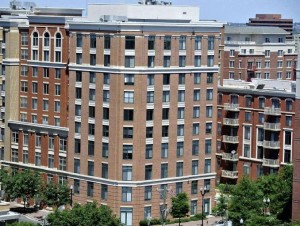
Carlye Towers looking toward Masonic Memorial in Alexandria VA
Home prices are expected to rise in 40 percent of major metropolitan areas, according to Veros Real Estate Solutions, a research firm that provides information to the mortgage industry.
The markets Veros expects to be strongest are:
1. San Diego/Carlsbad/San Marcos, Calif.
2. Kennewick/Richland/Pasco, Wash.
3. Pittsburgh
4. Fargo, N.D.
5. Washington, D.C. metro area
The five markets Veros expects to be weakest are:
1. Reno/Sparks, Nev.
2. Orlando/Kissimmee, Fla.
3. Boise City/Nampa, Idaho
4. Deltona/Daytona Beach/Ormond Beach, Fla.
5. Port St. Lucie/Fort Pierce, Fla.
Source: HousingWire.com, Kerry Curry (12/22/2010)
Home Prices In Arlington Continue To Hike
The housing market in Arlington County is getting more and more expensive as potential buyers continue to have fewer homes and condos to choose from.
Inlet Cove is alongside Route 1 This neighborhood of townhouses is near grocers and eateries Inlet Cove is close to Fort Belvoir, Alexandria, and Potomac Mills shops, in the city of Woodbridge Interior to these properties are multilevel Inlet Cove is serene
Pending home sales increased again in March, affirming that a surge of home sales is unfolding for the spring home buying season, according to the National Association of REALTORS®. The Pending Home Sales Index, a forward-looking indicator based on contracts signed in March, rose 5.3 percent to 102.9 from 97.7 in February, and is 21.1…
Some of the best housing deals are on high-end homes, many over $1 million. Some of them need TLC or they aren’t in the most-coveted locations. But there are plenty of desirable properties and lots of sellers who are getting impatient. Buyers with cash have the best opportunities. Buyers who need a mortgage should move…
The National Association of Realtors recently did a study about the characteristics of home buyers. Some of the findings might surprise you. Thirteen percent of buyers purchased a home with one or more parents and grandparents together with adult children. There were several reasons given for purchasing a multi-generational home. Cost savings; Children over the…
Good ole Fritz
Owning a pet, which six out of 10 U.S. households do, can be a problem for both sellers and practitioners seeking buyers.
Sellers with pets should do their best to eradicate pet odor. "Odor is the biggest obstacle,” says Trudy Severa, an associate with Long and Foster's North Hills office in Reston, Va. "Anyone who is sensitive or with allergies is going to be put off."
Pet hair is another turnoff for fussy people or those with allergies. A professional cleaning as well as frequent vacuuming can help.
It is also a good idea to remove the evidence of pet residents, including getting rid of dog doors, linoleum in unlikely places, even pet crates.
During showings it is smart to relocate pets because some potential buyers may find them objectionable, no matter how cute they are or where they are contained.
Source: Washington Times, Lisa Rauschart (12/03/2010)
Consider this piece of information if you're about to buy a home:
According to the Zillow Home Value Index (HVI), we have just completed our 17th consecutive quarter in declining home prices as values declined 1.2% from the previous quarter and 4.3% since Q3 2009. Although not a steep decline, it is consistent with other economic indicators pointing to a continued gradual decline as 77% of markets covered by Zillow experienced value dips.
According to Zillow, “with home values 25% below their June 2006 peak, the current housing downturn is approaching Great Depression-era declines, when home values fell 25.9% in five years.”
“While not unexpected, the unceasing declines in home values signal that we’re in for a long, bleak winter of continued troubles for the housing market,” said Zillow Chief Economist Dr. Stan Humphries. “The length and depth of the current housing recession is rivaling the Great Depression’s real estate downturn, and, with encouraging signs fading, will easily eclipse it in the coming months.
Additionally, Zillow began taking a closer look at other indicators last year, thus began tracking negative equity. Since they began tracking, the percentage of homeowners underwater has crept up to where it sits now at 23.2% of all single family loan holders.
Four-leaf clover
Amid all the media reports on how housing is still “in the tank,” one piece of news seemed to have escaped many of the pundits. Housing affordability could possibly reach an all-time high of near 200 in the second half of this year. That is, a household making the median income would have twice the income necessary to buy a median-priced home in America. To date, NAR’s housing affordability index reached an all-time high of 184 back in early 2009. It was only slightly above 100 during the housing bubble years, meaning that qualifying income barely met the requirements to buy a home even with a 20 percent down payment (if not using teaser-rate, funny/toxic mortgages). Historically over the past 40 years, the average affordability index was 118.
The principal reason for the expected record high housing affordability index reading is the rock bottom mortgage rates of 4.4 percent on a 30-year fixed rate. Add to that modest gains in the average wage rate, which rose 3 percent in 2009 and is up 1.2 percent this year-to-date in spite of the high unemployment rate. Consider now versus then when home prices were at their “bubble” peak in 2006.
shiny penny
Of course, like all things “real estate,” affordability is local as well. There will be considerable local market variations in affordability conditions. Remember that one of the main components of NAR’s affordability index is home prices. Some markets encountered only minimal price declines while others
such as Las Vegas experienced a 60 percent nose dive. Still, on a nationwide basis, the affordability conditions have risen to compelling levels.
However, if a sizable number of people view – rightly or wrongly – that home prices will fall further and raise the affordability levels to even higher levels, then homebuying will continue to remain soft. That will lead to a further build up of inventory and thus hold back a true price recovery. The price decline potential was evident in July’s housing data. Existing-home sales plunged 27 percent to 3.83 million seasonally adjusted annualized units – their lowest level since 1995. Even though there was little change in inventory (with 4 million homes available for sale), the actual months’ supply of inventory rose sharply to 12.5. The sales decline reflected the aftermath of taking the stimulus medicine away. For nearly all of June, homebuyers knew they had to close the deal by the end of June to qualify for the tax credit. Therefore – and naturally – people rushed in to close in June and not wait till July. Qualitative REALTOR® member survey data about recent homebuyers suggest that investors, all-cash buyers, and buyers of expensive homes stayed in the market in July, but first-time buyers did not.
rainbow
Going forward, home prices may fall, although I doubt in any meaningful way. Even if they do decline, there is no guarantee that affordability conditions will improve. Again, the principal reason for our current exceptionally high affordability conditions is lower mortgage rates. If prices were to fall 10 percent but mortgage rates creep up to 5.4 percent, then the affordability conditions could actually worsen.
As for home sales, there are far fewer people in the pipeline to buy a home in the immediate months after the tax credit expiration.
Consequently, expect continuing low sales at least through autumn. But sales should slowly come back because of the high expected affordability conditions. Winter months are generally slow ones for home sales. If sales this coming winter matches up with past “normal” winters, then it would be a good sign that the housing market is getting back on track to normal sales levels. If sales this winter remain 20 to 30 percent lower than normal, then we are looking at trouble with high inventory stuck at a double-digit months’ supply. Remember that the months-supply figure is also impacted by the raw count of homes listed for sale. Since inventory generally declines from summer to winter, the months’ supply will steadily fall, hopefully to 8 or 9 months, and close to the level consistent with continuing price stabilization. For example, inventory fell by 600,000 to 800,000 from July to December in each of the past 3 years. If a similar decline occurs this year and home sales slowly bounce back to 4.5 million (annualized sales) then we can have continuing price stabilization.
A compelling argument can be made about the best affordability conditions, but it will be for naught if consumers lack confidence. Confidence in turn will be directly impacted by the general direction of the economy. Unfortunately, the economic recovery is coming to a virtual halt. GDP growth rates in the past three successive quarters were: 5.0%, 3.7%, and 1.6%. The upcoming GDP growth rates could be even lower figures. (If it turns negative for two straight quarters, then another fresh recession is at hand). At such tepid growth rate the unemployment rate could well reach 10 percent. GDP growth in a post-recessionary environment should be 5 percent or better, not only to start growing but to compensate for the recessionary downfall.
Entrance to the Jamieson Condominium
The weak economic expansion means that the job market will continue to look bleak and the unemployment rate could top 10 percent. This does not mean the country is necessary losing jobs on net right now. There have in fact been 763,000 private sector job creations from the beginning of the year to August. The soft economic expansion just means that the job creation pace is too slow to accommodate the rise in the labor force, particularly the recent high school and college graduates looking for work, aside from the need to fully re-hire the near 8 million job losses that occurred in the 2008 and 2009 recession. In a normal good year, there would be 2.5 to 3 million annual private sector job gains.
The homebuyer tax credit appears to have done its job in preventing home price over-correction. NAR prices show stabilizing pattern for the past 12 months while Case-Shiller price data show stabilizing patter for the past 18 months. We’ll still need to wait several more months to get a definitive gauge on price stabilization. At this point, we’ll see how the housing market behaves in the absence of the stimulus medicine. As with any sectors in the economy, it is very unhealthy to be dependent on government help for a long period. Compelling affordability conditions and some job creations are a move in the right direction and we have to just allow some time for these factors to work their way into the system. But an important question that will linger is of when consumer confidence will genuinely return to close on the deal.
by Lawrence Yun, NAR Chief Economist
For those searching for homes in Northern Virginia, the location is always the main and important factor. However, there are a lot of specifications that would decide on a location. Those would be the exact neighborhoods, views, noise, schools, accessibility to shopping centers/ entertainment/ convenient stores/ healthcare and more. But there is one factor that will remain to be the most important specification and that would be Commute.
Washington DC does have the most gridlock highways in the country and as regional planners suggest improvements to handle the current situation, people and employment still rains hard. Although from the perspective of Real Estate it is a blessing but in terms of commute it is already a complicated and challenging situation that would grow into a more challenging one.
According to local news radio WTOP, the Washington DC region is primed to grow by more than 2 million people over the next 25 years, however the same report did highlight that the region needs to build more accessible roads to handle the influx. While as observed by the Northern Virginia Transportation Alliance, once we get beyond our current major roads projects to deal with the current concerns, there are “no improvements in the pipeline after this”.
Based on the current situation we have, the concern of location in Real Estate may as well be commute. A worker’s commute being frustrating and lengthy can and will have a large impact on his or her lifestyle and even personality. Bearing this in mind, the consideration to trade other location features to commute features will definitely arise.
Such commuting features may be:
Accessibility to current or possible job centers that may include military bases.
Convenient highway access
Accessibility to mass transportation like Metrorail
Proximity to airports – Dulles or Reagan National in Northern Virginia or BWI
Consideration of toll vs. non-toll highways
Carpool hours on certain highways that can affect commute
Accessibility to secondary roads and upcoming road improvements
Awareness of where “ bottlenecks” can be found
Would such considerations make a large change of location specifications to commute specifications in terms of Real Estate?
Paying off an underwater mortgage and buying a better home could be the best tactic in this troubled market.
"If you are trading up, what better time than when interest rates are at record lows and the cost of the trade-up is much less than it used to be?" says Christopher J. Mayer, a Columbia Business School economist.
With 15-year fixed-rate mortgages at about 4.5 percent, it also makes sense to pay off the mortgage and keep the house. "At this point," says Jay Brinkmann, chief economist of the Mortgage Bankers Association in Washington, D.C., "if they don't have anything else that is bringing a tremendous return, then they are buying themselves an annuity by paying their house off sooner than they needed to."
Source: The Wall Street Journal, M.P. McQueen (07/24/2010)
Earlier this spring affluent Falls Church Virginia still showed signs of difficulty in the real estate market. After posting continued gains in the median price of homes, the prices declined for three straight months. But that sharp decline was followed by a bounce that is back at the levels seen late last year.












 Earlier this spring affluent Falls Church Virginia still showed signs of difficulty in the real estate market. After posting continued gains in the median price of homes, the prices declined for three straight months. But that sharp decline was followed by a bounce that is back at the levels seen late last year.


