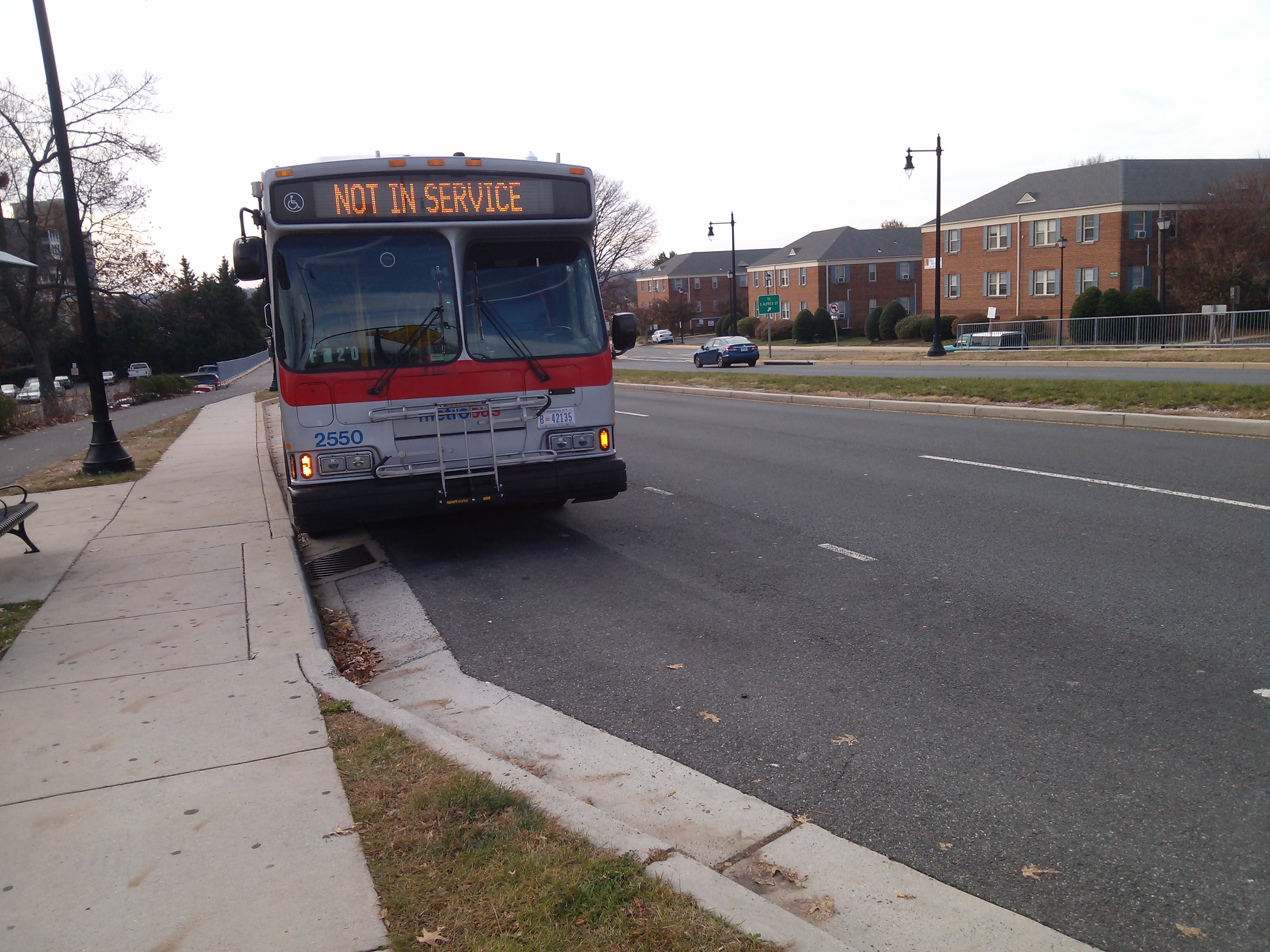
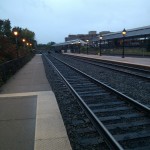
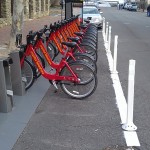
A bus on a cold day
Porto Vecchio is commuter friendly. There is a metro bus stop just steps from the entrance. Commuting in Old Town is also convenient to the King St. Metro, which is on the blue and yellow line. Additionally, studies have shown that homes near public transportation retain their value better then those not near public transportation.
High-rise condominium
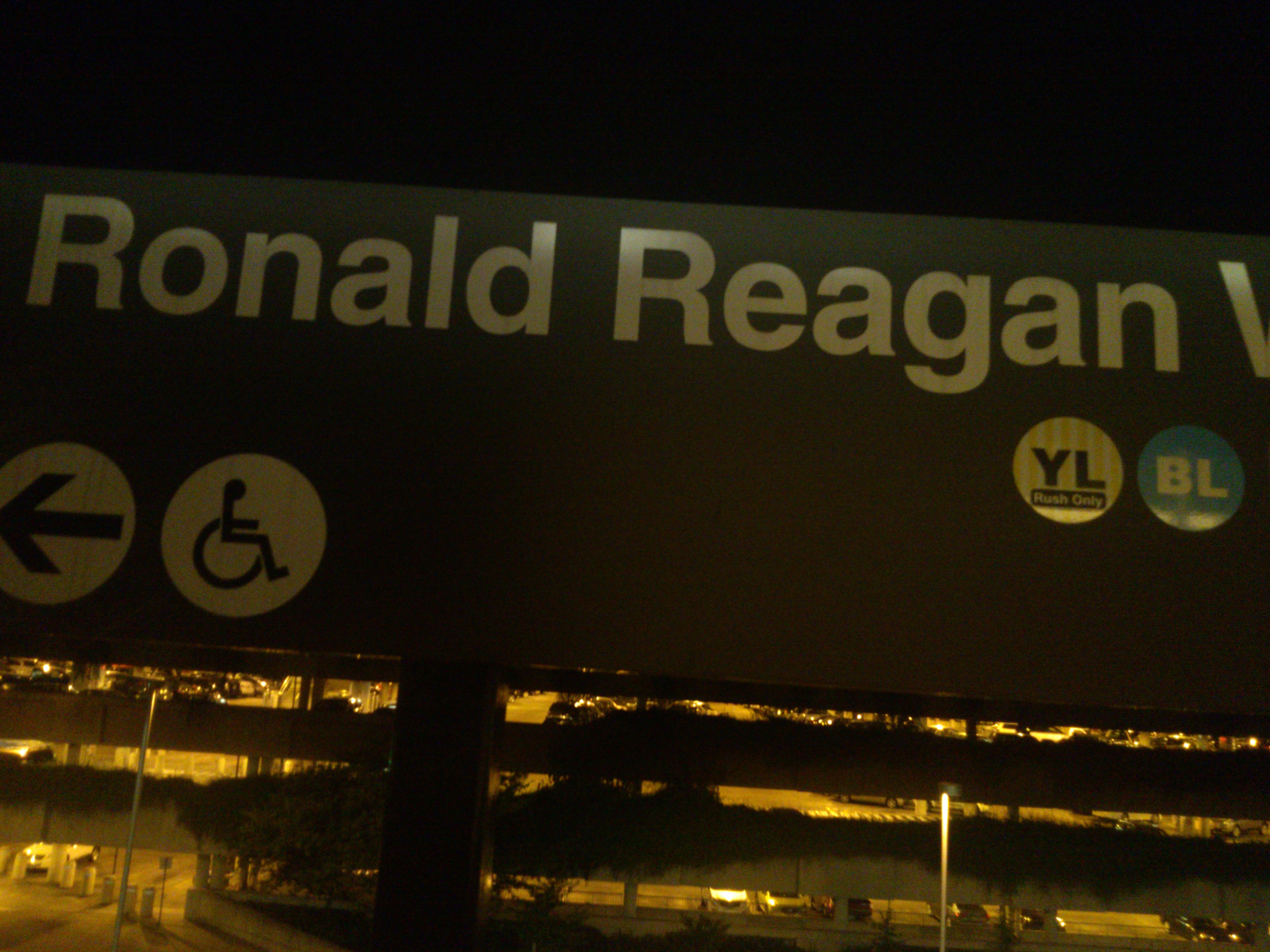
Ronald Reagan airport is on the blue and yellow metro line. This airport is in Arlington. This airport is a transportation hub for commuters traveling to different parts of the country, and world. Reagan is located at 2401 Smith Boulevard, near the George Washington Parkway.
A sign for Reagan near an illuminated parking deck
Will and Julie Nesbitt cross the street in Shirlington
Walk Score helps people find walkable places to live. Walk Score calculates the walkability of an address by locating nearby stores, restaurants, schools, parks, etc. Walk Score promises to measure how easy it is to live a car-lite lifestyle---not how pretty the area is for walking.
Each home listed for sale is given a Walk Score. That number is between 0 and 100. Here are general guidelines for interpreting your score:
90–100 = Walkers' Paradise: Most errands can be accomplished on foot and many people can get by without owning a car.
70–89 = Very Walkable: It's possible to get by without owning a car.
50–69 = Somewhat Walkable: Some stores and amenities are within walking distance, but many everyday trips still require a bike, public transportation, or car.
25–49 = Car-Dependent: Only a few destinations are within easy walking range. For most errands, driving or public transportation is a must.
0–24 = Car-Dependent (Driving Only): Virtually no neighborhood destinations within walking range. You can walk from your house to your car!
Walk Score isn't perfect ...
Home buyers need to be aware that Walk Score is just an approximation of walkability.
Walking to a restaurant on a Fall evening in Del Ray
For example, the Skyline communities of Falls Church generally have a higher Walk Score than the New Alexandria community of Belle View. River Towers has pleasant tree-lined walkways with easy access to neighborhood shops, parks, libraries, the Potomac. Skyline Square is convenient as can be, but broad and busy 4 lane roads make walking inconvenient, if not dangerous. But River Towers doesn't score as high on Walk Score as Skyline Square.
So, there are a number of factors that contribute to walkability that are not part of the algorithm used to calculate Walk Score:
Public transit: Good public transit is important for walkable neighborhoods. Not to fear: you can also search for homes near a metro station.
Street width and block length: Narrow streets slow down traffic. Short blocks provide more routes to the same destination and make it easier to take a direct route.
Street design: Sidewalks and safe crossings are essential to walkability. Appropriate automobile speeds, trees, and other features also help.
Safety from crime and crashes: How much crime is in the neighborhood? How many traffic accidents are there? Are streets well-lit?
Pedestrian-friendly community design: Are buildings close to the sidewalk with parking in back? Are destinations clustered together?
Topography: Hills can make walking difficult, especially if you're carrying groceries.
Freeways and bodies of water: Freeways can divide neighborhoods. Swimming is harder than walking.
Weather: In some places it's just too hot or cold to walk regularly.
Walking near Cameron Mews in Old Town Alexandria
Thus, the tools on our site are a great starting point in your search for homes and neighborhoods of Northern Virginia, but there really is no substitute for your Condo Alexandria realtor. We know the areas and neighborhoods where you want to live and we can really help you sort to the wheat from the chaff.
1. Metro is great for getting to various metro stations in Washington DC, Northern Virginia, and Maryland. Many people use the metro to commute into DC daily.
2. Bus routes offer transportation to highly trafficked areas that might not be covered by the metro. Buses come more frequently in the morning and are usually on an hourly schedule in the evenings.
3. Train useful for longer distance travel to different parts of Virginia as well as different parts of the United States.
4. Plane Ronald Reagan National Airport is a transportation hub for many people in Northern Virginia flying out to different parts of the world.
5. Scooter fuel efficient, easy to find parking for, minimal paperwork involved, and fun to ride.
6. Bicycle green, healthy, and in some ways cheaper then the other modes of transportation listed above. Many neighborhoods in Arlington and Alexandria are bicycle friendly.
7. Walking green, healthy, and free.
8. Boat good for fishing, relaxing on the Potomac River after leaving a marina, or just taking the Potomac Riverboat to a Nationals game.
9. Taxi can be expensive, but great for going out to explore nightlife.
Ronald Reagan Airport is close to Old Town which has several parks
Ronald Reagan Airport is close to Old Town which has many bars on King St.
Some of the scooters for sale at HP Mopeds
Archives Metro stop in DC
Map of Virginia trains
Inside the train
The Alexandria Amtrak Station is close to the King St. Metro
Stop Sign
Commuting plays a very essential role in our everyday life. And one would have to be aware of the ways on how to get to place on time efficiently.
The Virginia Railway Express (VRE) Woodbridge Station is one of the many ways you can commute around and to Springfield, Crystal City including DC’s Union Station that is just a few minutes away in the bustle of rush hour in Lakeridge.
Omnilink serve Lakeridge providing buses that operate regularly in Prince William County.
Express service via buses towards DC and Pentagon is offered in Lakeridge and at the VDOT Commuter Lot entering Lakeridge.
Hitch a Ride!!!
Carpooling has proven to be very popular in Lakeridge where you can meet up at the VDOT Commuter Lot.
Hitching a ride or also rather Slugging is provided by a designated Slug Line Stop in Lakeridge where those wanting to catch a free ride can do so. This much preferred with the demand to use I–95 HOV lanes. A driver heading out to DC in need of one more passenger can make a stop at the Slug Line Stop where the first commuter in the line heading off to DC as well can join the ride and use the I-95 HOV lanes.
With the many ways of commuting, people can never be without any means of transportation in Lakeridge.
photo credit: joeltellingphoto credit: divinemisscopa
For those searching for homes in Northern Virginia, the location is always the main and important factor. However, there are a lot of specifications that would decide on a location. Those would be the exact neighborhoods, views, noise, schools, accessibility to shopping centers/ entertainment/ convenient stores/ healthcare and more. But there is one factor that will remain to be the most important specification and that would be Commute.
Washington DC does have the most gridlock highways in the country and as regional planners suggest improvements to handle the current situation, people and employment still rains hard. Although from the perspective of Real Estate it is a blessing but in terms of commute it is already a complicated and challenging situation that would grow into a more challenging one.
According to local news radio WTOP, the Washington DC region is primed to grow by more than 2 million people over the next 25 years, however the same report did highlight that the region needs to build more accessible roads to handle the influx. While as observed by the Northern Virginia Transportation Alliance, once we get beyond our current major roads projects to deal with the current concerns, there are “no improvements in the pipeline after this”.
Based on the current situation we have, the concern of location in Real Estate may as well be commute. A worker’s commute being frustrating and lengthy can and will have a large impact on his or her lifestyle and even personality. Bearing this in mind, the consideration to trade other location features to commute features will definitely arise.
Such commuting features may be:
Accessibility to current or possible job centers that may include military bases.
Convenient highway access
Accessibility to mass transportation like Metrorail
Proximity to airports – Dulles or Reagan National in Northern Virginia or BWI
Consideration of toll vs. non-toll highways
Carpool hours on certain highways that can affect commute
Accessibility to secondary roads and upcoming road improvements
Awareness of where “ bottlenecks” can be found
Would such considerations make a large change of location specifications to commute specifications in terms of Real Estate?
Huntington Metro
A new study contends that only 39 percent of U.S. communities are affordable for typical households when the cost of transportation is included in the calculation of housing costs.
The Center for Neighborhood Technology analyzed the Housing + Transportation Affordability Index, which examined 161,000 neighborhoods housing 80 percent of the U.S. population, and concluded that for most families, transportation is the second-largest household expense.
It is also a fairly unmanageable one, the study concluded, because it is difficult for families to estimate the full cost of a location before they move there. Gas prices and employment demands aren’t very predictable for many.
Factors that can help people control transportation costs include walkable neighborhood streets, access to public transit, and nearby retail.
Source: Center for Neighborhood Technology (03/23/2010)
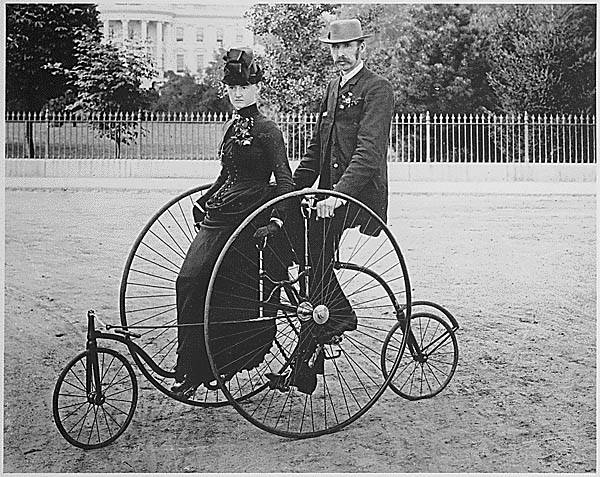 Transportation in Northern Virginia has a history that includes metro, automobile, train, bike, plane, etc.