The revival in the luxury real estate market is being fueled by growth in jumbo mortgages, Reuters reports. Jumbo loans typically are more than $417,000.
“Jumbo loans are returning to the mortgage market after almost disappearing entirely in the wake of the credit crisis of 2008 and the real estate meltdown,” Reuters reports. “Most lenders stopped making new jumbo loans when the private secondary market dried up in the credit crunch.”
But now jumbo loans are coming back. Lenders are reserving jumbo loan approvals to qualified borrowers, and some reportedly are even offering these “once-pricey jumbo loans at interest rates that are barely higher than conventional mortgages,” Reuters reports.
"The jumbo market may fare better than the overall mortgage market in 2013," says Guy Cecala, publisher of Inside Mortgage Finance.
But while jumbo loan volume was about $200 billion last year, it’s still far below the $348 billion in jumbo loans issued in 2007. Cecala predicts that 2013 volume of jumbo loans will reach about $220 billion.
Source: “Jumbo Home Loans Are Back, But Far Below 2007 Levels,” Reuters (Feb. 26, 2013)
Julie Nesbitt
Julie Nesbitt knows the back trails and by-ways of Northern Virginia real estate.
Established in 1974 with a mission to reduce homelessness, increase community support and promote self sufficiency, the Good Shepherd Housing and Family Services is operated by a multi-denominational board of directors and staff managing over 70 housing units. Good Shepherd Housing and Family Services is located in the Mount Zephyr Business Center at 8305 Richmond…
With the U.S. housing market finally picking back up, the National Association of Home Builders (NAHB) conducted a large study to pinpoint how recession may have influenced consumers' lifestyle preferences and home wish lists. Released this month, the survey found that Americans desire:
Energy Star appliances above all else
energy-efficient laundry rooms
high-end amenities such as kitchens with double sinks, French doors, and whole-house technology
Kitchen
What homeowners and buyers do not want, meanwhile, are:
Julie sold another!
Existing-home sales edged up in January, while a seller’s market is developing and home prices continue to rise steadily above year-ago levels, according to the National Association of REALTORS®. Sales rose in every region but the West, which is the region most constrained by limited inventory.
Total existing-home sales, which are completed transactions that include single-family homes, townhomes, condominiums and co-ops, increased 0.4 percent to a seasonally adjusted annual rate of 4.92 million in January from a downwardly revised 4.90 million in December, and are 9.1 percent above the 4.51 million-unit pace in January 2012.
Lawrence Yun, NAR chief economist, said tight inventory is a major factor in the market. “Buyer traffic is continuing to pick up, while seller traffic is holding steady,” he said. “In fact, buyer traffic is 40 percent above a year ago, so there is plenty of demand but insufficient inventory to improve sales more strongly. We’ve transitioned into a seller’s market in much of the country.”
Total housing inventory at the end of January fell 4.9 percent to 1.74 million existing homes available for sale, which represents a 4.2-month supply at the current sales pace, down from 4.5 months in December, and is the lowest housing supply since April 2005 when it was also 4.2 months.
Listed inventory is 25.3 percent below a year ago when there was a 6.2-month supply. Raw unsold inventory is at the lowest level since December 1999 when there were 1.71 million homes on the market.
“We expect a seasonal rise of inventory this spring, but it may be insufficient to avoid more frequent incidences of multiple bidding and faster-than-normal price growth,” Yun explained.
The national median existing-home price for all housing types was $173,600 in January, up 12.3 percent from January 2012, which is the 11thconsecutive month of year-over-year price increases; that last occurred from July 2005 to May 2006. The January gain is the strongest since November 2005 when it was 12.9 percent above a year earlier.
Distressed homes — foreclosures and short sales — accounted for 23 percent of January sales, down from 24 percent in December and 35 percent in January 2012. Fourteen percent of January sales were foreclosures and 9 percent were short sales. Foreclosures sold for an average discount of 20 percent below market value in January, while short sales were discounted 12 percent.
According to Freddie Mac, the national average commitment rate for a 30-year, conventional, fixed-rate mortgage rose to 3.41 percent in January from a record low 3.35 percent in December; it was 3.92 percent in January 2012.
Sales Trends
NAR President Gary Thomas said homes are selling faster. “The typical home is selling nearly four weeks faster than it did a year ago,” he said. “In this environment, REALTORS® can help buyers strike a balance between moving quickly and protecting their interests, such as making offers contingent upon a satisfactory home inspection and obtaining a loan; of course, a loan pre-qualification may help too.”
The median time on market for all homes was 71 days in January, down from 73 days in December and is 28.3 percent below 99 days in January 2012. Short sales were on the market for a median of 94 days, while foreclosures typically sold in 47 days and non-distressed homes took 75 days; 31 percent of all homes sold in January were on the market for less than a month.
First-time buyers accounted for 30 percent of purchases in January, unchanged from December; they were 33 percent in January 2012.
All-cash sales were at 28 percent of transactions in January, down from 29 percent in December and 31 percent in January 2012. Investors, who account for most cash sales, purchased 19 percent of homes in January, down from 21 percent in December and 23 percent in January 2012.
Single-family home sales increased 0.2 percent to a seasonally adjusted annual rate of 4.34 million in January from 4.33 million in December, and are 8.5 percent above the 4.00 million-unit level in January 2012. The median existing single-family home price was $174,100 in January, up 12.6 percent from a year ago.
Existing condominium and co-op sales rose 1.8 percent to an annualized pace of 580,000 in January from 570,000 in December, and are 13.7 percent higher than the 510,000-unit level a year ago. The median existing condo price was $169,600 inJanuary, up 9.4 percent from January 2012.
Performance by Region
Regionally, existing-home sales in the Northeast increased 4.8 percent to an annual rate of 650,000 in January and are 12.1 percent above January 2012. The median price in the Northeast was $230,500, up 2.4 percent from a year ago.
Existing-home sales in the Midwest rose 3.6 percent in January to a pace of 1.16 million and are 17.2 percent higher than a year ago. The median price in the Midwest was $131,800, which is 8.6 percent above January 2012.
In the South, existing-home sales increased 1.0 percent to an annual level of 1.96 million in January and are 14.0 percent above January 2012. The median price in the South was $152,100, up 13.4 percent from a year ago.
Existing-home sales in the West fell 5.7 percent to a pace of 1.15 million in January and are 5.7 percent below a year ago. The median price in the West was $239,800, which is 26.6 percent above January 2012.
Source: NAR
Established in 1974 with a mission to reduce homelessness, increase community support and promote self sufficiency, the Good Shepherd Housing and Family Services is operated by a multi-denominational board of directors and staff managing over 70 housing units. Good Shepherd Housing and Family Services is located in the Mount Zephyr Business Center at 8305 Richmond…
Brick sidewalks are common in the 22314 zipcode
Moves across county and state lines are falling, with the 2007-2009 recession blamed for changing Americans’ moving patterns, according to an analysis of census data through 2010. The Great Recession caused more Americans to move because they could no longer afford to remain where they were. That's a big change in what traditionally motivates Americans to move -- a bigger home or higher paying job, USA Today reports about the analysis.
Nine percent of Americans stayed local with their moves during 2007-2009 period -- the highest in a decade.
"Typically, over the last couple of decades, when Americans moved, they moved to improve their lives," says Michael Stoll, author of the research and chairman of UCLA's public policy department. "This is the shock: For the first time, Americans are moving for downward economic mobility. Either they lost their house or can't afford where they're renting currently or needed to save money.”
More than 23 percent moved for more affordable housing during the recession. Prior to the recession, that percentage stood at 20.8 percent.
Also, prior to the recession, 41.3 percent of Americans moved in order to own a home or settle into a better neighborhood. However, during the recession, that percentage dropped to 30.4 percent.
Source: “Americans on the Move Start Moving Down, Not Up; Setback in Upward Mobility Hits Blacks, Sun Belt Spots Hardest,” USA Today (Feb. 20, 2013)
Home Prices In Arlington Continue To Hike
The housing market in Arlington County is getting more and more expensive as potential buyers continue to have fewer homes and condos to choose from.
Inlet Cove is alongside Route 1 This neighborhood of townhouses is near grocers and eateries Inlet Cove is close to Fort Belvoir, Alexandria, and Potomac Mills shops, in the city of Woodbridge Interior to these properties are multilevel Inlet Cove is serene
Pending home sales increased again in March, affirming that a surge of home sales is unfolding for the spring home buying season, according to the National Association of REALTORS®. The Pending Home Sales Index, a forward-looking indicator based on contracts signed in March, rose 5.3 percent to 102.9 from 97.7 in February, and is 21.1…
Some of the best housing deals are on high-end homes, many over $1 million. Some of them need TLC or they aren’t in the most-coveted locations. But there are plenty of desirable properties and lots of sellers who are getting impatient. Buyers with cash have the best opportunities. Buyers who need a mortgage should move…
The National Association of Realtors recently did a study about the characteristics of home buyers. Some of the findings might surprise you. Thirteen percent of buyers purchased a home with one or more parents and grandparents together with adult children. There were several reasons given for purchasing a multi-generational home. Cost savings; Children over the…
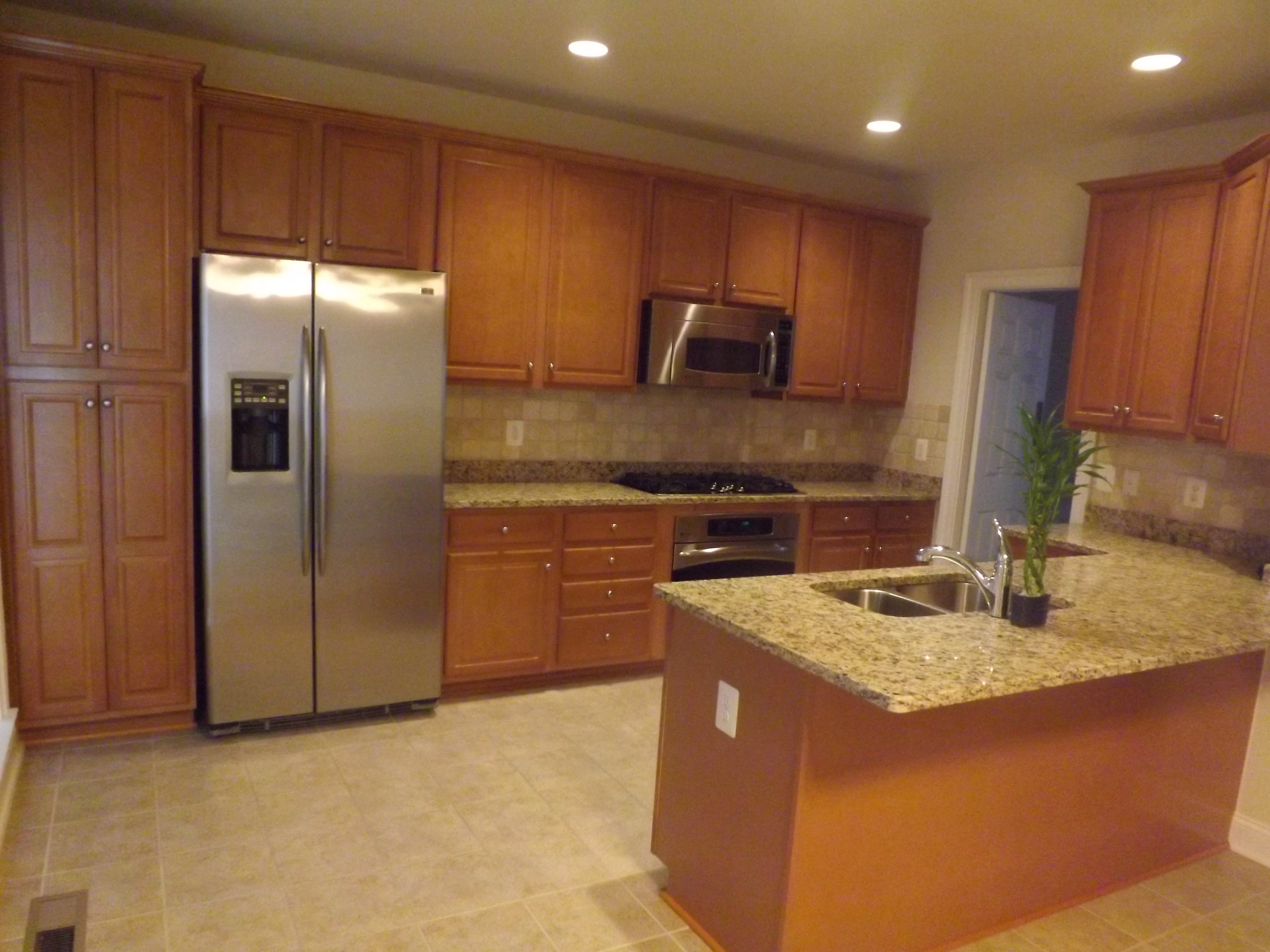
This is new kitchen in at Potomac Branch.
As kitchens have become rooms for doing more than just cooking, the need to maximize space has become paramount. That’s where cabinets come in handy. Learn about home owners’ options in using these to creative aesthetically pleasing storage solutions.
As the number of kitchen accessories has increased, cabinetry has become both a major necessity and a challenge. That’s because kitchens have become a place for additional tasks besides cooking — entertaining, bill paying, and homework, for example. Also, the cost of cabinetry can be staggering, sometimes as much as 50 to 60 percent of a total kitchen redo.
When it comes to working with buyers or sellers on improving a kitchen, your goal should be to help them understand the pros and cons of overhauling cabinet storage — or whether they should do anything dramatic, as there are ways they can improve cabinetry without replacing it. The key questions home owners should ask are:
Do the kitchen and its existing cabinetry appeal visually?
How well does the cabinetry work to sufficiently store pots and pans, dishes, glassware, cutlery, spices, cookbooks, and other cooking and entertaining accessories?
Based on those responses, they can decide whether to undertake a limited redo or embark on an extensive transformation. Here’s how they can proceed:
Partial Tweak
If a layout works and home owners like their current appliances and surfaces, sometimes they can just reface cabinet fronts with newer materials such as popular cherry, maple, or bamboo. Other times, still less is needed and the fronts can be retained and the knobs or pulls changed out to a more stylish brushed or satin nickel. If space has been wasted in the room, they also might be able to find a place to construct a walk-in pantry that has easy-to-access shelves with specialized inserts to keep everything accessible but out of sight behind a full-height wood or obscured glass door. The latter can provide visual information about what’s inside without home owners having to keep contents meticulously ordered, says Chicago designer Tom Segal of Kaufman Segal Design.
Pantries can vary in size from a basic 2-by-2-foot space to a more generous 4-by-4 with room for shelves on three sides and space to maneuver, or an even bigger 4 by 8 feet with outlets for extra appliances and a secondary sink, says architect David Barbour, whose eponymous firm is based in Bridgeport, Conn. Partial redos may cost just half of what a total overhaul would, he says.
Total Gut
When it comes to replacing cabinets completely because they’re worn or inefficient, home owners have a choice of three major options. They can go for the crème de la crème of custom at the top, semicustom in the middle, and stock at the budget end. The choice depends in part on the level of quality of other items in the room — appliances, countertops, flooring, backsplashes, and lighting — as well as the home’s overall value and how long home owners plan to remain. There’s little point in putting an $115,000 kitchen in a $350,000 home or going through the expense and hassle if home owners will stay put for only a few years, says Segal, who’s redone both clients’ and his own kitchens. He and other design experts recommend not spending more than 15 percent of a home’s value on a kitchen redo. So for that $350,000 home, he advises keeping the budget limited to a maximum of $52,500.
The best way to start is for home owners to add up the linear feet of their existing cabinetry to be sure they’ll gain as much or more storage and then decide, probably with professional expertise, where to locate each type of storage — for example, spices and knives adjacent to an oven, Segal says. Tall, deep cabinets with pull-out shelves make efficient use of space and can be an alternative to a walk-in pantry, if the area of the kitchen is limited. Home owners should also decide whether they want drawers or cabinets — depending on how they like to store their belongings — and if they have enough room to include an island with base cabinetry. The best-designed islands allow 42 inches all around to navigate, measure 36 inches long and 24 inches wide, and have a 12-inch overhang on at least one side to make it work as an eating, bill paying, or homework center, says building contractor and licensed remodeling expert Philip A. Beaubien, whose Beaubien Construction is based in Santa Barbara, Calif.
With all this information in hand, home owners should be able to decide which of the following three levels to go with:
▪ Custom cabinets are constructed from scratch to a room’s specific layout for a seamless built-in look with no gaps between boxes. Most custom manufacturers such as Wood-Mode, Fine Custom Cabinetry and Rutt Handcrafted Cabinetry offer an extensive array of woods, finishes, and custom paint colors; door styles, such as flat or with some type of raised paneling or perhaps glass; cabinet or drawer depths; varied styles and materials for the pulls or knobs; and a large number of specialized cabinet organizers to keep specific items in place. Custom cabinets also come with better exposed hinges for a tighter fit and smoother draw glides, some of which may retract on their own. Beaubien prefers custom cabinets for their handmade appearance.
▪ Semicustom cabinets are manufactured in a large range of sizes based on 3-inch increments, and numerous materials and finishes are available — just not as many as for the custom option, says Segal. While they typically present a seamless look and fit together well, adjustments sometimes are needed for a specific layout, which may bring additional costs. Hinges also are typically concealed, which means a less-tight fit, he says. Home owners should verify specifics so they don’t end up spending so much to adjust them that the final price is close to a custom cabinet. Segal went with a semicustom design to save funds when he remodeled his kitchen. He found that with careful planning he gave up little and gained a quality product that should last years.
▪ Stock cabinets are the equivalent of off-the rack — or shelf — choices made in ready-made sizes, with fewer possibilities to pick among. They’re widely available at big-box stores like Lowe’s (a REALTOR Benefits® Partner), Home Depot, and IKEA. In kitchens with an uncomplicated layout or for home owners who are content with basics that will function well and help lower their budget, stock cabinets can be a good solution. Barbour likes to look first at these options, then have a carpenter add moldings to conceal gaps and lighting. He recommends carefully choosing the best stock boxes available—those from well-crafted wood versus composition or pressed board, which won’t wear as well. It’s also important to have sturdy shelves within — at least three-quarters of an inch thick — that don’t extend longer than 30 to 48 inches to avoid sagging. While Beaubien doesn’t use stock in most kitchen projects, he finds them acceptable for garage storage. They also can be a wise choice for a vacation home where home owners spend less time indoors, Segal says.
Another way to cut costs when going with any of the three choices is to incorporate some open shelves above countertops, which can sometimes accomplish what a closed cabinet could at a quarter of the cost, Barbour says. They also allow home owners to see everything stored at a glance and add instant color and pattern. Of course, the downside is a continual need to keep the contents neat.
The bottom line: Home owners should make their decision based on their home’s price, how long they plan to stay in it, how complicated or simple their kitchen layout is, what they’re storing, and their overall kitchen priorities. If having an expensive restaurant-style range and marble countertops are at the top of their wish list, they may want to scale back their cabinet budget. The decision should suit them rather than the next buyer.
January 2013 | By Barbara Ballinger
Foreclosure filings continue their downward spiral, dropping to the lowest level in January since April 2007, according to RealtyTrac's latest report.
Filings — which include notices of default, scheduled auctions, and bank repossessions — dropped 28 percent in January year-over-year.
"We're now well past the peak of the foreclosure crisis," says Daren Blomquist, spokesman for RealtyTrac.
Still, the foreclosure problem has a ways to go: Filings remain at double the pace of 2005, and foreclosure auctions are on the rise in 26 states.
"It's likely that by this time next year, we'll start to see 2005-type, pre-crisis numbers again," Blomquist says.
The decrease in foreclosure starts in January was largely attributed to California, which saw a significant drop last month. Due to a new law in California that offers borrowers in default more protection, the state saw foreclosure filings fall 62 percent in January. The big drop made it the first month since January 2007 that California was not the leader in the nation in foreclosure filings — that state has been replaced by Florida.
Meanwhile, RealtyTrac also reported that bank repossessions were down 24 percent in January from year-ago levels, reaching their lowest ebb since February 2008 and putting it below half of the record amount set in September 2010.
Source: RealtyTrac and “Foreclosure Filings Fall to Lowest Level Since 2007,” CNNMoney (Feb. 14, 2013)
Friday is the best day of the week to sell a home. Homes listed on Friday sell for 99.1 percent of their original asking price, a higher percentage than homes listed on any other day of the week, according to a study by real estate broker Redfin, which analyzed more than 500,000 home listings and sales records.
The best month to sell? April, according to the analysis. Homes sold in April tended to sell closer to their asking price. In April, homes were found to sell for a 99.2 percent sale price-to-list ratio, compared to a 97.3 percent ratio of homes listed in December.
Springtime is still a good time to sell for a higher price and also in the fastest time too, according to the study. Homes tended to sell within 90 days of being listed during March through June, according to the study.
Redfin also found that pricing the home competitively from its debut is critical because that’s when it’ll receive the most traffic. During the first week a listing debuts on the market, it receives nearly four times more visits on real estate Web sites than it will a month later.
Source: Redfin
Stuart Nesbitt, a chip off the old block
Younger Americans place more importance and hold more favorable views toward home ownership than older generations, according to a new survey from Prudential Real Estate of about 5,000 potential buyers and sellers.
About 77 percent of those aged 25-34 and 78 percent of those aged 35 to 44 rate home ownership as “very important.” The millennials and Generation X age group represent the ages between 25 and 44.
“Millennials and Generation X — about 85 million people strong — face a unique opportunity in U.S. housing,” says Earl Lee, president of Prudential Real Estate. “They are generally optimistic about home ownership and, by nature, share a strong sense of community. As important, many were not impacted by the real estate downturn and are looking at today’s buying opportunities with keen interest.”
Seventy-four percent of all survey respondents say that interest rates at historically low levels make it a great time to purchase a home. The primary drivers for owning a home, according to the survey, were for more control over space, safety, and as an investment.
Still, consumers are cautious about the real estate process. Sixty-two percent of respondents say that obtaining financing is more challenging, and 72 percent say that having a trusted partner as a reliable source of information is important to them.
“It’s been a tough road but the momentum we are seeing across the economy and real estate market appears sustainable,” says Stephen Phillips, chief operating officer for HSF Affiliates LLC. “Real estate agents have a real opportunity to develop new relations with a younger generation ready to invest in a home, and with others who are returning to the market thanks to improving conditions.”
Source: Prudential Real Estate
The housing market recovery continues to grow stronger, but the economy remains “fragile,” according to the Obama administration’s latest Housing Scorecard for January. The Obama Administration’s Housing Scorecard is released monthly, providing a snapshot of the nation’s housing market.
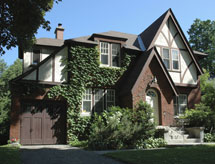
typical Tudor home
"The housing market has clearly bottomed out nationally and is turning a corner with new home construction increasing to a level not seen since June 2008 and home prices showing strong annual gains,” says Kurt Usowski, deputy assistant secretary for economic affairs with the U.S. Department of Housing and Urban Development. “But with so many households still struggling, we have important work ahead.”
Government efforts to help struggling home owners avoid foreclosure are improving. Nearly 1.5 million homeowner assistance actions have taken place through the Making Home Affordable Program, and the Federal Housing Administration has offered more than 1.5 million loss mitigation and early delinquency interventions.
"Every foreclosure avoided has positive impacts for families, communities, and our economy,” says Tim Massad, Treasury assistant secretary for financial stability.
Also, the number of underwater borrowers continues to fall while home prices improve. Home owners who owe more on their mortgage than their home is currently worth account for 10.67 million borrowers, which is down from 10.78 million in the previous quarter, according to CoreLogic.
The inventory of existing homes for sale continues to drop, reaching a 4.4 months’ supply, according to National Association of REALTORS®’ data. In November, the supply of housing averaged 5.3 months.
Fewer homes are being sold due to limited inventories. Existing home sales fell to 411.7 million in January from 415.8 million in December.
Source: U.S. Department of the Treasury and “Obama Scorecard Warns Economy Remains Fragile,” HousingWire (Feb. 8, 2013)
Julie Nesbitt
Julie Nesbitt knows the back trails and by-ways of Northern Virginia real estate.
Established in 1974 with a mission to reduce homelessness, increase community support and promote self sufficiency, the Good Shepherd Housing and Family Services is operated by a multi-denominational board of directors and staff managing over 70 housing units. Good Shepherd Housing and Family Services is located in the Mount Zephyr Business Center at 8305 Richmond…
Sellers have a better chance at getting their house sold by using a REALTOR® than opting for the do-it-yourself approach, according to a survey of 1,000 home owners by HomeGain.com, an online real estate resource. Nearly 60 percent of home owners who used a REALTOR® to sell their home were successful compared to 39 percent of FSBOs, the survey found.
In the survey, 83 percent of home owners said they used a REALTOR® to sell their home, whereas 17 percent said they tried to sell it themselves. This corresponds to results from NAR's 2010 Profile of Buyers & Sellers, which found 88 percent of sellers were assisted by a real estate agent. (Additionally, 83 percent of buyers bought their home through an agent.)
“It is especially striking that home owners fare significantly better in selling their homes using a REALTOR® than selling on their own,” says Louis Cammarosano, general manager at HomeGain. “Due to that relative success, the level of satisfaction in the home selling process is also higher for home sellers utilizing the services of a REALTOR® than those who try to sell their homes on their own.”
Among the findings in its For Sale by Owner vs. REALTOR® survey:
88 percent of home owners who sold their homes using a REALTOR® said they would use a REALTOR® again.
24 percent of FSBOs eventually contacted a REALTOR® to help sell their home.
Source: “HomeGain Survey Finds Home Sellers Fare 50% Better in Getting Their Homes Sold Using a REALTOR® Than Selling on Their Own,” HomeGain.com (Feb. 24, 2011)















 Source: RealtyTrac and “Foreclosure Filings Fall to Lowest Level Since 2007,” CNNMoney (Feb. 14, 2013)
 Source: Redfin