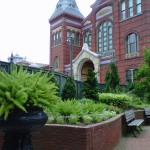
Located on the Waterfront of Historic Old Town Alexandria, the Torpedo Factory Art Center is a great place for art lovers and tourists alike. The center is stocked
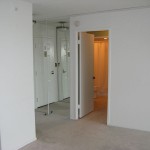
A Penthouse unit from the Torpedo Factory
with pieces ranging from “The Nest Project” to at “Fiberworks” Gallery. The museum has over 500,000 visitors annually and has over 82 artist studios, six galleries, two workshops, and the Alexandria Archaeology Museum. The center also houses over 165 visual artists who produce artwork ranging from painting to stained glass. The Torpedo Factory is located at 105 N. Union Street, Alexandria, VA 22314. (703) 838-4565.
Across the street from the Torpedo Factory Art Center is the Torpedo Factory Condominiums, a collection of apartment and townhouse-style condos at the heart of Old Town's most desirable waterfront locations.
The Occoqan Regional Park is located in Lorton, Virginia, in Fairfax County, right across from the Town of Occoquan. It's located on the Occoquan River. It opened in 2008 making it 1 of 29 parks in the Northern Virginia Regional Parks Authority. It has around 400 acres of recreational space. There are many different things to do there such as, hit the batting cage, have a picnic, get a snack at the snack bar in the marina, play your favorite sport on one of their athletic fields, etc. They also have a boat ramp and boat storage. Their hiking trail is 1.1 miles round trip and forms a loop. The trail is well maintained. Most say that the blue trail is a great running trail and is very well marked. Dogs are of course welcome in the park. Historic black kilns from the early 1900's can be found on the property, reminding us of the women suffragists who demonstrated in front of the White House and were then imprisoned on the prison farm where these are found.
If you're shopping for a home you might be surprised to learn just how affordable and pleasant some homes in Occoquan and near the park might be.
Boasting its Victorian architectural beauty, the Lee- Fendall House interprets the life and living of the Lee family from 1850 to 1870 with the well restored house and cared for garden. The Lee-Fendall House is situated in the Historic District of Old Town Alexandria on Lee Corner, at the junction of North Washington and Oronoco Streets within the neighborhood where other Lee Homes were located in the 18th and 19th centuries.
General Robert E. Lee’s father, Henry “Light Horse Harry” Lee who was a revolutionary war hero, sold the piece of land situated at the corner of Oronoco Street to his cousin Philip Richard Fendall who later on built his family home on this land in 1785. The Lee family resided on this land from 1785 to 1903 even when the Union Army had taken over the property to establish a hospital for its soldiers in 1863. After the departure of the last Lee member from the property, Robert Downham resided in the house till 1937 when he conveyed the property to John L. Lewin, who in turn lived there till his death in 1969.
The half acre garden of the Lee-Fendall House is a well managed garden overseen by the Alexandria Council of Garden Clubs consisting of 24 garden clubs ever since 1974. A variety of heritage roses, collection of herbs, English boxwoods, Black Walnut Trees, Gingko, Magnolia Grandiflora and scampering squirrels along with the tombstone of Philip R. Fendall’s mother, Eleanor Fendall can be found in this cared for garden.
The Lee- Fendall House Museum and Garden is located at 614 Oronoco Street in Alexandria VA 22314. For more information about tours, events, rentals and the like, please call 703 548 1789 or visit www.leefendallhouse.org.
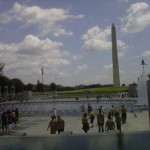
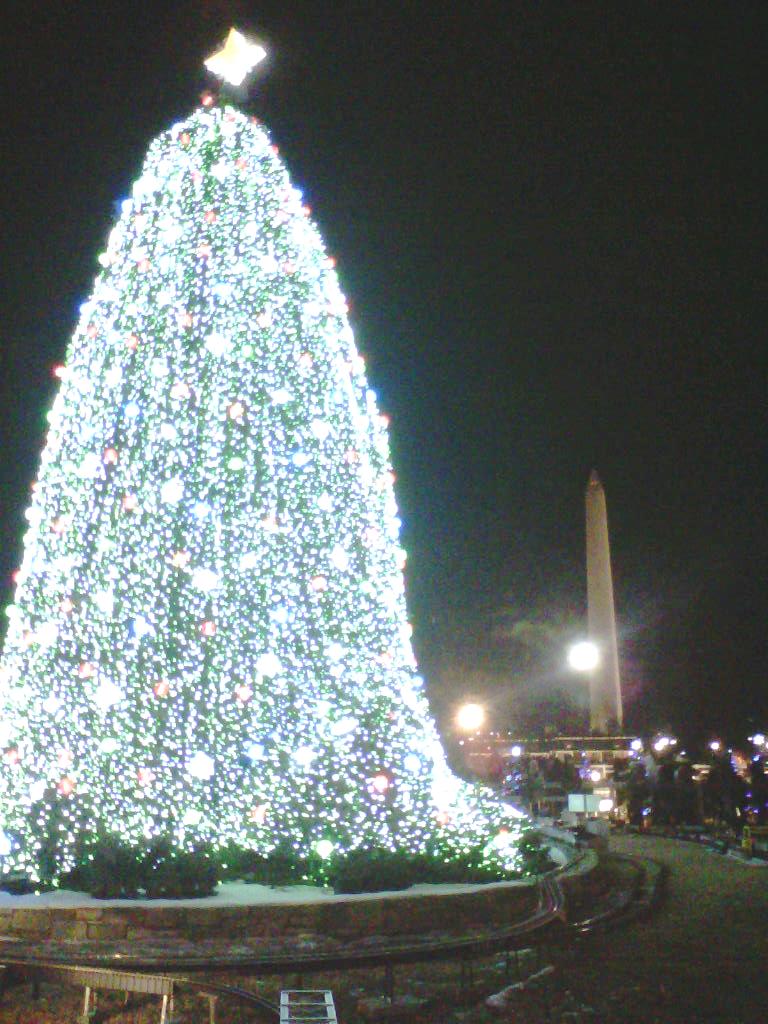
The National Christmas Tree and the Washington Monument
The first national Christmas celebrations began in 1913 when President Woodrow Wilson and over 20,000 visitors gathered together at the Capitol with a lighted community Christmas tree that began the national event.
In 1923, Vermont’s Middlebury College had presented the first official National Christmas Tree as a gift. It was decorated with 2,500 red, white and green lights and was lit by President Calvin Coolidge on the Eve of Christmas at President’s Park situated to the south of the White House also known as the Ellipse. Through the years, the National Christmas Tree had been relocated to several areas such as in 1923 when it was relocated to Sherman Plaza and to Lafayette Park years after, and was returned to the Ellipse in 1939.
On December 17, 1954, President Dwight Eisenhower started the lighting of the National Christmas Tree for the Pageant of Peace, permitting more visitors to view the lighting and celebrating Christmas Eve at home with family.
From a single Christmas tree, the National Christmas Tree now is accompanied by 56 smaller Christmas trees representing each state, territory and the District of Columbia. The National Christmas Tree is lit with reflection of the current events such as when the lights were turned off for a moment in support of the American hostages in Lebanon and their families on Christmas Eve in 1985 as instructed by President George H. W. Bush, and the lighting in 2001, when the children of the September 11 attack victims of the Pentagon had assisted in the lighting.
An array of trees, such as the Balsam Fir, Fraser Fir, Engelmann Spruce and Red Cedar were constantly donated for the event till 1973, when the National Arborist Association then donated a 42 foot blue spruce intended as a permanent National Christmas Tree till it began to die and thus a 40 foot tall living Colorado blue spruce was donated from Maryland and served as the National Christmas Tree. Standard filament burning bulbs had long ago decorated the National Christmas, then Solar energy was then used in 1995 to light the tree, in 2007 energy efficient LED lights are now used as a reminder to everyone that energy can be saved to decrease carbon footprint.
Every year, the tree lighting ceremony begins the festivities of the National Christmas Tree program or “Pageant of Peace”, with re-known performers and a military band and a message of peace by the President dedicated to everyone worldwide. Entertainment and musical performances provided by volunteer choirs, bands and dancers are for free.
For the “Christmas Pathway of Peace”, the National Christmas Tree and its accompanying 56 smaller trees shall be lit every night at dusk till 11pm all through the 1st of January. While model trains surrounding the base of the National Christmas Tree are provided by the National Christmas Tree Railroad.
Located north of Manassas in Prince William County, the Manassas National Battlefield Park sites the area where the American Civil War battles took place in July 21, 1861 ( First Battle of Bull Run) and in August 28 and 30, 1862 ( Second Battle of Bull Run – First Battle of Manassas).
The National Battlefield Park was established in 1940 and listed on the National Register of Historic Places in October 15, 1966, that now offers everyone the chance to discover the site where the battles took place years ago along with the Henry Visitor Center located at the south entrance to the park that showcases the civil war era uniforms, weapons, gear, exhibits and more to highlight the First Battle of Bull Run.
Featured at Manassas National Battlefield Park:
Stone House – Found at the intersection of Sudley Road and Lee Highway that was occupied as a hospital during the battles.
Stone Bridge – Located on Lee Highway and within proximity of Bull Run where the Union retreated after the battles.
Brawner’s Farm – Location where the second battle began and renovated as a museum exhibiting the Second Battle of Bull Run.
Battery Heights – The Confederate batteries were deployed at the Union troops.
Matthews Hill – Site where the first battle begun.
The Unfinished Railroad Grade – Site where Jackson deployed his men for the second battle.
The Deep Cut – Area where Pope fired his attacks against the Grade.
Groveton – A Civil War era neighborhood with remains of a small house that was occupied by Lucinda Dogan with a Confederate Cemetry nearby.
New York Monuments – Site where 123 5th New York Zouaves men lost in 5 minutes.
Hazel Plain – Chinn family plantation now in ruins located across the Henry Hill Visitors Center.
Chinn Ridge – Counterattack of General James Longstreet of the second battle took place.
Portici – Francis Lewis plantation used as the Confederate Headquarters in the second battle now in ruins.
The Robinsons House – The home of James Robinson.
Manassas National Battlefield
12521 Lee Highway
Manassas, VA 20109
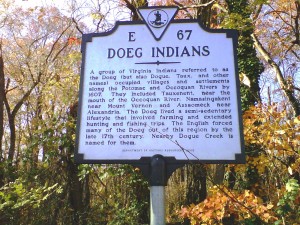
Doeg Indians Marker at the pull off area along VA 235
A tribe of Native American Indians called the ‘Doeg’ or ‘Doages’, ‘Dogues’, ‘Taux’, Dogi’, ‘Tacci’ and more had resided in villages of Northern Virginia along the Potomac River and Occoquan Rivers, including Tauxenent near the mouth of the Occoquan River, Assameck near Alexandria and Namasingakent near Mount Vernon in 1607. The ‘Doeg’ were said to be a branch of the Algonquian language family who lived on hunting, fishing and farming according to the seasons while frequently residing in different locations.
A large number of the ‘Doeg’ were forced out by the English colonists within the 17th Century while the others died from European diseases. The remaining ‘Doeg’ moved towards the eastern bank of the Potomac River and south of the north bank of the Rappahanock.
The Dogue Creek is named after the ‘Doeg’ Indians.
Gunston Hall
Located in Fairfax County near Lorton and Mason Neck, Gunston Hall Plantation was the center of a 5,500 acre tobacco and corn plantation. Owned by the author of the Virginia Declaration of Rights, George Mason IV (1725 – 1792), this Georgian style home and garden is now a National Historic Landmark.
It is now owned by the Commonwealth of Virginia and administered by a Board of Regents appointed from the National Society of the Colonial Dames of America.
Gunston Hall is open from 9:30 am to 5:00 pm except holidays such as Thanksgiving, Christmas and New Year’s Day. And special events are showcased throughout the year.
Guided tours are offered of the mansion and the 550 acres of ground. The hiking trails are open till 6:00pm.
An outdoor Swimming Pool Complex – Lap Pool, Recreational Pool, Kiddies Pool, Children’s Water House and Multiple Water Slides
Miniature Golf Course
Batting Cages – Baseball and Softball
Activates / Events for Children on special holidays / occasions
The Upton Hill Regional Park at 6060 Wilson Boulevard in Arlington Virginia is well loved by nearby residents and visitors from around. It is a wooded recreational park in the heart of the most densely populated areas in Northern Virginia. Found between Arlington and Fairfax County line just at the intersection of Patrick Henry Drive and Wilson Boulevard, Upton Hill Regional Park is a great place for families to bond and enjoy. An extensive renovation in 2007 was done to attract local residents and more visitors to promote an innovative and public facility as the area and local government’s commitment to its community.
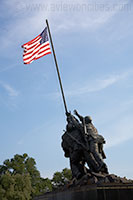
The Marine Corps War Memorial
“In honor and in memory of the men of the United States Marine Corps who have given their lives to their country since November 10, 1775.”
The Marine Corps War Memorial can be found on Marshall Drive between Route 50 and the Arlington national Cemetery in Rosslyn. Every single name and date of every principal Marine Corps. engagement is burnished onto the base of the statue along with the inscription “In honor and in memory of the men of the United States Marine Corps who have given their lives to their country since November 10, 1775”, in honor of the fallen U.S marine Corps members.
News photographer Joe Rosenthal witnessed and photographed 6 men raising the American flag on Mount Suribachi. The picture won the Pulitzer Prize, and then later on became the symbol of the war effort in the Pacific that was used by the American government to sell war bonds and to promote the war effort. It was Felix DeWeldon who later on created a life size model of the photograph, casted into bronze and brought to Washington D.C in September 1954.







-150x150.jpg)

-150x150.jpg)
-150x150.jpg)
-150x150.jpg)
-150x150.jpg)
-150x150.jpg)
-150x150.jpg)
-150x150.jpg)
-150x150.jpg)
-150x150.jpg)