The housing recovery appears to be on track and growing stronger. Home sales and prices are up after reaching bottom in 2010, foreclosures and mortgage delinquencies are dropping, yet housing affordability still remains high.
So why are some analysts and economists concerned?
At a recent Milken Institute Global Conference in Beverly Hills, Calif., panelists said that threats to the housing recovery still remain. The biggest threats they pointed to included:
Land scarcity: Real estate developers are struggling to find desirable land to start new projects, which is limiting the supply of new homes. A few years ago, banks took ownership of land after developers had foreclosed on some projects. The land is worth less than its original price so banks are reluctant to write off additional losses by selling it too cheaply. Plus, lenders remain cautious about issuing loans for new land purchases.
House flippers should be cautious: Housing affordability is high mostly due to super low mortgage rates, and investors are taking advantage with intentions of flipping homes for profit. "No doubt you can buy a house today and get a really good price and a low-interest loan,” says Jeff Greene, president of Florida Sunshine Investments. “But if you want to sell that house to somebody two or three years later and rates go up to 5 or 6 percent, how much is he going to pay for that house?"
Foreign buyers potentially inflating prices: In some markets, strong demand by foreign buyers has helped home prices recover, which has made homes more expensive for Americans in some areas. Some analysts fear that it could even lead to another housing bubble if interest rates started rising quickly as well. Markets like Miami, Los Angeles, and New York are seeing strong demand among foreign buyers. Some say this is a good thing, because it reflects a strong faith in the U.S. market.
A ‘patchy’ recovery: Some markets are seeing rapid increases with bidding wars, rising prices, and low inventories, while other markets are still at a standstill. For example, Miami’s housing market is “on fire” while 80 miles north in Palm Beach County there’s a “huge glut of housing,” says Greene.
Inlet Cove is alongside Route 1 This neighborhood of townhouses is near grocers and eateries Inlet Cove is close to Fort Belvoir, Alexandria, and Potomac Mills shops, in the city of Woodbridge Interior to these properties are multilevel Inlet Cove is serene
Pending home sales increased again in March, affirming that a surge of home sales is unfolding for the spring home buying season, according to the National Association of REALTORS®. The Pending Home Sales Index, a forward-looking indicator based on contracts signed in March, rose 5.3 percent to 102.9 from 97.7 in February, and is 21.1…
Some of the best housing deals are on high-end homes, many over $1 million. Some of them need TLC or they aren’t in the most-coveted locations. But there are plenty of desirable properties and lots of sellers who are getting impatient. Buyers with cash have the best opportunities. Buyers who need a mortgage should move…
The National Association of Realtors recently did a study about the characteristics of home buyers. Some of the findings might surprise you. Thirteen percent of buyers purchased a home with one or more parents and grandparents together with adult children. There were several reasons given for purchasing a multi-generational home. Cost savings; Children over the…
Most people have heard of the MLS, but many are unclear as to exactly what it is. MLS stands for Multiple Listing Service.The MLS is a database of homes listed for sale.
The Multiple Listing Service is probably your best tool as a home buyer and your best friend as a home seller.
But what exactly is the MLS?
The MLS is a database.
In the old days MLS databasing was done on filing cards and notebooks. Today that information is aggregated on computers. MLS data includes information about what properties are for sale and certain details about those properties such as condo amenities, number of bedrooms, garage parking. Almost everything you'd want to know about a given property is cataloged on the MLS.
Much of that information is public, such as the selling price and the address. Some of that information is private, or reserved for those who have professional access to the MLS. For example, real estate agents know which properties are vacant. The general public doesn't need to know this information as sharing that information might pose a risk to some property owners.
Yes, the MLS is a database, but it is also something more.
The MLS is a marketplace.
The collection of information on the MLS serves as the primary repository of details about real estate for sale or rent. MLS data is the foundation for most websites, and it is the primary reference point for most real estate professionals. As properties are contracted and sold, the data is constantly updated. Today, most agents and websites have data that is practically up to the minute.
The MLS is not free, but it's free to you the consumer. Agents and brokers pay fees for access to MLS data and to fees to maintain and improve the system. Professionals like me make that data available to the public for the purpose of helping buyers and sellers connect.
The MLS is a tool.
Like all tools, the MLS gives the best results when wielded by a professional. (More on this below.)
The MLS is for sellers.
Home sellers want access to the maximum number of buyers, in the most cost effective manner. When compared to the expense of newspaper, radio or other ads, the MLS is incredibly targeted and very affordable. The professionals who use this data will only bring qualified buyers shopping for property in your price range. It doesn't get better than that.
When a seller chooses a real estate agent with MLS access, the seller's sales force is equal to the number of agents who are using the MLS. The larger pool of prospective buyers the greater the chance that the property will sell quickly and for a fair market value.
The MLS is for buyers.
The MLS makes home shopping extremely convenient. MLS data does not cost the buyers a dime. Thanks to the internet and sites like NesbittRealty.com you can search MLS listings 24 hours a day 7 days a week. Many consumers find that a "self-search" through the MLS is a good starting point for finding the right home.
A real estate agent is for you.
In the old days consumers needed an agent to help them look through the data. These days its easy for the public to access most of the data available. So, you can do it yourself.
But if you try to find a home on your own or you try to sell without an agent, you'll quickly discover why most people choose to employ a professional. It's true: you could probably cut your own hair, change your oil filter and fill your own cavities. But why would you?
These days the problem isn't that the data is hard to find. The data is often up to the minute. These days, the problem is that there is too much data. Buyers are overwhelmed with choices. Sellers are drowned out by the noise of available information.
That's one reason why when it's time to get serious about buying or selling, a real estate professional can help guide you through the process.
Most agents know the tricks and secrets of the MLS.
As an agent, I have access to more complicated tools and search processes not available to the consumer. I work with the MLS every single day. The MLS is one of the most important tools in my toolbox. Once you have an idea of what you want to accomplish, I can employ the MLS in ways that you haven't imagined.
If you're in the market for a condo, one of the first decisions you need to make is whether to by a newly built condo, or to by a previously owned condominium. Both have advantages and both have pitfalls. Here are a few thoughts to consider.
The majority of condos that are sold are existing condos. This is
neither an advantage or a disadvantage---simply a fact. The majority of
marketing materials and advertisements you will see for condos is for
new construction. This means that it is easier to find ads, pretty
pictures and floor plans for new condos.
One of the advantages of buying an existing condo is what you see is
what you get. There will be no surprises, good or bad. There will be no
change orders. You won't have to look at a model and a floorplan to
get an idea of what you are buying. Instead, you can tour the property
that you will actually buy.
You can move into an existing condo as soon as your loan and title
work are finished. There will be no construction delays. Construction
delays can be sizable and in today's market it is even possible for
the builder to fold-up shop before the project is completed.
All properties, condos included, have kinks. That is to say, there
are unexpected problems with the construction, lay-out or plan. In an
existing condo, the owners have already discovered, identified and
usually solved those problems. In a new condo, you never know what the
problems will be. If anyone could have predicted that unexpected
problem it wouldn't exist!
Existing condos are in established neighborhoods. The traffic
patterns are set. The views are what they will be. Established
neighborhoods have a tendency to have "enough" shopping outlets.
Established neighborhoods have very predictable values in the future.
New neighborhoods can have unexpected increases or decreases in value.
One of the disadvantages of buying an existing condo is that you
might not have some of features you want. This can be simple things
like have the cable wired on the wall where you prefer to put your TV.
You might have to compromise on your laundry room and be forced to
share a community laundry. You might find that the layout is not
exactly as you would like it. A newly built condo always has the latest
features and if it is brand new construction the builder can sometimes
tailor the unit to your demands.
Let's face, brand new buildings are often more appealing than old condos.The materials, the stylings, even the smell
of a new condo is enticing. New condos are fun and bright and designed
to appeal to the latest notion in the buying public. A new condo will
not require any special assessments or repairs. It's in perfect shape.
To weigh your options between new and previously owned condos, contact Will Nesbitt with Condo Alexandria.
About the Author --- Aubrey Nesbitt is a native of Northern Virginia who attended Virginia Commonwealth University. He is a veteran of the US Army and helps his family business by providing informational articles like this one. In addition to photography and blogging, Aubrey provides administrative support for the office.
I was contacted over the weekend by several friends, associates and strangers because a reporter quoted me as an expert in the Washington Post.
For those who aren't from the Washington Metropolitan area, the Washington Post is a widely circulated paper in Washington DC, suburban Maryland and Northern Virginia, and across the country. If you think you've heard of the Washington Post, you probably have. The Post is not the most famous paper in the United States. (The USA Today or New York Times perhaps have that honor.) But the Washington Post is probably one of the most famous papers in America. The Post has a daily circulation of around 700,000 and a Sunday circulation of about a million. The Washington Post online claims to have 18 million readers per month, but I think that number sounds a bit inflated.
But whether there are 18 million or not, I'm quite certain there are a lot of readers of the Washington Post. Now only a fraction of those readers pay any attention at all to the Real Estate section of the paper, but the good news for me is that I only need to talk to the ones who pay attention to the Real Estate section.
I was contacted by a reporter from the Post and was interviewed about condos and the condo market in Northern Virginia. We talked for about 20 minutes or so, and from that conversation, the reporter selected one tiny quote: "The new builders are trying to overcome the lack of space by building a high ceiling, as if that is going to kid somebody."
I stand by that quote, but if I could pick one quote to be known for, that probably wouldn't be my pick. I'm not a stranger to this sort of thing though. A few months ago, my wife (president of Condominium Mortgage) and I were interviewed by Channel 9 News. They probably asked us 20 to 30 questions and then pulled out 30 to 50 seconds of tape to frame the story they were pushing.
Tom Meyer of Condo Alexandria says that I'm a publicity hound. This isn't entirely correct. I do make myself known, through formats such as Active Rain and Trulia. But I don't seek out reporters. They find me.
But his comment and my poorly phrased quote above forced me to reflect on a simple question. Is there a such thing as bad publicity?
My guess is probably not. But still, I think I'd rather have good publicity when possible. So now that I've had a little practice, the next time the Washington Post or Channel 9 or any other news outlet comes calling, I am going to choose my words very very carefully.
Then my neurotic inner voice says, "But you want to be a good interview to keep them coming back for more ..."
snow at Belle View condos
I met a potential client who told me that she had been looking for two years for a condo. She called me because she wanted to see a particular property in Belle View. After establishing that she didn't have an agent, I showed her Belle View I practically had to drag here to see a property I thought she would like based upon her input. That property was Montebello, and she absolutely loved it and was amazed because she wouldn't have had a clue that Montebello existed if it wasn't for me.
A few days later, she wanted me to tag along to another property that she had found at my property search site. That prompted me to "set the record straight" with some frank talk.
Obviously, I would love the opportunity to be of service to her. I appreciate and value each client and always need one more client. But there are limits to what I can and will do and this is for the protection of both the client and myself.
Living room at Montebello
When I take on a client it is because I know I can add value to my client's end of the transaction. I add value by finding right property at the right price. As I have demonstrated to her and others, I know the condos of Northern Virginia very well. Additionally, I can be a pretty tough negotiator when the time calls.
Thus, if a client allows me to represent him or her, I think it's important that I go with the client whenever the client views properties (with the possible exception of open houses). So, to answer her first question, of course I want to go with a client when a client has interest in a property. But, when I see someone who has been looking for two years, three years, and has probably burned through a couple of agents who threw their hands up in frustration, I think it is important establish a few facts.
There are two primary reasons why a buyer takes a long time to select a property:
The buyer either has unrealistic expectations; or
The buyer does not have clearly defined goals.
When expectations are unrealistic the best thing that I can do as an agent is to apprise the buyer of reality and wish them well in their search. This is not because I'm a tough guy, but rather because it would ruin me a professional to chase the impossible. To use a metaphor, maybe bigfoot exists. I've heard that people saw
him. But if I made my living as a game hunter, I'm not going to spend my time (the only thing I really have) trying to catch bigfoot. I'll wish you well if you are looking for bigfoot, but I'll stick to game that I pull from the forest every single day.
In this case, the buyer had a reasonable assessment of reality but she didn't really know what she was looking for. In other words, she didn't have clearly defined goals.
The client's method for finding a condo was simple: she randomly searched the Internet and other media to identify prospects. She then visited the potential location and then moved on to something else. That method will use up a lot of time and energy. I'm not saying the random selection method NEVER works, but in this case the client had already spent two years and hadn't found the right property.
Obviously, a buyer needs to see some properties to get an idea of what is available. But what doesn't make sense is to randomly shop units to find what you want. Northern Virginia (Arlington, Alexandria, Fairfax County) is a huge metropolitan market. There are so many condominiums in Northern Virginia that a person won't be able to see them all. (Unless like me, the only thing you do is look at condos all day.)
I told this client gently but firmly, what I thought made the most sense. I told her the truth. That is, instead of the client leading me around and letting me open doors so she could find a condo, I would play the part of the expert.
As an expert, I would asked pointed questions and listen carefully to her replies. In this way, we can define exactly what it is that the buyer is looking for. Then, after we have established the goals, then it makes sense to begin touring the selections that I recommend.
With each condominium we visit, I'll learn more about her needs and we'll get closer to the property that this client will eventually buy.
Define goals.
Refine goals.
Buy.
Simple, effective and good for the client and the agent.
Of course as a homeowner you'll be responsible for maintenance and repairs on the house. As a condo owner, many of these responsibilities are handled by the condo association. Either way, you're the type of person who has taken charge of his or her life. You can paint your wall any color you want. You don't need your landlord's permission to get a pet.
Fred
As a homeowner you're more likely to be a part of the neighborhood watch and the garden club. According to some studies, home owners are more likely to vote, and more likely to participate in local government activities. As a condominium owner you have become one of America's landed gentry. According to the Rossi and Weber National Survey of Families, home owners possess significantly higher levels of self-confidence than renters.
Tax advantages are one of the biggest financial benefits of home ownership. The typical home owner that pays a $1,000 house payment will realize tax savings of about $120 each month. (As a general rule, most homeowners can deduct most or all of their interest payments on their home loan, property taxes and loan points, but check with your tax advisor about your situation.) What this means is that next year your rent won't go up, but your liability will go down. Generally if you can afford the cash flow, it's cheaper to buy than to rent. Because you're a homeowner, you know what this means.
This increase confidence and wealth will have an impact on your family life as well. According to Boehm & Schlottmann, University of Tennessee, "Children of home owners are 59% more likely to become homeowners. Their children are also 25% more likely to graduate from high school and 116% more likely to graduate from college."
As an owner, you'll stop paying rent and you'll start building ownership equity. A survey of consumer finance by the Federal Reserve Board found that the median net worth of most modest-income owners is almost $60,000 compared to less than $10,000 for renters in the same income group.
In many cases, your home will provide you with more privacy than rental living. For some, this means a quieter living environment, for others it's the ability to have a grow garden, have a backyard barbecue or a build a garage. You'll have the freedom to make whatever changes or improvements you like. Now that you control your living environment, you can make adjustments as your family changes or just as your personal taste dictates.
For more information or to set up an appointment call Julie at (703)765-0300.
Purchasers of second homes should be aware that, according to the IRS, taxpayers who are married and filing jointly can’t deduct interest on more than a combined total of $1 million of “home acquisition debt” for a primary and a secondary residence.
Entrance to the Torpedo Factory condos on a snowy day
Taxpayers also may deduct up to a combined total of $100,000 of home-equity debt on their first and second homes.
After refinancing, a home owner can only deduct interest on the original amount of the loan at the time they refinanced, plus $100,000.
Buyers and refinancers also can deduct loan fees – "points” – if the money was used to buy or improve their home. They can’t deduct them if they refinanced to lower the interest rate.
Source: Inman News, Tom Kelly (04/07/2010)
Julie Nesbitt
Julie Nesbitt knows the back trails and by-ways of Northern Virginia real estate.
Established in 1974 with a mission to reduce homelessness, increase community support and promote self sufficiency, the Good Shepherd Housing and Family Services is operated by a multi-denominational board of directors and staff managing over 70 housing units. Good Shepherd Housing and Family Services is located in the Mount Zephyr Business Center at 8305 Richmond…
Buying a home should be fun, not stressful. As you look for your dream home, keep in mind these tips for making the process as peaceful as possible.
Julie Nesbitt1. Find a real estate agent who you connect with. Home buying is not only a big financial commitment, but also an emotional one. It’s critical that the REALTOR® you chose is both highly skilled and a good fit with your personality.
2. Remember, there’s no “right” time to buy, just as there’s no perfect time to sell. If you find a home now, don’t try to second-guess interest rates or the housing market by waiting longer — you risk losing out on the home of your dreams. The housing market usually doesn’t change fast enough to make that much difference in price, and a good home won’t stay on the market long.
3. Don’t ask for too many opinions. It’s natural to want reassurance for such a big decision, but too many ideas from too many people will make it much harder to make a decision. Focus on the wants and needs of your immediate family — the people who will be living in the home.
4. Accept that no house is ever perfect. If it’s in the right location, the yard may be a bit smaller than you had hoped. The kitchen may be perfect, but the roof needs repair. Make a list of your top priorities and focus in on things that are most important to you. Let the minor ones go.
Decks5. Don’t try to be a killer negotiator. Negotiation is definitely a part of the real estate process, but trying to “win” by getting an extra-low price or by refusing to budge on your offer may cost you the home you love. Negotiation is give and take.
6. Remember your home doesn’t exist in a vacuum. Don’t get so caught up in the physical aspects of the house itself — room size, kitchen, etc. — that you forget about important issues as noise level, location to amenities, and other aspects that also have a big impact on your quality of life.
7. Plan ahead. Don’t wait until you’ve found a home and made an offer to get approved for a mortgage, investigate home insurance, and consider a schedule for moving. Presenting an offer contingent on a lot of unresolved issues will make your bid much less attractive to sellers.
8. Factor in maintenance and repair costs in your post-home buying budget. Even if you buy a new home, there will be costs. Don’t leave yourself short and let your home deteriorate.
9. Accept that a little buyer’s remorse is inevitable and will probably pass. Buying a home, especially for the first time, is a big financial commitment. But it also yields big benefits. Don’t lose sight of why you wanted to buy a home and what made you fall in love with the property you purchased.
10. Choose a home first because you love it; then think about appreciation. While U.S. homes have appreciated an average of 5.4 percent annually over from 1998 to 2002, a home’s most important role is to serve as a comfortable, safe place to live.
Julie Nesbitt
Julie Nesbitt knows the back trails and by-ways of Northern Virginia real estate.
Established in 1974 with a mission to reduce homelessness, increase community support and promote self sufficiency, the Good Shepherd Housing and Family Services is operated by a multi-denominational board of directors and staff managing over 70 housing units. Good Shepherd Housing and Family Services is located in the Mount Zephyr Business Center at 8305 Richmond…
If you are looking or even just thinking about buying a condominium home, it's perfectly natural to feel a little nervous. Buying a condo and owning your own home is a large, life changing purchase. Indeed, any individual thinking about buying a condo needs to know what to expect and how to prepare for those expectations. Below is a short list of 5 essential tips that any potential condo buyer would do well to consider throughout the process of finding a new condominium home. Happy hunting!
Royalton penthouse1) Look at Everything in Person
First, remember to look in person at any condo unit you are interested in. It is very important that you make sure to actually see the amenities, parking space, and condo facilities personally. This simple but critical task will avoid any confusion and disappointment later on and will ensure that you are satisfied with your condo purchase. If you absolutely cannot look at the condo in person than ask the seller if you can send a friend you trust to look at the unit instead. In addition, if you are located in a different city than where you are condo shopping, be sure to ask the condo seller or realtor to send you as many pictures as possible of the condo and the condo building before you make a decision.
2) Carefully review the Condo Association Fees First
Make sure that you know what exactly is included in your condo purchase. What amenities are included in the condo fees to make the condo right for the price? Or, on the other hand, are you going to end up paying for benefits you don't need? In addition, ask if there is any insurance included. Different condo associations may charge the same amount per month, but one may include some incidental insurance while others may require hefty fees for amenities you may not really need or want. Finally, check the condo association meetings and/or any printed bulletins that result from them. Look for any past or developing issues that you need to take into account.
Wooster Mercer Lofts3) Never Ignore the Documents that Accompany the Condo Purchase
Always review the condominium documents very carefully before you buy. In laymen's terms, don't ignore the fine print. Here, you should check the total price and property documents to make sure that they are reasonable for the area. Be especially cautious if the price is very low because this could mean you will need a special assessment of the unit, which could cost you a lot of money, later in the future.
4) Always Review Comparable Units for Sale in the Same Building
While every condo building is unique and features different amenities, styles, policies, and location, it is important that you look into other condo units that are for sale or have sold in the same building. Here, do not simply rely on the recent sale price of another unit in the building. Consider what another units' floor plan was, what views it had, or if it had any special upgrades. Depending on the view and floor of the unit, the price of a one bedroom can vary within a condo building.
5) Work with a Specialist
The condominium marketplace is often a very specialized type of real estate and as such, you should always consider working with a qualified realtor, and particularly one who specializes in condos. With the help of a realtor, you will have access to a greater condominium market which will enable you to find the best condo unit to fit your needs at a price that you can live with.
For more information or to set up an appointment call Nesbitt Realty at (703)765-0300.
Help With Down-Payment For First-Time Buyers For A Residence In 22304 In Alexandria
Are you planning to buy a modest nice condo like this condo at 4862 Eisenhower Ave #164? Considering purchasing a home? Okay. Please rely on a professional like Nesbitt Realty to help.
First-Time Home Buyer Credit In The City Of Falls Church
Do you want a little help to purchase a $1,250,000 5-bedroom home in 22046? Has the time come to buy a your first home? Good. Nesbitt Realty am a resource that can assist.
Does Nesbitt Realty Offer A Down-Payment Assistance For First-Time Home Buyers Of $28,428 On 8417 Brookewood Ct McLean VA 22102?
Attaining your first home is an exciting milestone, and it's likely the biggest purchase you'll ever make. So don’t jump into it without doing your homework. You can count on a personable ace like me to assist.
Can A First-Time Buyer Get A Rebate On A Luxury Detached Home Like 2510 N Columbus St?
Attaining your first home is an exciting milestone, and it's likely the biggest purchase you'll ever make. So don’t jump into it without doing your homework. It's Nesbitt Realty's job to help. Do you want a very large luxury place in 22207 in Arlington County?
Help With Down-Payment For First-Time Buyers In 22015 In Fairfax County
Has the time come to purchase a a home? Alright! Nesbitt Realty is available help. Are you planning to buy a sprawling mid-market interior row/townhouse like this striking interior row/townhouse at 9514 Draycott Ct?
When selling property, brokers and agents arrange for title searches to verify ownership and for meetings between buyers and sellers during which they agree to the details of the transactions and in a final meeting, the new owners take possession of the property. They also may help to arrange favorable financing from a lender for the prospective buyer; often, this makes the difference between success and failure in closing a sale. In some cases, brokers and agents assume primary responsibility for closing sales; in others, lawyers or lenders do.
Duties to Sellers
Agents and brokers spend a significant amount of time looking for properties to sell. They obtain listings---agreements by owners to place properties for sale with the firm. When listing a property for sale, agents and brokers compare the listed property with similar properties that recently sold, in order to determine a competitive market price for the property. Following the sale of the property, both the agent who sold it and the agent who obtained the listing receive a portion of the commission. Thus, agents who sell a property that they themselves have listed can increase their commission.
The listing firm and its agents must
promote the sellers' best interests
be loyal to the seller
follow the sellers' lawful instructions
provide the seller with all material facts that could influence your decisions
use reasonable skill, care and diligence, and
account for all monies they handle for the seller.
Once you have signed the listing agreement, the firm and its agents may not give any confidential information about you to prospective buyers or their agents without your permission so long as they represent you.
Duties to Buyers
If the real estate firm and its agents represent you, they must
promote the buyers' best interests
be loyal to the buyer
follow the buyers' lawful instructions
provide the buyer with all material facts that could influence your decisions
use reasonable skill, care and diligence, and
account for all monies handled for the buyer.
Before showing residential properties to potential buyers, agents meet with them to get an idea of the type of home the buyers would like. In this prequalifying phase, the agent determines how much the buyers can afford to spend. In addition, the agent and the buyer usually sign a loyalty contract, which states that the agent will be the only one to show houses to the buyer. An agent or broker then generates lists of properties for sale, their location and description, and available sources of financing. In some cases, agents and brokers use computers to give buyers a virtual tour of properties that interest them.
Agents may meet several times with prospective buyers to discuss and visit available properties. Agents identify and emphasize the most pertinent selling points. To a young family looking for a house, for example, they may emphasize the convenient floor plan, the area's low crime rate, and the proximity to schools and shopping. To a potential investor, they may point out the tax advantages of owning a rental property and the ease of finding a renter. If bargaining over price becomes necessary, agents must follow their client's instructions carefully and may have to present counteroffers to get the best possible price.
Once the buyer and seller have signed a contract, the real estate broker or agent must make sure that all special terms of the contract are met before the closing date. The agent must make sure that any legally mandated or agreed-upon inspections, such as termite and radon inspections, take place. In addition, if the seller agrees to any repairs, the broker or agent ensures they are made. Increasingly, brokers and agents are handling environmental problems as well, by making sure that the properties they sell meet environmental regulations. For example, they may be responsible for dealing with lead paint on the walls. Loan officers, attorneys, or other people handle many details, but the agent must ensure that they are carried out.
Most real estate brokers and sales agents sell residential property. A small number---usually employed in large or specialized firms---sell commercial, industrial, agricultural, or other types of real estate. Every specialty requires knowledge of that particular type of property and clientele. Selling or leasing business property requires an understanding of leasing practices, business trends, and the location of the property. Agents who sell or lease industrial properties must know about the region's transportation, utilities, and labor supply. Whatever the type of property, the agent or broker must know how to meet the client's particular requirements.
Brokers and agents do the same type of work, but brokers are licensed to manage their own real estate businesses. Agents must work with a broker. They usually provide their services to a licensed real estate broker on a contract basis. In return, the broker pays the agent a portion of the commission earned from the agent's sale of the property. Brokers, as independent businesspeople, often sell real estate owned by others; they also may rent or manage properties for a fee.

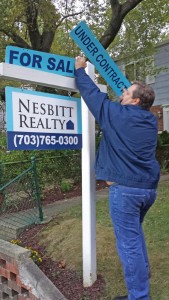







 The majority of condos that are sold are existing condos. This is
neither an advantage or a disadvantage---simply a fact. The majority of
marketing materials and advertisements you will see for condos is for
new construction. This means that it is easier to find ads, pretty
pictures and floor plans for new condos.
One of the advantages of buying an existing condo is what you see is
what you get. There will be no surprises, good or bad. There will be no
change orders. You won't have to look at a model and a floorplan to
get an idea of what you are buying. Instead, you can tour the property
that you will actually buy.
You can move into an existing condo as soon as your loan and title
work are finished. There will be no construction delays. Construction
delays can be sizable and in today's market it is even possible for
the builder to fold-up shop before the project is completed.
The majority of condos that are sold are existing condos. This is
neither an advantage or a disadvantage---simply a fact. The majority of
marketing materials and advertisements you will see for condos is for
new construction. This means that it is easier to find ads, pretty
pictures and floor plans for new condos.
One of the advantages of buying an existing condo is what you see is
what you get. There will be no surprises, good or bad. There will be no
change orders. You won't have to look at a model and a floorplan to
get an idea of what you are buying. Instead, you can tour the property
that you will actually buy.
You can move into an existing condo as soon as your loan and title
work are finished. There will be no construction delays. Construction
delays can be sizable and in today's market it is even possible for
the builder to fold-up shop before the project is completed.